Robotics, Digital Twins, and Spatial Computing Are Starting to Work as One System
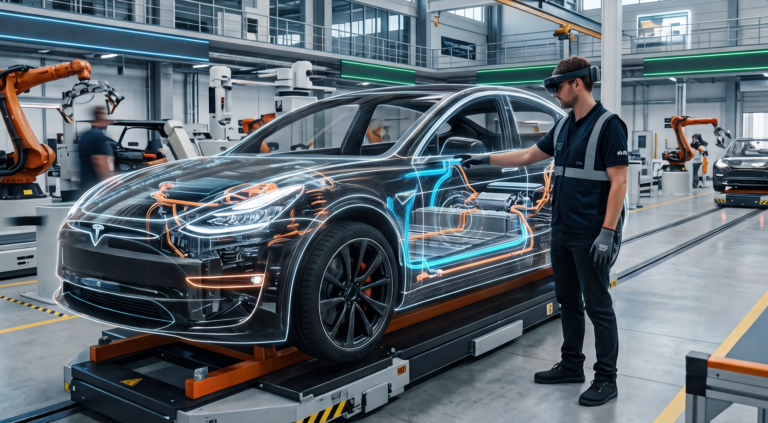
Robotics, digital twins, and spatial computing are usually discussed as separate technologies, but in practice, the boundaries are starting to blur. Together, these technologies are creating a tighter loop between the digital and physical world. The digital twin is no longer just a planning tool, the robot is no longer just a machine repeating a fixed task, and spatial computing is no longer just a visualization layer. Each technology strengthens the others.
Imagine this: A robot collects data while it works. That data is used to update a digital twin. The digital twin provides a virtual environment to train, test, and optimize robotic systems before they’re deployed. Spatial computing helps human operators see what the robot sees, control it remotely, and virtually practice working alongside it. Over time, the whole system becomes more aware, adaptive, and measurable.
The concept is especially important in industries where the physical environment is complex, variable, or difficult to document. Construction, manufacturing, logistics, energy, aerospace, and healthcare all depend on physical work being done accurately and consistently. Yet many of these industries still rely heavily on manual inspection, paper-based reporting, field interpretation, and individual memory.
Digital twins were supposed to help close that gap. In theory, a digital twin should provide a living model of an asset, process, or environment. In reality, many twins become static after the planning or design stage. The model may show what was intended, but not necessarily what happened once real work began.
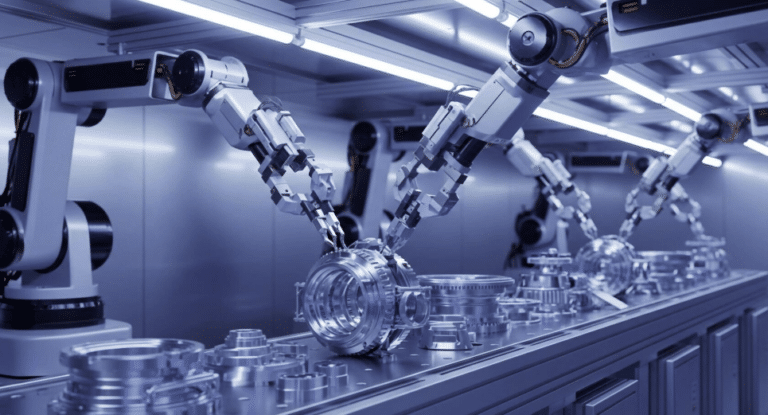
Robotics changes the equation by bringing sensing, verification, and data collection into the physical workflow itself. Instead of sending someone to scan, photograph, measure, or inspect after the fact, a robot can capture structured data as the work is performed. Each drilled hole, inspected part, or completed task becomes part of the digital record.
The impact: Digital twins feed on real activity instead of occasional updates while robots are able to operate with better context. The twin provides the simulation space including constraints, the robot provides action and feedback, and spatial computing helps humans stay connected to both.
Why the convergence is gaining momentum
Traditional industrial robots are fast, precise, and reliable, but they’re often rigid. Changes in product mix, part geometry, or workflow can require reprogramming, downtime, and specialized support. While that’s fine for highly repeatable production, it’s harder to justify in high-mix, low-volume manufacturing.
AI-enabled robotics, digital twins, and spatial computing point toward a more flexible approach in which computer vision helps robots recognize variable parts, reinforcement learning and simulation optimize (robotic) movements and pathways, and digital twins allow changes to be tested before they reach the factory floor.
Not every robot will become fully autonomous overnight, but robotics is gradually shifting from hard-coded automation to adaptive automation. A robotic cell used for palletizing during one shift may be reconfigured for kitting or material handling later. Autonomous mobile robots in warehouses can move beyond isolated tasks toward coordinated fleet behavior, adjusting priorities as orders, inventory, and bottlenecks change.
The human role evolves, as well. Cobots and AI-enabled robots are often framed as labor-saving tools, but the stronger long-term use case may lie in redesigning roles. As robots take on repetitive, physically demanding, and ergonomically challenging tasks, workers can spend more time supervising systems, improving processes, monitoring quality, interpreting data, and making decisions. Low-code and no-code interfaces may also make automation more accessible to smaller manufacturers and employees without specialized robotics expertise.
XR plays an important role in connecting people to these systems. Workers can train around robotic equipment without disrupting production or putting themselves at risk; engineers can test processes before equipment is installed; operators can control robots remotely through immersive interfaces; and distributed teams can collaborate inside the same simulated environment.
Robots as potential data-gathering platforms
Do humanoid robots have a role to play in industrial settings? Traditional industrial robots remain more precise, reliable, and proven for many high-volume tasks. But humanoids may be most valuable not as direct replacements for workers, but as mobile, sensor-rich, and dexterous platforms that can navigate human-designed environments, observe conditions, collect data, and perform flexible support tasks.
Like other robotic systems, their value ultimately depends on perception, spatial awareness, and the ability to feed useful information back into factory, maintenance, quality, or logistics systems.
The larger shift is that robotics is becoming less isolated. Robots are increasingly connected to digital twins, AI models, spatial data, human interfaces, and enterprise systems. At the same time, digital twins are becoming more dynamic, while spatial computing is evolving beyond impressive visualizations toward practical interaction with real-world environments.
The result is a new kind of industrial feedback loop: simulate, train, deploy, observe, update, and improve. That cycle could make robots more adaptable, digital twins more accurate, and spatial computing more operationally useful.