An Abbreviated History of Wearable Devices: From Ancient Times to the Future
When was wearable technology invented, and by whom? Pinning down a date for the invention of wearable technology, or even an inventor, might spark some debate. Several dates and individuals – differing vastly in time and greatly in motive – have been proposed, but the question still remains: Where do we begin? Should we begin in Ancient Greece, the 13th century, the 16th century, the 1960s…?
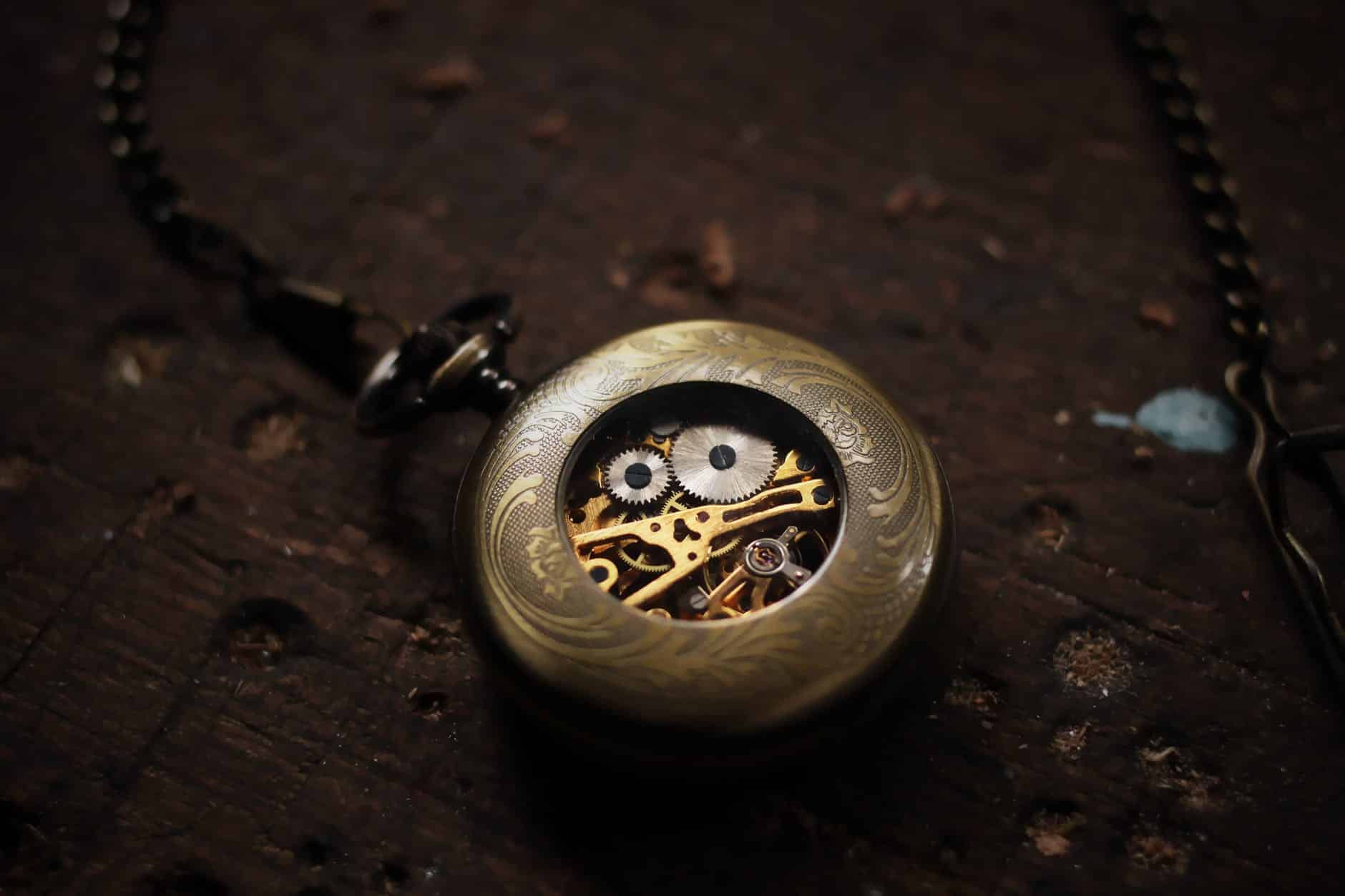
Consider the very first watch. The earliest dated watch was commissioned by the German reformer (and friend of Martin Luther) Philip Melanchthon around 1530. Essentially, Melanchthon’s Watch was a small, portable clock that could sit on a table or be worn on a chain around the neck. The first wristwatch came about not too long after, in 1571. This jeweled, armlet-mounted watch was given to Queen Elizabeth I by her longtime boyfriend of sorts Robert Dudley, 1st Earl of Leicester. These watches may not have been “smart” in the contemporary sense of the word (you could not use them to check your email), but for the 16th century, and for hundreds of years following, pocket and wristwatches were considered very sophisticated devices. (Side note: 17th-century Dutch still-life painters depicted pocket watches as vanitas symbols, or symbols of the brevity of life, but they could also symbolize man’s technological achievement.)
Let’s go back even earlier, to the 4th century BC. The ancient Greeks wore reinforced linen body armour called linothorax, which was pretty effective protection against arrows and spears. Is this technology in the modern sense? No. But was it highly advanced for its time, and worn on the body? Yes. So technically ancient Greek armour was very early wearable. Even Alexander the Great is depicted wearing a linothorax at the Battle of Issus in a mosaic from Pompeii.
The first eyeglasses provide yet another starting point: Italy, between 1268 and 1289. These were lenses held either in front of the eyes or balanced on the nose, used mainly by monks and scholars.
Other early wearable devices include a 1650 abacus ring from the Qing Dynasty; the first scuba mask designed by Henry Fleuss in 1878; an 1886 spy camera by C.P. Stirn that was concealed behind a vest or coat; and the first hearing aid developed by Louis Weber for Siemens & Halske around 1911. Considering that most fitness trackers are discarded by consumers after just a few months, hearing aids might be considered the most successful commerical wearables to date.
Flash forward to the 1960s and you have significantly more advanced wearable devices, including helicopter pilot head-mounted displays and even wearable devices invented for the purposes of cheating at the roulette table. In 1980, Steve Mann, then a researcher at MIT, strapped a cathode ray tube to his head, demonstrating that not only could you wear technology but there would be practical uses for wearable tech in years to come. Flash forward again to 2015, and wearable technology is now a class all of its own—small devices that can be worn pretty much anywhere on the body, and that can sense, display and compute all kinds of information. We have…
- Smartglasses & other head-mounted devices
- Smartwatches, smartbands & other arm-worn devices
- Smart badges & patches
- Smart clothing (socks, shirts, even shoes)
- Smart rings & other smart accessories
- Wearable cameras
- Exoskeleton suits
- Ingestibles & hearables
- Digital tattoos (and more)
If you were writing a history of wearables, where would you begin? Personally, I like to begin the history of wearable technology with a pop culture favorite: the calculator watch popular in the 1980s. Whether Pulsar, Seiko or Casio, these watches have made a small comeback in recent years among nostalgic types and hipsters alike. I mean can you really disagree with Sting, Tom Hanks and Marty McFly?