How AI Is Reshaping Product Innovation Before It Even Exists

Product innovation has always involved a certain amount of guesswork. Engineers, scientists, designers, and operations teams rely on the best available information to develop prototypes, test ideas, learn from the results, and iterate. The cycle is often slow and expensive, limited by what can be physically built and tested.
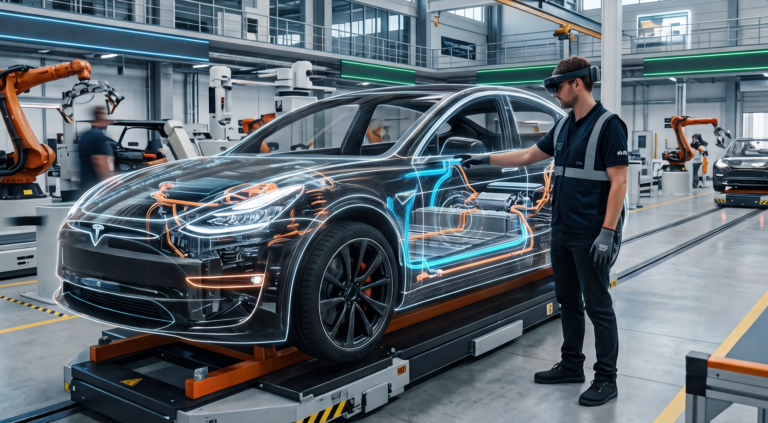
AI is beginning to change where that learning happens. Instead of relying solely on trial and error, teams can test concepts virtually, generate and evaluate new design options, analyze complex product data, and narrow the field before committing significant time and resources to physical development.
That doesn’t mean product development is becoming fully automated. In many cases, AI tools are still being piloted, refined, or deployed within targeted workflows. But the trend is clear: AI is moving upstream in the innovation process. Rather than simply optimizing existing products, it’s increasingly influencing what gets designed and built in the first place.
From Searching catalogs to generating options
Materials science company 3M provides a clear example: The company has been exploring how AI can help engineers move more quickly from a design challenge to a material solution. In industries such as automotive and consumer electronics, choosing the wrong adhesive, film, or coating can lead to performance issues, costly redesigns, and project delays. The earlier engineers can identify promising options, the easier it is to evaluate tradeoffs and avoid late-stage surprises.
In February, 3M launched Ask 3M, an AI-powered digital assistant designed to guide users through questions about substrates, environmental conditions, assembly methods, and other design considerations before recommending suitable material options. Instead of manually searching through 3M’s vast product catalog and technical data sheets, teams can use conversational AI to accelerate material selection and make early decisions with more confidence.
This points to a broader trend: AI is making product and technical knowledge more interactive. Rather than leaving expertise buried in documents or confined to a small group of specialists, AI systems can make it easier to query, apply, and simulate. These tools go beyond helping customers find existing products. They support a model of innovation in which engineers define a desired performance outcome and explore what the optimal solution might look like.
Virtual testing before physical prototypes
Better recommendations are only part of the equation. If AI can help identify a potential solution, companies still need a way to determine whether it’s likely to work. Digital material models, simulation-ready data, and virtual testing environments allow teams to evaluate performance before committing to physical development.
Along with the digital assistant, 3M upgraded its Digital Materials Hub, which uses advanced modeling and simulation-ready material data cards to help customers digitally validate materials before investing in physical prototypes. Users can collaborate directly with 3M scientists through the hub’s Workbench feature and even use generative AI to explore bespoke virtual materials that don’t yet exist.
For industries like advanced manufacturing and healthcare, a material may need to withstand heat, pressure, vibration, light exposure, repeated use, and contact with other materials. Physically testing every variation is impractical. Virtual simulation allows companies to explore a wider range of options earlier, reserving physical prototyping for the most promising candidates.
This doesn’t mean simulation replaces the real world. Models can be incomplete, assumptions can be wrong, and virtual performance doesn’t always translate into production. But when used carefully, AI and simulation can reduce the number of blind bets companies make before reaching the prototype stage.
Structuring the product data companies already have
Not all AI-driven product innovation starts with inventing something new. Sometimes the first challenge is making existing product information usable.
Food ordering and quick commerce company Delivery Hero provides a good example. Managing large product catalogs is difficult because vendor-supplied information is often inconsistent, incomplete, or formatted differently across markets and platforms. One vendor might describe a beverage one way, another might omit the package size, and a third might use a naming convention that doesn’t align with internal standards.
It might seem like a back-office data problem, but it has broad operational and customer experience consequences. Product attributes influence search, recommendations, inventory management, analytics, and warehouse workflows. When the underlying data is “bad,” the entire product experience suffers.
Historically, verifying and standardizing product information has been manual, time-consuming, and error-prone. To address this, Delivery Hero implemented an agentic AI system consisting of two AI agents operating in sequence: The first extracts structured attributes from vendor titles and images, while the second generates standardized product titles. To maintain quality and accuracy, the system also assigns confidence scores, automatically flagging low-confidence outputs for human review.
It’s not just about clean data. Better product information improves search, powers smarter recommendations, provides deeper analytics, and creates a more consistent customer experience. AI isn’t only helping companies create new products; it’s turning fragmented product data into a strategic asset that can support better decisions and future innovation.
AI in high-stakes innovation
In healthcare and pharmaceuticals, the stakes are even higher. Johnson & Johnson has explored hundreds of potential AI use cases across areas like drug discovery, surgical planning, clinical trial recruitment, supply chain resilience, and internal knowledge search. These aren’t simple productivity applications; they’re part of regulated, complex, and often mission-critical workflows.
Drug discovery is one of the most compelling examples. The search for new medicines involves enormous chemical and biological complexity. Researchers must understand disease mechanisms, identify promising targets, evaluate and optimize potential compounds, and assess both intended and unintended biological effects. The number of possible drug-like molecules is far too large to explore manually.
AI can help scientists evaluate far more possibilities in parallel. Generative models can propose novel compounds, while machine learning systems analyze biological data to identify the most promising candidates. Imaging, genomic, clinical, and experimental data can all feed into this process, giving researchers a more comprehensive view of how potential molecules may behave.
The goal is not to remove scientists from the process. In high-stakes fields like healthcare, AI should support expert judgment rather than replace it. Human oversight, explainability, bias mitigation, and governance become core elements of the system. At J&J, AI can analyze vast datasets and identify patterns, but chemists, biologists, and other experts still provide the context and judgment needed to make responsible decisions.
The new shape of innovation
AI doesn’t simply speed up product learning; it changes when and where that learning happens. Materials can be explored before they’re manufactured, product catalogs can be structured before becoming operational bottlenecks, and drug candidates can be evaluated before years of development are invested. Simulations, AI agents, and generative models enable companies to move more discovery, validation, and decision-making to the front end of the innovation process.
This creates new opportunities, but also new risks. AI-generated materials raise questions about intellectual property, ownership, and accountability. AI-structured product data still needs quality control, while AI-assisted drug discovery demands careful oversight, explainability, and validation.
The future of product innovation won’t be defined by AI replacing the messy work of development. It will be defined by organizations learning how to use AI to explore more possibilities, test them earlier, and make better decisions before the physical world locks in those decisions.