
By Technology

Robotics, Digital Twins, and Spatial Computing Are Starting to Work as One System
Robotics, digital twins, and spatial computing are usually discussed as separate technologies, but in practice, the boundaries are starting to blur. Together, these technologies are creating a tighter loop between the digital and physical world. The digital twin is no longer just a planning tool, the robot is no longer just a machine repeating a fixed task, and spatial computing is no longer just a visualization layer. Each technology strengthens the others. Imagine this: A robot collects data while it works. That data is used to update a digital twin. The digital twin provides a virtual environment to train, test, and optimize robotic systems before they’re deployed. Spatial computing helps human operators see what the robot sees, control it remotely, and virtually practice working alongside it. Over time, the whole system becomes more aware, adaptive, and measurable. The concept is especially important in industries where the physical environment is complex, variable, or difficult to document. Construction, manufacturing, logistics, energy, aerospace, and healthcare all depend on physical work being done accurately and consistently. Yet many of these industries still rely heavily on manual inspection, paper-based reporting, field interpretation, and individual memory. Digital twins were supposed to help close that gap. In […]
4 min read

How AI Is Reshaping Product Innovation Before It Even Exists
Product innovation has always involved a certain amount of guesswork. Engineers, scientists, designers, and operations teams rely on the best available information to develop prototypes, test ideas, learn from the results, and iterate. The cycle is often slow and expensive, limited by what can be physically built and tested. AI is beginning to change where that learning happens. Instead of relying solely on trial and error, teams can test concepts virtually, generate and evaluate new design options, analyze complex product data, and narrow the field before committing significant time and resources to physical development. That doesn’t mean product development is becoming fully automated. In many cases, AI tools are still being piloted, refined, or deployed within targeted workflows. But the trend is clear: AI is moving upstream in the innovation process. Rather than simply optimizing existing products, it’s increasingly influencing what gets designed and built in the first place. From Searching catalogs to generating options Materials science company 3M provides a clear example: The company has been exploring how AI can help engineers move more quickly from a design challenge to a material solution. In industries such as automotive and consumer electronics, choosing the wrong adhesive, film, or coating can […]
5 min read
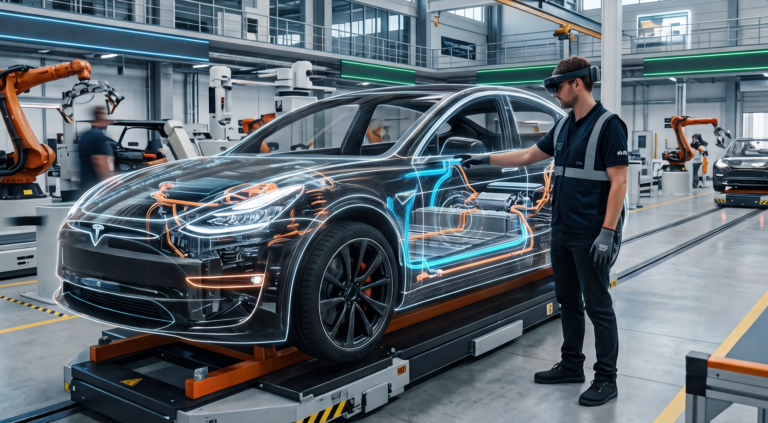
XR in Automotive: How Automakers Are Using XR, Digital Twins, and AI
Automotive companies have been on the cutting edge of emerging technology adoption for a decade now. As an industry, automotive is a perfect example of how technologies like extended reality, digital twins, and artificial intelligence can transform not just individual tasks but an entire sector. The pressure to innovate in the auto industry is due to a number of factors, including a severe shortage of skilled workers. It’s estimated that the U.S. needs more than 100,000 new automotive technicians each year to meet demand and replace workers leaving the field, far more than the number of people currently preparing for careers in the industry. At the same time, vehicles themselves have changed. Modern cars are more electronic than physical, packed with software, sensors, battery systems, advanced driver assistance features, infotainment, connectivity, diagnostics and, increasingly, AI-enabled capabilities. Cars today are complex technology platforms. It makes sense that the tools used to design, build, inspect, sell, and service them would become more digital, too. Here are some recent examples of how automakers are using XR, digital twins, and AI across the vehicle lifecycle. Ford Ford began using VR in 2015 along with infrared cameras and motion capture software to identify unergonomic assembly […]
7 min read
Robotics: Where Digital Twins and Physical AI Collide
Why Physical AI Needs Digital Twins If physical AI is going to work in the real world, enterprises need a way to test it before it takes action. That may sound obvious, but it’s one of the biggest challenges facing AI in physical environments. Software AI can be tested in sandboxes. AI agents can be limited, monitored, and rolled back, with failures typically contained behind a screen. But once AI is connected to robots, vehicles, machines, and other physical systems, the stakes change. A system that applies the wrong amount of force, fails to detect a hazard, or makes a bad decision near people or equipment can cause physical harm, damage, and disruption. This is why physical AI cannot scale on models and hardware alone. It needs a proving ground where systems can be trained, tested, and validated before deployment. Digital twins provide virtual environments where AI can learn, fail, adapt, and prove itself without putting people, assets or operations at risk. (A digital twin is a virtual replica of a physical asset, process, facility, or system. Unlike static models, it’s continuously updated with real-world data, allowing it to reflect changing conditions and help companies better understand and predict how […]
5 min read
Physical AI Is Leaving the Screen
For the last few years, most people have experienced Artificial Intelligence (AI) as something that writes emails, summarizes documents, generates images, and answers questions. That version of AI is already changing how people work, but it mainly operates in the digital realm. The next frontier is AI that can perceive, decide, and act in the physical world. Physical AI refers to intelligent systems that use cameras, LiDAR, tactile sensors, and other inputs to understand their surroundings, then take action through motors, actuators, and other control systems. It’s AI that thinks and moves, and it’s already visible in autonomous vehicles, robotic arms, precision manufacturing systems, and humanoid robots. Nevertheless, the technology remains in the early stages. AI is just starting to connect with the physical systems companies depend on, including factories, logistics networks, infrastructure, inventory, and workers. For enterprises, this is where things get really interesting and also a lot harder. Physical AI vs. agentic AI Though the rise of physical AI overlaps with excitement around agentic AI, they are not the same. An AI agent might search a database, update a CRM, draft a report, or trigger some other digital workflow. It can reason, plan, use tools and take action, […]
5 min read

POWER DUO: AI & DIGITAL TWINS DRIVE SMARTER, MORE SUSTAINABLE OPERATIONS
Although the concept of digital twins isn’t new, companies are beginning to realize the technology’s full potential, in large part thanks to Artificial Intelligence. Advancements in AI as well as IoT, cloud/edge computing, reality capture, and extended reality (XR) are making digital twins more intelligent, predictive, autonomous, and accessible to organizations of all sizes across nearly every industry. At their core, digital twins are virtual replicas of physical systems, but when combined with AI, they become far more powerful. AI-powered digital twins integrate real-time IoT sensor data and other diverse data sources with dynamic, physics-based 3D models, enabling organizations to simulate, predict, and optimize everything from factory floors to supply chains. These systems can run complex “what-if” scenarios, detect anomalies, predict maintenance, and even automate certain controls, transforming digital twins from static visualizations into intelligent, self-learning, multi-purpose decision-making tools. The shift is unlocking tangible benefits like improved energy efficiency, faster planning cycles, reduced operational risk, and increased productivity. More importantly, it’s allowing companies to fundamentally rethink how they design products, manage operations, and scale sustainably. Discover how two real-world organizations are using AI-powered digital twins to tackle increasingly complex business challenges while laying the groundwork for smarter, more efficient, and […]
4 min read
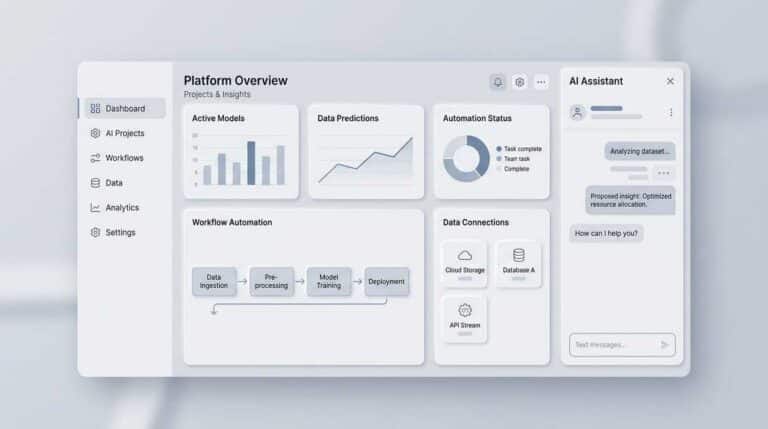
Beyond the Demo: What to Look for in an Enterprise AI Platform
Fit Over Features Polished demos and long lists of capabilities can be compelling, but they only show/tell what an AI platform can do. The real challenge isn’t proving AI’s value; it’s operationalizing it at scale. Enterprise AI success depends on asking the right questions. You need to understand how a given AI platform will perform in your organization–in production, across teams, and under real-world conditions. A feature checklist is useful, but knowing what strategic questions to pose to vendors is essential. Start with the Basics What to Look for in an Enterprise AI Platform 1. End-to-end Model Lifecycle Management Enterprise AI is not a one-time setup; it’s an ongoing process where models must be versioned, trained, deployed, monitored, and retrained as data and conditions evolve. That makes lifecycle management critical. Look for a platform that makes it easy to iterate and continuously refine models, move successful prototypes into production, and measure performance with confidence. You also need visibility into usage, performance, and outcomes over time through monitoring, analytics and feedback loops in order to improve accuracy, control costs, and adapt as business needs change. Key words to look for are model versioning, experiment tracking, rollback, built-in evaluation frameworks, A/B testing, […]
5 min read

The Enterprise AI Platform Landscape: Where to Start (and Why It’s So Hard)
AI is out of the bag and advancing at an extraordinary pace; and though clear, measurable ROI remains elusive for many organizations, it would be unwise to “wait and see” about AI. At the same time, the AI market landscape is rapidly shifting. New tools, new versions of tools, new frameworks, and frequent acquisitions can reshape roadmaps almost overnight. Meanwhile, AI initiatives are often fragmented across departments and persistent challenges like data debt and talent gaps can slow efforts. The pressure is on to build AI-ready infrastructure and start experimenting now, but how? For technology leaders tasked with deploying AI across a 50,000-person organization, where do you actually start? Choosing the Right Approach: Build, Buy, or Platform? One of the first strategic decisions is whether to build internally, buy a platform, or adopt a hybrid approach to AI–a choice that’s often less about technology than organizational readiness. Build: Control & Responsible AI Building a custom AI stack offers the highest level of control and customization, but it’s expensive, time-consuming, and requires adequate expertise. Companies like Uber and Netflix have built internal AI ecosystems by combining open-source tools, proprietary models, and cloud infrastructure. This approach is best suited for organizations with […]
6 min read

Digital Twin It, Then Execute: The New Strategy for Enterprise Planning
Digital twins are providing measurable value as powerful tools for enterprise planning. From processes to physical spaces, enterprises across industries are turning first to digital twins to test ideas before acting in the real world. In this post, learn how real companies are using digital twins to plan electricity networks, marketing campaigns, assembly lines, and drive systems. The results include reduced costs, shorter timelines, lower risk, fewer errors, improved customer satisfaction, and more. National Grid: From Reactive to Predictive Planning with Digital Twins (ENERGY) The utility provider worked with Atos to develop Triton, a digital twin platform for streamlining the planning of electricity networks. Triton leverages advanced visualization and automated data integration to accelerate infrastructure (grid) decisions. To facilitate stress testing and provide long-term visibility, the platform consolidates and processes thousands of datasets from diverse sources such as legacy systems (internal) and Distribution Network Operators (DNOs) and transmission owners (external). Engineers can run rapid simulations of complex network scenarios – modeling future demand and supply at specific grid points and transmission substations – to make reinforcement decisions 70% faster (compared to static mapping) and direct investment where it’s needed most. In addition to identifying where new infrastructure is required and […]
4 min read
From Assistants to Operators: Enterprise AI Agents in Action
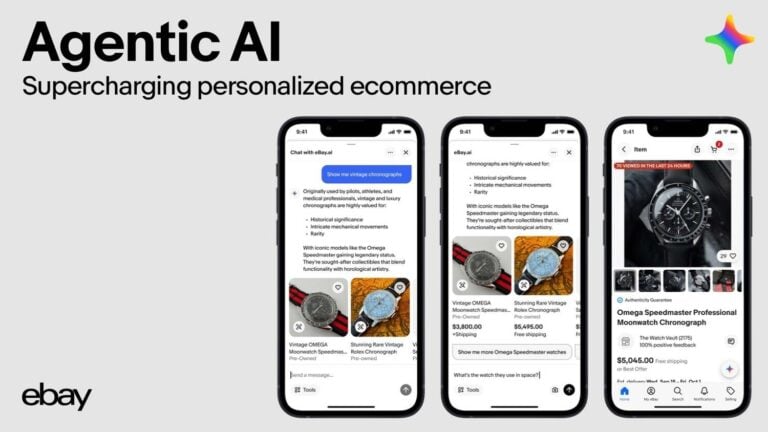
AI agents have seemingly replaced generative AI as the next hot thing in enterprise artificial intelligence. Salesforce, ServiceNow, Microsoft, and many other enterprise software tools all have their own AI agents marketed as helping businesses automate routine tasks and streamline workflows. And while theoretically this should free up employees for more strategic, revenue-generating, and customer-facing work; companies are looking to AI agents to alleviate the skills gap and do more with less human capital. What is an AI agent? AI agents are software systems or applications that use AI to complete tasks on behalf of users. Often powered by LLMs, AI agents go beyond simple scripts or responses to plan, reason, and use tools like APIs and databases to achieve goals with minimal human input and oversight. AI agents range in complexity, degree of autonomy and ability to learn, with the most advanced agentic AI systems capable of managing entire multstep workflows. Most AI agents are examples of composite AI or multi-agent systems, combining various AI techniques and data technologies to break down complex problems into manageable sub-tasks with each step handled by specialized components or sub-agents (e.g. a LLM for reasoning, a search tool for information retrieval, etc.) Today’s […]
6 min read

Data Readiness: The Real Bottleneck to Enterprise AI
In 2023, noting a serious operations oversight problem, BMW Group’s Hams Hall plant began centralizing its data gathering infrastructure with the ultimate goal of implementing digital twin technology. The plant was producing approximately 1.4 million components and assembling around 400,000 engines per year, generating vast amounts of data that typically ended up siloed. At one point, internal teams were reportedly using more than 400 custom dashboards across 15 different IT systems! The situation in Hams Hall reveals a significant challenge facing not only digital twins but digitalization in general: Company data. A foundational step in adopting advanced digital technologies involves locating, formatting, and integrating multiple, disparate, and often unstructured sources of data—a complex, resource-intensive, and frequently underestimated process. It’s not surprising that poor data quality is estimated to contribute to 40% of failed business initiatives. WHAT’S REALLY PREVENTING AI ROI? What if AI isn’t overhyped? What if we’re just not ready for it? When it comes to AI’s promise in enterprise, data readiness – encompassing data standardization, data quality, data management, etc. – is the elephant in the room. According to a 2025 MIT study of 300+ public AI deployments, 95% of AI projects fail. It’s not that the AI […]
5 min read
The Agentic Spectrum: Where AI Agents End and Agentic AI Begins
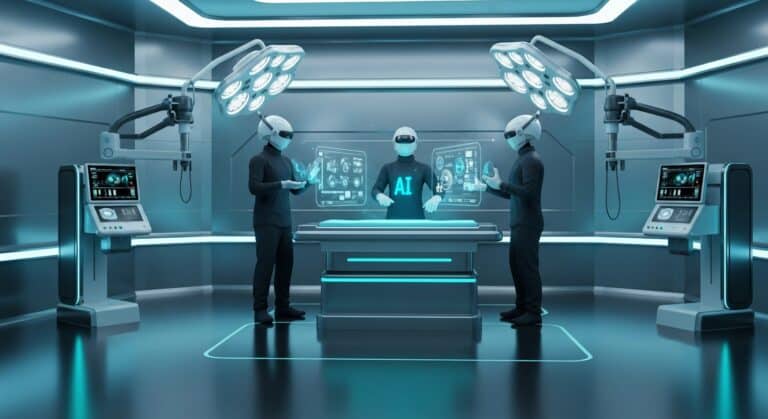
I read somewhere that the dawn of the AI agent was “one of the defining stories of 2025,” a sign that we’re moving beyond mere analytics to systems that have the power to act. AI agents have seemingly replaced generative AI as the hot new thing in AI, as evidenced by the proliferation of AI agent solutions and numerous articles about them. Then, there’s the term “agentic AI.” Engineering.com recently reported that DHL is carrying out the “next phase” of its AI strategy, which “focuses on agentic AI for its contract logistics division.” Elsewhere in the article it says that DHL Supply Chain is interested in integrating AI agents “to drive greater process efficiency for customers while making operational roles [better] for employees…” Apparently, the logistics giant has already deployed HappyRobot’s AI agents or “AI workers” across several use cases, including appointment scheduling, driver follow-up calls, and high-priority warehouse coordination; and internal teams continue working on designing new agentic capabilities. CONFLICTING TERMS “AI agent” and “agentic AI” are often used interchangeably, but it’s not clear they are the same. When it comes to AI agents, in particular, sources disagree on level of complexity, degree of autonomy, and ability to learn. […]
4 min read
Augmented Enterprise Newsletter
Get bi-monthly insights on AI, XR, digital twins, and related emerging enterprise technology delivered to your inbox.