
Editorial
3 Key Takeaways for Fast-tracking AR in Enterprise
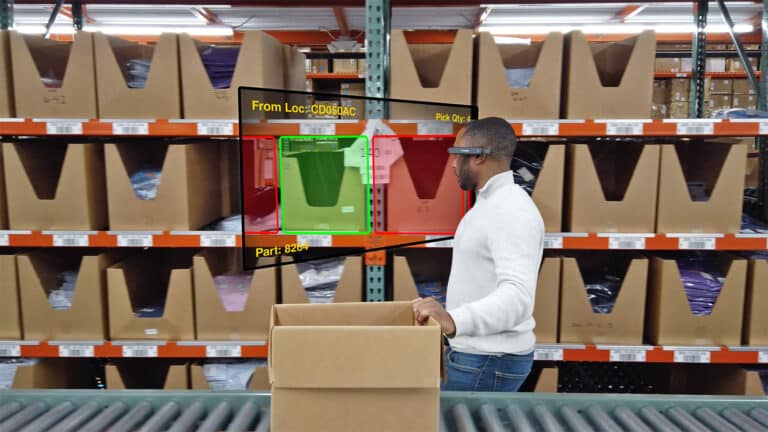
Last week, Seth Patin, CEO of LogistiVIEW, and Lance Anderson, CEO of Lance-AR, shared a new way to adopt augmented reality in your organization in the webinar “Fast-tracking AR for enterprise – From idea directly to deployment.” Here are three takeaways: Avoid pilot purgatory by “skipping” the pilot: At this point, five years after the initial release of Google Glass, we’re beyond pilots. AR has been proven in the enterprise space in hundreds of pilots across the industry spectrum. Start small, start real: Taking decisive action drives time to value. When the stakes are real, IT has to make it secure and employees have to acclimate. Don’t invite fear of change. Instead of trying to achieve maximum ROI and dramatic digital transformation, optimize the process that is the lowest-hanging fruit in order to set yourself up for incremental improvement, incremental adoption. Deploy on top of your existing operations: For your first deployment, don’t choose a use case requiring you to completely stop a process or one that requires significant AR visualization rework. For more valuable takeaways and to learn more, watch the full webinar available now on demand. The Enterprise Wearable Technology Summit (EWTS) is an annual conference dedicated to […]
2 min read
End Users Share Real Challenges of Wearable Tech Software
Finger Food Studios’ Graham Cunliffe leads a panel discussing the current state of the enterprise wearable market and the challenges of deploying business-ready wearable applications. Graham is joined by Caterpillar’s Jeff Lind, Southwest Airlines’ Chris Grubbs, Walmart’s Steven Lewis and United Technologies’ Peggy Wu. They discuss the considerations that help an organization determine appropriate software solutions. Common pain points include the scalability and portability of solutions across devices and the relative lack of off-the-shelf solutions. The panelists guide us through resolving functionality gaps for end users, the difficulties of establishing and navigating software partnerships with vendors, and the handling of data within the enterprise for seamless integration across digital platforms.
1 min read
Insider Secrets to Adopting Wearables
Watch this throwback 2016 expert panel led by Upskill’s Brian Ballard, in which enterprise end users from Jacobs Engineering, Powerstream Inc., the AES Corporation, and Intel share their secrets to adopting wearables. Some key insights include referring to the people closest to the problem (i.e. the workers), getting them involved early in the process and allowing them to opt in; creating a partnership between the business and IT sides of your organization; and talking to the standards bodies for your industry from the get-go. In addition, don’t underestimate the impact on your company’s infrastructure, as content and information management are key challenges in this space, especially when it comes to AR.
1 min read

When Is The Time to Talk About Consumer-Facing AR Apps in Enterprise?
The release of Magic Leap One was supposed to be the “magic moment” for consumer AR, the development that finally got consumers excited about augmented reality glasses. Needless to say, it wasn’t. Despite the billions in funding, awesome concept videos and mainstream media attention, Magic Leap did not suddenly big-bang the consumer AR market into existence with the launch of its much-hyped headset. Though Magic Leap the product may be “just another HoloLens” aimed at consumers; Magic Leap the company did a lot in 2018 – through strategic partnerships with AT&T, Sennheiser, and Wayfair – to impress upon consumers the potential for augmented reality beyond Google Glass and Snap filters. In addition, 2018 saw a number of relatively normal-looking smart glasses hit the market, including Focals by North and Vuzix Blade, which make a far stronger case than Google Glass did in 2013 for putting our smartphones (and AI assistants) on our faces. And just this week at CES 2019, nreal debuted colorful, 3-ounce AR glasses that look like everyday sunglasses and ThirdEye unveiled its X2 Smart Glasses, “the smallest standalone 6oz mixed reality smart glasses with built-in SLAM.” Why should any of this matter to enterprises? Is it […]
9 min read
Enterprise Wearable and Immersive Tech 2018: Magic Leap, Exosuits and VR Training, Training, Training
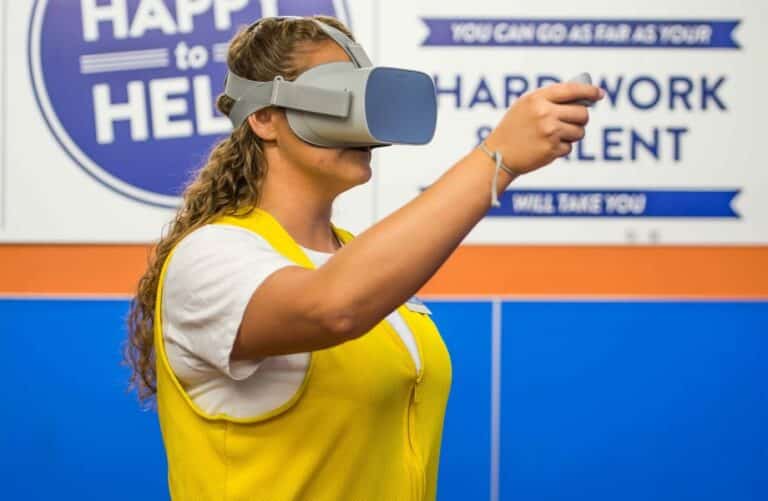
This year was going to be the year of augmented reality, but by the end of 2018 market analysts were pointing to 2020 or 2021 as the “golden year” of AR. While wearable technologies, including wearable XR, didn’t exactly “blow up” this year, the technology did further entrench itself in enterprise—the number of companies in the evaluation stage rose significantly, several large deployments made headlines, and solution providers continued to partner and expand their products to more platforms. Magic Leap finally dropped to mixed reviews and BrainXchange published its Definitive Guide to Adopting Wearables, AR and VR in Enterprise. Going into 2019, the industry eagerly awaits HoloLens 2 and Glass Enterprise Edition 2, as rumors swirl around the possibility of AR glasses from Apple and/or Facebook in the near future. Read on for a recap of the major developments that took place in 2018: Enterprises that made the news for using wearables: In 2018, major retailers got more serious about XR in hopes of competing with Amazon and improving the shopping experience. Walmart was very active, beginning with its acquisition of VR startup Spatialand in February. Just three months ago, the company revealed it’s putting 17,000 Oculus Go headsets in […]
7 min read
Challenges of Enterprise Wearables, AR and VR: A Changing Landscape, Budget, Battery, and More
In this largely Q&A-driven panel discussion from last month’s EWTS 2018, Tacit’s Todd Boyd and members of the audience question IT leaders from Worthington Industries, HB Fuller, Ford, JetBlue and The American Bureau of Shipping (ABS) on the cultural and technical challenges of adopting wearable technologies. Some of the challenges addressed include keeping people engaged, dealing with opponents and a constantly changing hardware landscape, budget and financing, battery life and back-end system integration. Watch now: The Enterprise Wearable Technology Summit (EWTS) is an annual conference dedicated to the use of wearable technology for business and industrial applications. As the leading event for enterprise wearables, EWTS is where enterprises go to innovate with the latest in wearable tech, including heads-up displays, AR/VR/MR, body- and wrist-worn devices, and even exoskeletons. The 6th annual EWTS will be held September 17-19, 2019 in Dallas, TX. More details, including agenda and early confirmed speakers, to come on the conference website.
1 min read
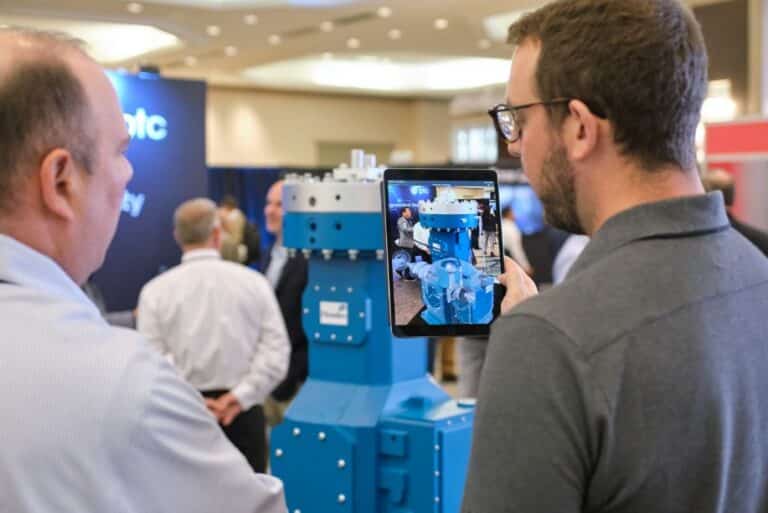
Build a Culture of Bottom-up Innovation and More Advice for Adopting AR/VR and Wearables
In this video from last month’s Enterprise Wearable Technology Summit in Austin, Upskill’s Brian Ballard leads early wearable tech adopters from Toyota, Duke Energy, Merck and Southern Company in a discussion around strategies for accelerating an organization’s wearable journey. Though the panelists represent very different operating environments; they all agree that an agnostic approach to hardware, end user input and feedback, having systems of bottom-up innovation in place, line-side support during rollout, and room to fail are key components to successful adoption. Enjoy this first-hand advice available nowhere else but EWTS: The Enterprise Wearable Technology Summit (EWTS) is an annual conference dedicated to the use of wearable technology for business and industrial applications. As the leading event for enterprise wearables, EWTS is where enterprises go to innovate with the latest in wearable tech, including heads-up displays, AR/VR/MR, body- and wrist-worn devices, and even exoskeletons. The 6th annual EWTS will be held September 17-19, 2019 in Dallas, TX. More details, including agenda and early confirmed speakers, to come on the conference website.
1 min read
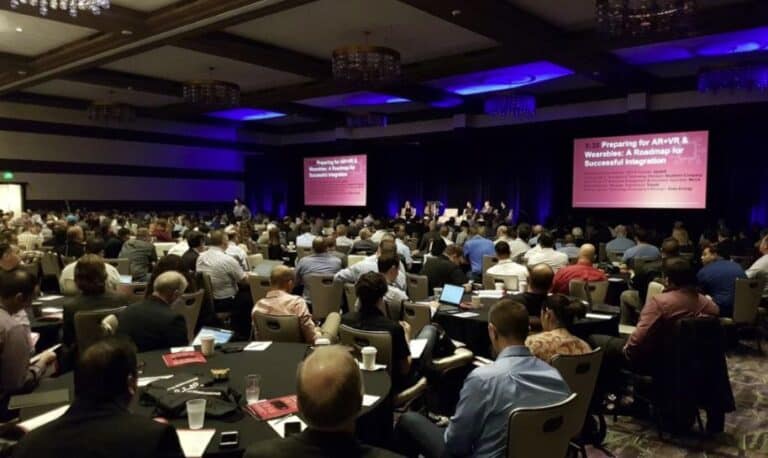
All the News Out of EWTS 2018
The 2018 Enterprise Wearable Technology Summit took place October 9-10 at The Fairmont in Austin, TX. A number of announcements were made at the event—all great news for the future of enterprise wearable technologies. From new partnerships to global deployments, here are the developments announced at the event: RealWear Announces That Colgate-Palmolive to Roll Out HMT-1 Hands-Free Wearable Computers to 20 Manufacturing Sites in 11 Countries Colgate-Palmolive is rolling out RealWear’s voice-operated HMT-1 among hundreds of its mechanics and engineers across 20 of the company’s largest manufacturing facilities in 11 countries. Colgate-Palmolive employees will use the technology to receive support from remote SMEs, equipment suppliers and manufacturing teams, as well as to retrieve and capture documents and video. Vuzix Receives M300 Follow-On Orders from SATS to Outfit Ramp Handling Operations with Smart Glasses at Changi Airport SATS, the chief ground-handling and in-flight catering service provider at Singapore Changi Airport, began piloting the Vuzix M300 to increase accuracy and efficiency in its ramp handling operations in mid-2017. The company is now expanding its use of the technology, deploying smart glasses to over 500 employees at Changi Airport. Wearing Vuzix M300 Smart Glasses, workers will be able to receive real-time loading instructions […]
3 min read

3 Steps to Escaping Pilot Purgatory and Nailing Your Wearable Tech Pilot
Ever since I became involved in the wearable and immersive tech space, I’ve wondered how a digital revolution really gets underway in an organization. What goes on behind the scenes within organizations? What’s the best starting point? What are the most common mistakes made during the pilot phase? What should enterprises know before piloting or adopting wearables, and how can they avoid pilot purgatory? I spoke with Sanjay Jhawar, co-founder and president of RealWear, maker of the HMT-1 and HMT-1Z1, to get the inside scoop. Read on for best practice advice, pilot lessons, and steps to nailing a pilot: In a May 2017 survey of companies exploring digital manufacturing strategies, 84% of respondents said they had been stuck in pilot mode for over a year, while less than 30% were beginning to scale (McKinsey & Co.) In another McKinsey report, 41% of industrial firms surveyed said they were in pilot limbo and 30% were still discussing how to start a pilot—that’s 71% stuck in pilot purgatory. Though these findings aren’t wearable tech-specific, a similar story holds across the industry spectrum—pilot purgatory remains a common dead end for companies pursuing wearable technologies like smart glasses and mixed reality headsets. “Every sales […]
8 min read
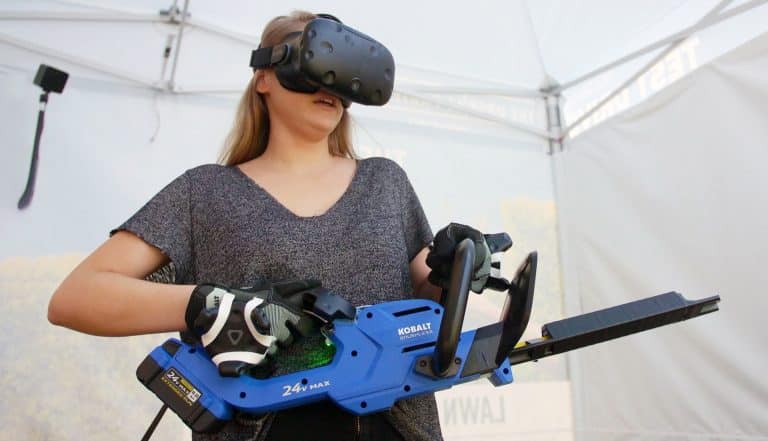
Let Your Customers and Workers Choose the Right XR Use Case for You
Here’s a common misconception: The more robotics and Artificial Intelligence (AI) advance, the more expendable human beings become in the workplace. Although Forrester Research predicts automation will displace 24.7 million jobs by 2027, it’s irrational to fear that robots will ultimately replace all human workers. For as robotics and AI improve, so do technologies for empowering human workers. I’m talking about wearable technologies like augmented and virtual reality headsets as well as wearable robotics (exoskeletons) that enable humans to work longer, quickly train for new jobs, and perform in sync with automation. You could even argue that as automation progresses, human workers will become more indispensable to enterprises—while robots may assume the dangerous and repetitive aspects of work, unmanned technology won’t be able to address every productivity issue or match distinctly human capabilities like human dexterity and imagination. When it comes to embracing disruptive technology, successful organizations take a “user is king” approach, finding out pain points in the business directly from the source, i.e. workers or customers who are expected to use or benefit from the technology. Whether it’s getting a group together for a brainstorming session, including members of the workforce in the proof of concept stage, or […]
5 min read

Interview with Sam Murley, EHS Digital Acceleration Leader at General Electric
With workplace injuries and accidents costing U.S. employers alone over $60 billion a year, it’s not surprising that safety has emerged as a key productivity-boosting and cost-saving application for wearable technologies and other emerging tech. I spoke with Sam Murley, EHS Digital Acceleration Leader at General Electric, about how GE is currently piloting and deploying body-worn sensors, exoskeletons, AR/VR, and more along with Sam’s vision for the future of EHS. Sam has been an inspiring thought leader at several Enterprise Wearable Technology Summits–don’t miss his case study “EHS 2.0 and The Predictive Digital Model” this October in Austin at EWTS 2018! This interview has been edited and condensed for clarity. E: To start, could you provide us with a little background on yourself and your career, and what you do at GE? S: I’m the EHS Digital Acceleration Leader at GE and oversee the innovation and emerging technology portfolio for environment, health and safety (EHS) . Our EHS innovation portfolio focuses on incubating the exploration and accelerating the adoption of emerging technologies and wearable devices through a Pilot-to-Deployment process. The goal is to eliminate certain hazards and risks within work environments, increase safety in general, increase operational excellence, and drive […]
8 min read
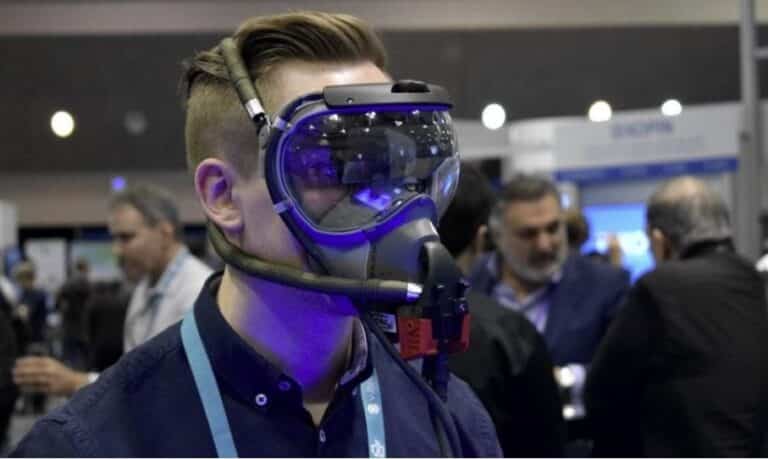
Everything Enterprise XR Announced at AWE USA 2018
The scope of the Augmented World Expo is large to say the least—six tracks, a huge expo divided into pavilions, a Playground of entertaining immersive experiences, workshops, and more. As opposed to EWTS’ enterprise focus, AWE truly gathers everyone interested in defining and progressing the future of XR in every aspect of life; and BrainXchange was happy to partner with the show’s producers to help plan the industry event. There were many announcements at the 9th AWE and some really cool tech on the expo floor (mixed reality backpack, anyone?) For our followers interested in the business and industrial applications of wearable XR technologies, we’ve separated enterprise from consumer in recapping the major developments (yet still beta in many cases) that came out of last week’s event: Kopin One of the most anticipated announcements was for the Kopin Golden-i Infinity: A compact and lightweight, gesture- and voice-controlled smart screen that attaches magnetically to turn any pair of suitable eyewear into an AR display. The Golden-i is powered by an Android or Windows mobile device – thereby offloading the heavy lifting – and can connect to apps using a USB-C cable. It’s intended for enterprise use and will arrive by the […]
5 min read
Augmented Enterprise Newsletter
Get bi-monthly insights on AI, XR, digital twins, and related emerging enterprise technology delivered to your inbox.