Industrial Applications Highlight the Need of Flexible Displays for Large Field of View in Virtual Reality Headsets
Written by Special Guest Blogger Tony Sun, Lux Research, the leading research partner of the Enterprise Wearable Technology Summit 2015
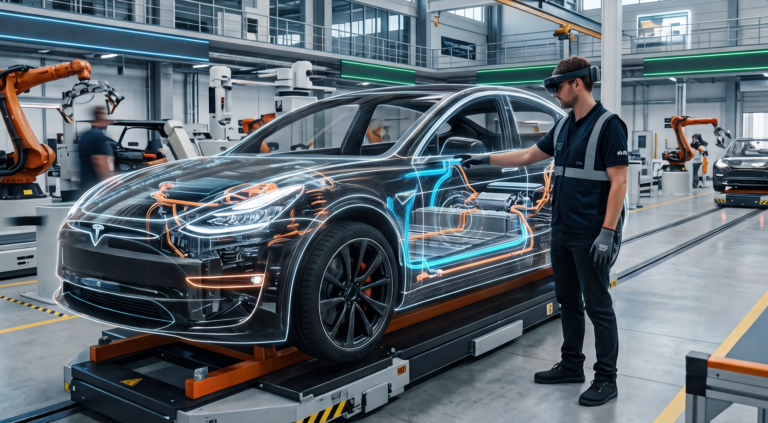
Virtual reality (VR) is not just for gaming or entertaining: the immersive interaction experience makes VR headsets a useful tool for design and training in many industries like automotive, construction, military, education, and health care. In fact, such technologies are already adopted by companies like Ford, which uses VR technologies to understand how customers experience its cars. However, current VR headsets are not for everyone to enjoy: some people will suffer from nausea due to motion sickness, which raises very real safety concerns of wider VR adoption in an industrial setup.
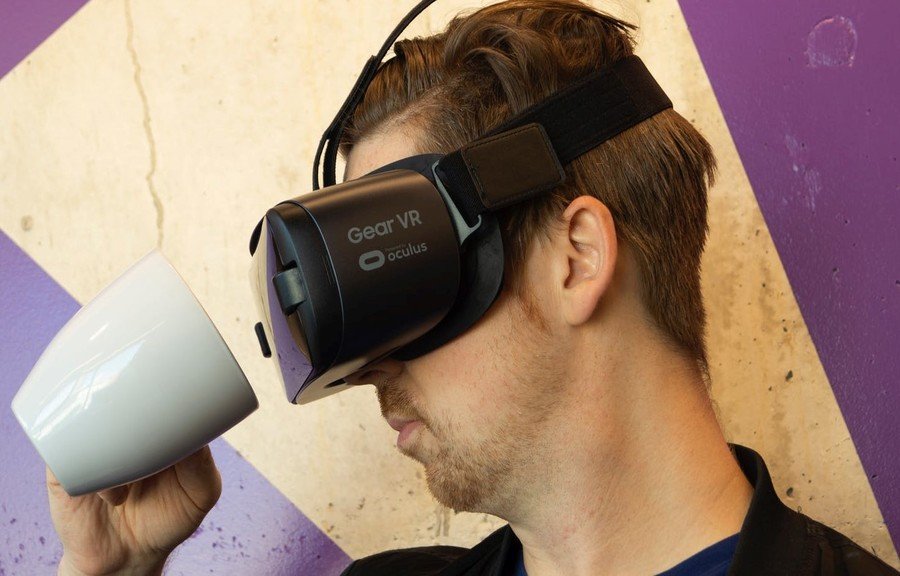
One of the key elements to solve the motion sickness issue is to have a large field of view (FOV), the extent of the observable world that is seen in the VR headset. Currently, there has not been a VR headset specifically for industrial applications. Industrial developers often pick major consumer VR headsets with a single screen for display, such as Oculus Rift, as the platform. These headsets typically offer FOVs of 100° to 110°. There are also VR cases with FOVs of 90° to 105°, such as Google Cardboard, which relies on smartphones to display images. Below is a list of VR headset products and their FOVs (FOV data source: VR Times).
The technical challenge of having large FOVs lies in how to convert a flat image into a curved image that can be perceived by eyes. In order to achieve larger FOVs, VR headsets will need dual screens, customized optics, or both. Among the devices available today, StarVR (210°), Rapture HMD (200°), and VR Union Claire (170°) have clear winning positions on the high FOV end thanks to their usage of dual screens. By having complex optics, such as Wearality Sky, a double Fresnel lens frame can improve FOV from 90° to 150°.
Dual screen and complicated lenses are only an imperfect interim solution: expect single flexible or curved displays to find traction in VR headsets in the longer term. Using a single display, the headset will need a very complex optical system to project the images into both eyes. Other than a large FOV, which to developers means horizontal FOV, VR headsets also face many more optical challenges, such as a large vertical FOV, high resolution, and fast refresh rate. As there is no perfect lens for everything, lenses used in Wearality Sky add significant weight and size to the headset, not to mention other optical issues like light-scattering. Having two displays can greatly simplify the lens design, but complicates the electronics design, and there is a trade-off of some optical performance. Therefore, a single piece of curved display with minimum optics will eventually be the best solution for an industrial VR headset when the technical challenges of manufacturing larger-area curved or flexible displays are solved.
Tony Sun is an Analyst on Lux Research’s Wearable and Flexible Electronics team. Lux Research provides strategic advice and ongoing intelligence for emerging technologies. Leaders in business, finance and government rely on Lux to help them make informed strategic decisions. Through their unique research approach focused on primary research and their extensive global network, they deliver insight, connections and competitive advantage to their clients.