
By Industry

‘Recycling’ AR/VR Applications for Design, Manufacturing, Training, and Sales
Only six years ago, Gulfstream used paper to design aircraft. Today, the company has significantly sped up the design cycle of new aircrafts with immersive technologies. From conception to manufacturing, marketing and customer support, Gulfstream’s engineers, designers and customers are taking full advantage of XR. In this EWTS 2020 case study, Drew Holbrook highlights the work of his extended reality team, the multiple benefits of AR/VR at Gulfstream, and how the technology enables Gulfstream to design one-of-a-kind government aircrafts, bring an actual airplane to the customer, and more. Catch Drew at EWTS 2021 this October online!
1 min read

A Virtual Reality Video Game for the Utilities Industry?
You better believe it! And that’s not all: VR simulations for an active shooter emergency situation, learning how to purge and walk down a gas pipeline, and more–all coming out of the XRLab at Duke Energy. Hear from the very people who ‘solicited’ VR projects from the XRLab along with the developers behind them and the ones using VR in the field. See demos of a wide range of VR experiences made even more valuable by the pandemic in this EWTS 2020 case study by IT Architect and Cybersecurity specialist John McGuire of Duke Energy. Catch up on all the AR/VR developments at Duke Energy from the past year at EWTS 2021, where John will once again grace the virtual stage. Learn more here.
1 min read
Mixed Reality and the First Woman on the Moon
A history-making asteroid sample on its way back to Earth, the search for ancient life on Mars, plans for the first fully commercial flight to space…these are just some of the exciting recent developments out of NASA. But for millions of women, girls and people of color around the world, perhaps the most exciting and inspiring NASA project is the Artemis mission. And this mission, which aims to land the first woman and person of color on the Moon by 2024, would not be possible without Mixed Reality and Lockheed Martin. Watch this video to hear from Lockheed’s Shelley Peterson, Michael Maxwell and Daniel Anger about how XR is powering not only the future of manufacturing but also inclusivity in space travel.
1 min read
AR/VR for Sales in the Age of Social Distancing: Mars Case Study
A two-fold case study perfect for social distancing and beyond: It took Mars only 10 weeks from kickoff to in-store demo for Mars Augment, a project that not only reduces travel and contact in the time of Covid-19 but also eliminates waste, with ramifications beyond the pandemic through which we’re currently living. Hear EWTS 2020 speaker Mark Christianson describe how Mars has been implementing augmented as well as virtual reality for sales at “zero distance to the customer” and remote training.
1 min read

XR and a ‘Great Reset’ for the Airline Industry
Since COVID-19, the future of travel has become fraught and uncertain. Let’s consider how airlines’ and airports’ use of XR and wearables will change post-pandemic given consumers’ reluctancy to travel, a sharp and likely permanent decline in business travel, and an economic recession. Pre-Corona Before the pandemic, airports around the world were hard-pressed to process more passengers and cargo than their terminals were designed to manage. By 2018, capacity issues had created a multibillion-dollar infrastructure crisis in the airport industry. Airlines had to deal with this crisis along with rapidly aging fleets, new customer demands (both the in-flight experience and sustainability), and a shortage of skilled workers. In response, airports and airlines experimented with and in some cases deployed immersive and wearable technologies to quickly process passengers, avoid delays, train cabin crew, and more. Outlook and Pain Points Clearly, the same pressures do not apply to the industry in 2021. Namely, there aren’t too many passengers; there aren’t enough. Airport renovation projects are at a standstill, and coronavirus has added a new dimension to keeping passengers safe and comfortable in the air. In addition, speed (faster boarding, plane turnaround, etc.) is not as paramount as health and safety. Due […]
6 min read

Home on the VRange: Immersive Tech in Residential Real Estate
Today, the U.S. housing market is nearing all-time highs following a long recovery from the 2007-08 global financial crash, which was fueled (in part) by the collapse of the housing market itself. Despite this, the traditional Real Estate market is challenged by a number of contemporary trends. Already enduring digital disruption via websites like Zillow and StreetEasy, the residential real estate sector must adapt, adopting emerging technologies to disrupt itself from within. CURRENT TRENDS & PAIN POINTS IN RESIDENTIAL REAL ESTATE Urbanization In addition to limited space and gentrification – major trends jacking up costs in urban neighborhoods – there is an unprecedented demand for ‘single-dweller’ housing in cities due to more and more young professionals choosing to postpone family life for professional and social pursuits. Startups like WeLive (WeWork) and Dwell offer innovative real estate models that address the anxieties of urban living and new socioeconomic realities. A young professional who would have scrambled to find a roommate on Craigslist (an early real estate disruptor) now seeks affordable, flexible co-living solutions like Ollie’s co-living microsuites and micro-living building in NYC that have a built-in social network and great amenities. The future of cities will be small, smart living spaces. […]
9 min read

Recreating Disasters and Training Claims Adjusters with AR/VR
Warnings and other use cases of AR/VR in Insurance: The UK-based insurer Allianz used augmented reality to generate customer awareness around the possibility of home accidents. The company built a model house that had an accompanying augmented reality (AR) app called “Haunted House.” Looking into the house through AR-enabled mobile devices, customers could view a variety of virtual accidents and dangers, including a toaster that starts to smoke and sparkle, a sink flood that breaks the bathroom floor, and a cracked aquarium. In a similar use case, Australian-based NRMA Insurance introduced a virtual reality (VR) car crash simulation that gave Oculus wearers the opportunity to feel what it’s like in a crash situation. The user (wearing a VR headset) experienced the accident sitting inside a real car that moved through a hydraulic system in coordination with the action in the virtual world. The goal of this campaign? To promote safe and careful driving. Customer Service: Betting on a future where virtual customer service is the norm, PNB MetLife recently launched “conVRse” – an immersive and personalized customer service simulation – across 10 cities in India. Wearing VR headsets, policyholders at a number of the insurer’s branches in India can interact […]
4 min read
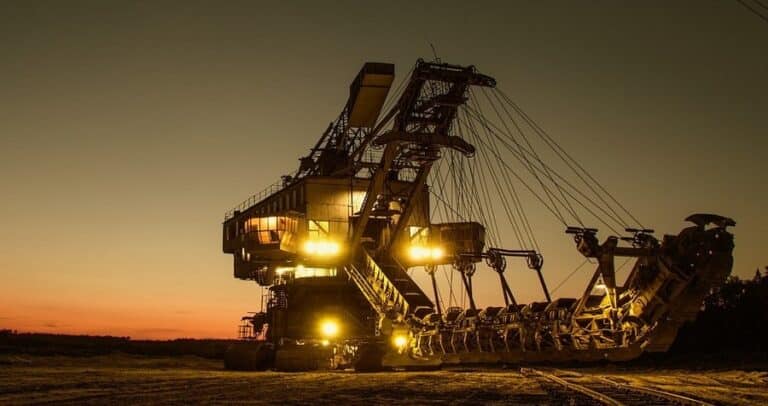
Digging for Digital Transformation Using AR/VR & Wearables: The Sustainable Future of Mining
Despite advances in technology, mining operations today are fundamentally the same as they were half a century ago. Faced with increasing demand, diminished ore grades, less accessible deposits, and public pressure to be more environmentally and socially responsible, mining companies must develop new techniques by adopting emerging technologies to evolve their industry. Trends and Pain Points in Mining Bad Reputation Mining has a less than stellar reputation when it comes to social and environmental impact. Despite technical advances and modern equipment, the mining industry as a whole has increased water consumption and is trailed by a legacy of poorly rehabilitated mines that have left behind chronic environmental problems like acid drainage. Mining companies can improve their image and build trust if they increase supply chain transparency and implement environmentally-sound practices that can stand up to regulatory pressure and the scrutiny of an increasingly aware consumer market. Firms must push innovation and R&D to find solutions (advancing techniques like biomining) to reduce their environmental footprint and mitigate the risk of large-scale incidents. Material Resources As the global population rises, so too does demand for minerals and metals. The depletion of near surface resources has pushed mining companies to look for lower-grade […]
9 min read

In-flight VR, Resort Bands, and AR Glasses for Tourists
Today, “every business is a tech business” and in every industry consumers’ digital customer service expectations are growing. A decade after the U.S. travel and hospitality industry emerged from the 2008 recession; industry players, including airlines, airports, cruises, hotels, and other travel brands, are feeling the heat to compete and earn the loyalty of a new customer base via emerging technologies. Trends and Pain Points in Travel and Hospitality Shift in Target Demographics Though Gen Y overtook Baby Boomers as America’s largest living generation in 2016, the demographic with the most purchasing power around the world today is millennials, and they don’t vacation like their parents. Travel brands need to both court and cater to millennials, who prefer to spend their money on experiences (like immersing themselves in another culture) over material objects and are more spontaneous and comfortable with tech than previous generations. Competition First it was online travel agents like Expedia and Priceline; then came Airbnb and VRBO—OTAs and the sharing economy have rocked the travel industry, altering distribution channels, taking business away from traditional industry players, and forcing airlines and hoteliers to compete online to win back customers. According to ADI, approximately 60% of all travel […]
8 min read

The Price of Drugs: Exploring New Realities in Pharma
Drug discovery, development, testing, approval, manufacturing, marketing, sales, and distribution—the pharma industry is defined by a number of processes – some years-long and all highly sensitive – that are coming under increasing strain due to rising demand, changing regulations, pricing pressures, the rise of personalized medicine, and the explosion of available data from new wearable devices. In response, large, mainline biotech firms like Pfizer and Novartis, smaller CMOs (contract manufacturing organizations), equipment manufacturers and others involved in the highly fragmented pharmaceutical sector are looking to emerging technologies to improve efficiency, speed up research and production, widen margins, and guarantee quality and safety. What is takes to develop a drug In the past, drugs were discovered either by isolating the active ingredient from a traditional remedy or completely randomly; today, molecular biology or biochemistry is used to manipulate the metabolic pathways related to a disease, with major pharma companies increasingly outsourcing this research to universities and biotech companies. Once a compound (potential drug) is identified, it costs an estimated $1.3 billion to develop it and over a decade to gain approval and begin commercial production. In most nations, only a small fraction of potential drugs is ultimately approved by government authorities, […]
7 min read

Using AR/VR for Assurance in Insurance
I recently watched a Netflix documentary about the Fyre Festival. Two things from the story really stuck with me: 1) Festival owner Billy McFarland failed to get festival insurance; and 2) He couldn’t (or wouldn’t) listen to reason, as multiple people told him it would be impossible to pull off such an ambitious festival in under six months. At one point, someone tried to show Billy – using a map spread out on a table – that the island venue could not accommodate the number of festivalgoers and luxury villas that had already sold. While watching, I thought about Virtual Reality, not because it’s my job but because immersive technologies might have prevented the disaster that Fyre Festival turned out to be. What if those around Billy had used VR to snap him out of his delusions? Or what if Billy had tried to get festival insurance? Might an insurance agent have used VR to “preview” the festival and ultimately denied coverage? Perhaps that would have convinced Billy to cancel the event. The insurance industry is, in fact, exploring virtual as well as augmented reality for a number of applications, including risk assessment, accident recreation, remote claims handling, and customer […]
8 min read

AR/VR and Wearables: Shaping the Future of Construction
Bechtel, Caterpillar, CDM Smith, MacDonald-Miller Facility Solutions, Martin Brothers Construction, Brady Services, Rogers-O’Brien Construction… These are just a few of the engineering and construction players who recognize the potential for wearables, AR and VR to increase efficiency and productivity, facilitate better communication and collaboration, and improve safety on the job site. When we last checked in on the construction industry, the difficulty of implementing wearables posed a great challenge. The devices weren’t robust enough, IT departments were unprepared, etc. Solution providers have since worked to make their products more suitable for construction environments, and companies are increasingly developing PoCs, setting up pilots, and thinking ahead. The construction industry is in need of disruption by wearable technology for a number of reasons: Poor Safety Safety is a top priority on every construction project and yet working in construction – as a laborer, equipment operator, steel worker, carpenter – is still one of the most dangerous occupations in the world. The most workplace accidents? Construction. One of the highest rates of fatal injuries? Construction. OSHA has even dubbed a nickname, the Fatal Four, for the leading causes of construction worker deaths: Falls, electrocutions, getting struck by an object, and getting caught in/between […]
11 min read
Augmented Enterprise Newsletter
Get bi-monthly insights on AI, XR, digital twins, and related emerging enterprise technology delivered to your inbox.