
By Application

3 Companies Using XR to Promote Sustainability
AR/VR/MR (XR) is aiding in the transition to a low-carbon economy in a number of ways, for instance by reducing business travel and reducing waste early in the design process. Check out 3 companies who’ve used immersive technologies towards greater sustainability. BURGER KING What first comes to mind when you think of sources of plastic pollution? For me, it’s grocery store bags and drinking straws, but what about plastic toys? Around 80% of plastic toys end up in landfills, incinerators, and the ocean. Burger King has been experimenting with replacing plastic toys altogether with experiences. In 2016, in its South African restaurants, the fast food giant offered an AR game with every junior meal instead of a physical toy. Users downloaded the mobile Defend The King app and scanned a game marker in the Burger King restaurant to access the short, easy-to-play game. CHIQUITA BANANA In 2018, Chiquita Brands International rolled out 200 million Chiquita Banana blue stickers bearing a code to access an AR experience. The “Behind the Blue Sticker” campaign is essentially a virtual product development journey. Shoppers virtually follow a banana as it travels “from farm to shelves.” They even get to meet the Latin American farmers […]
2 min read

Synergies Between XR and Sustainability in Industry
How can immersive technologies help manufacturers and other industrial companies meet ESG (environment, social, and governance) goals? Alarming orange skies over NYC, devastating wildfires in Maui, intensive heat waves around the world…the evidence of climate change is glaring. Despite this, the world’s biggest companies – the largest contributors to the climate change crisis – have done almost nothing to limit global warming. Demand Sustainability SHOULD be on every corporate agenda, not just because it’s the right thing to do but because employees and customers are increasingly demanding it. 77% of Americans are concerned about the environmental impact of the products they buy. These consumers consider a company’s “sustainability credentials” and have shown that they’re willing to pay a premium for sustainable products. At the same time, a majority don’t believe companies’ environmental claims. Though demand for businesses to be eco-conscious isn’t demographic-specific, a whopping 90% of Gen Zers say companies have a responsibility to the environment (McKinsey). Sustainability matters to them as both consumers and employees: Younger workers have higher “eco-anxiety” and are willing to reject and leave jobs based on their climate change values. Role of XR AR/VR/MR (XR) or extended reality can aid in the transition to a […]
6 min read

Unveiling the Power of Eye Tracking in the Latest VR Headsets
Built-in eye tracking is standard in next-gen Virtual/Mixed Reality headsets (ex. Vive Pro Eye, Varjo XR-3, Meta Quest Pro, Apple Vision Pro), opening up a number of compelling applications that should be on your radar. Training & Performance Not only does eye tracking make for more immersive and realistic VR training experiences, it also enables gaze-based triggers and real-time performance feedback. When it comes to flight simulations, surgical training, and other complex, high-precision industrial training, the natural interaction (gaze as an input method) and headset performance improvements (foveated rendering) that are possible with eye tracking are key. Consider the nuclear power industry and more specifically the control room of a nuclear power reactor: Training for this environment is difficult and physical simulators expensive, especially for emergency scenarios and radioactive areas of the plant. This is why Fortum, a Finnish energy company, built a dedicated Varjo headset-equipped space for control room operations training. In this scenario, trainees viewed virtual procedure manuals and control room displays, the movement of their eyes indicating whether they located the correct manual or panel switch in the VR simulation. With attention tracking (including blinking, pupil dilation, and other eye movements) and additional biosensors (skin, sweat, heart rate, etc.), proficiency testing […]
3 min read
From Airbus to Volvo: 5 Recent XR Use Cases in Enterprise
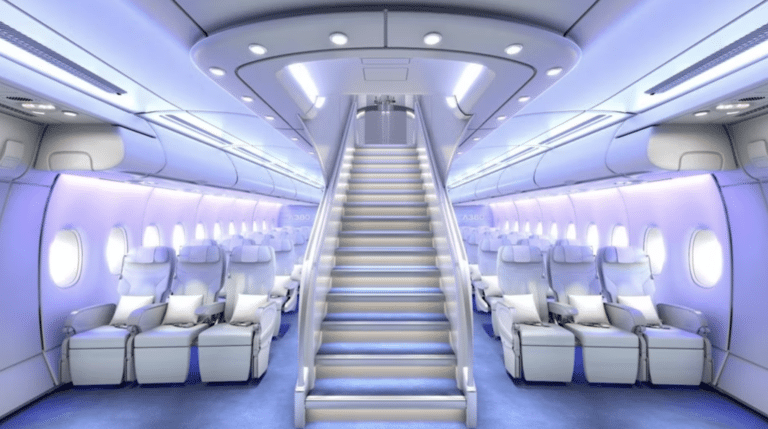
Though Apple Vision Pro is slated for release sometime early next year, companies haven’t been biding their time when it comes to extended reality or spatial computing. For several years now, companies have been testing the immersive waters and even fully integrating AR/VR/MR (XR) devices into their workflows. These organizations are in the best position to take advantage of the impact of Vision Pro; in a way, they’re growing their capabilities as the metaverse grows into whatever it’s going to turn into. Here are five recent examples of global companies using or planning to use XR. Airbus: Design Viz x Remote Collaboration x Sales & Marketing Airbus is planning to use Mixed Reality for remote collaboration with customers, more specifically to help air lines design their cabins. The aerospace firm recently debuted this immersive interior customization concept, which would allow customers to “essentially step inside” a 3D model of their aircraft and provide live feedback to the designer(s). Users can make real-time changes to the configuration, seat types, materials, colors, etc.–all around a better way for clients to both visualize the craft before it’s built and provide input. The program should go live in 2025 in time to be used […]
4 min read

The Enterprise Metaverse is Actionable Today, Starting with Digital Twins
A convergence of advancements around data collection, artificial intelligence (AI), computing power, and immersive visualization are enabling next-generation digital twins: Highly detailed, interconnected, persistent, and collaborative digital replicas of products, processes, and systems. We’re already seeing some advanced, long-term use cases for digital twins from global companies and even individual cities, providing the first indications of what the enterprise or industrial metaverse could look like. The enterprise metaverse begins with digital twins An enterprise metaverse can be described as a persistent, immersive simulation of an organization’s entire operations. Enterprise metaverses are made up of many interrelated or linked digital twins, each of which corresponds to (i.e., looks and behaves like) a real asset such as a product, piece of equipment, factory, or supply chain. As opposed to standalone 3D visualizations, the next-level digital twins emerging today are interactive working virtual copies of their physical counterparts. They can represent anything from a single component to an entire building, the ultimate vision being to replicate and connect every asset, workflow, system, facility, and even person within or related to an enterprise in the virtual world. Types of digital twins In my research, I discovered several categories of digital twins, none widely used […]
5 min read

Human Digital Twins: Role of Avatars in Enterprise
Whenever I read about a future in which we meet as avatars in virtual conference rooms, my first thought is always “What will my avatar wear?” What is appropriate workplace attire in the metaverse, and will our work avatars be required to look like us? Surprisingly, professional avatar etiquette is not a new concern. Back in 2009, Gartner analysts recommended employers establish ground rules for employee avatars, predicting that 70% of companies would have a digital dress code and other guidelines for employees in virtual business settings by 2014. Of course Gartner’s prediction did not come true, but it did highlight an aspect of the enterprise metaverse that’s overshadowed by the current aesthetic and technical challenges of avatar creation: Digital identity in the virtual workplace. Theoretically, your avatar could be anything. It could look and act completely different from you in the real world, but should it? For some people, that’s the appeal of the metaverse–new possibilities for self-expression. Others warn of digital identity fraud, “deep fakes,” and new types of cybercrimes, which is a whole other discussion. Let’s start with the basics: What is an avatar and what is the difference between an avatar and a digital human? The […]
8 min read
Introducing the BrainXchange Directory of Enterprise XR Use Cases
Today, we’re launching the BrainXchange Directory of Enterprise XR Use Cases, a living, breathing list of companies who have or are currently testing and using immersive technologies for applications such as remote support, training, design, marketing, and more. We’ll be updating the list weekly with the latest use cases as well as classic or pioneering ones from circa 2015-2018. By no means an exhaustive list, the directory is intended as a resource and source of inspiration for businesses of all sizes looking to begin or expand use of AR/VR/MR in the workplace. The Directory Come to Life: Augmented Enterprise Summit 2023 Discover the latest enterprise XR solutions and hear from 90+ Fortune 1000 enterprises using immersive and related technologies at the Augmented Enterprise Summit 2023 taking place October 24-26, 2023 in Houston, TX. Learn more.
1 min read
Year in Review: Top XR Use Cases of 2022
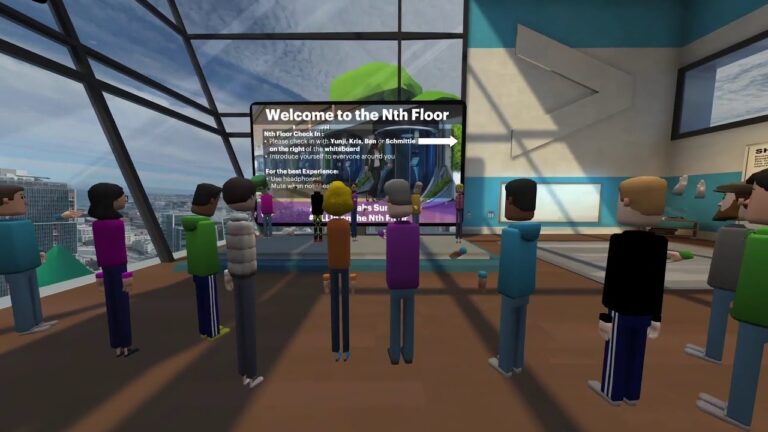
In 2020 and 2021, augmented reality remote support went mainstream and virtual reality training use cases exploded. Though training and remote support remained the top two AR/VR/MR (XR) applications in enterprise in 2022, organizations also explored virtual meetings and committed to digital twins. Here are some use cases that stood out: Remote Support Dozens of companies in a wide range of industries tested, deployed, and expanded their use of XR for remote support this year, including: State Farm developed a POC for small business policy quotes conducted via VR headsets. Apple engineers in Cupertino continued to rely on AR to check factory issues at Chinese plants; while ReNew Power, in its transition away from fossil fuels, adopted Librestream’s Onsight solution to virtually connect workers, contractors, and SMEs. In March, Mercedes-Benz deployed Microsoft Teams on RealWear HMT-1 at 56 service centers in Turkey. Hyundai announced plans to leverage TeamViewer’s Frontline AR platform at its Singapore innovation center to support assembly, maintenance, and other critical business areas. Indian chemicals conglomerate SRF Limited also implemented TeamViewer’s platform across four plants in July, while Ricoh customer engineers have been carrying Vuzix M400 glasses for instant support on the job. Training Immersive training […]
4 min read

10 Real-World Examples of ROI from XR
In a 2018 Capgemini report, 82% of companies who were then implementing augmented and virtual reality (AR/VR/MR or XR) technologies said the benefits exceeded their expectations. Four years and one global pandemic later, the number of companies using XR has only grown along with the technology itself. Here are 10 examples proving the ROI of XR is real and measurable at some of the world’s biggest companies: APTIV Using VR (Oculus + Gemba VR learning platform), the auto company has reduced in-person driver-focused education requirements from 2 days to just 4 hours. Aptiv had been flying experts around the world for intensive on-site training with small groups, each over a three-day period. VR not only eliminates travel costs and speeds up training but also minimizes waste. BMW The luxury automaker reduced production planning time by 30% using NVIDIA’s Omniverse to simulate every aspect of its manufacturing operations, down to work instructions for factory workers in 31 factories. BMW is also using or has explored XR for vehicle design, user experience testing, aftersales remote support, workstation planning, engine assembly training, and marketing. BOEING The aerospace giant reduced training time by 75% using Microsoft’s HoloLens mixed reality headset. Boeing began using HoloLens […]
3 min read
Practice makes perfect: Real-world use cases of VR soft skills training
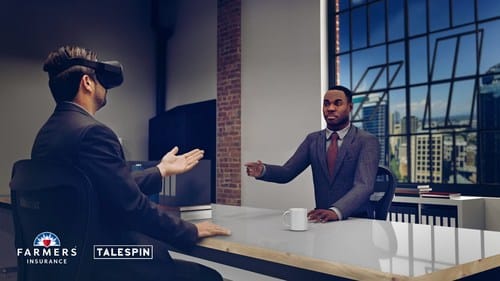
For most companies (and employees), soft skills, diversity and inclusion (D&I or DEI), anti-harassment, and other HR trainings are about checking a box, not really about driving behavioral change or improving workplace culture. But there is a strong business case for improving and investing in this kind of training. Consider that employers paid out a record $68.2 million to employees alleging harassment in 2019 (EEOC), or that ethical companies tend to be more profitable than their peers. Is virtual reality (VR) the key to getting customer service, DEI, and similar training programs to “stick?” Immersive training involves the trainee or employee interacting with one or more avatars to practice skills in a simulated (virtual) work environment. The trainee may wear a virtual reality headset or access the training via WebXR. Why does it work? VR is essentially a safe place to fail with unlimited do-overs. Emotion is heightened as the realism increases, leading to higher retention. Scaling is also easier, as headsets can be shipped to employees all over the world. Today, companies like Verizon and Walmart are turning to VR for new hire onboarding, empathy training, de-escalation training, sales training, leadership development, conflict resolution training, and even fraud protection. […]
5 min read
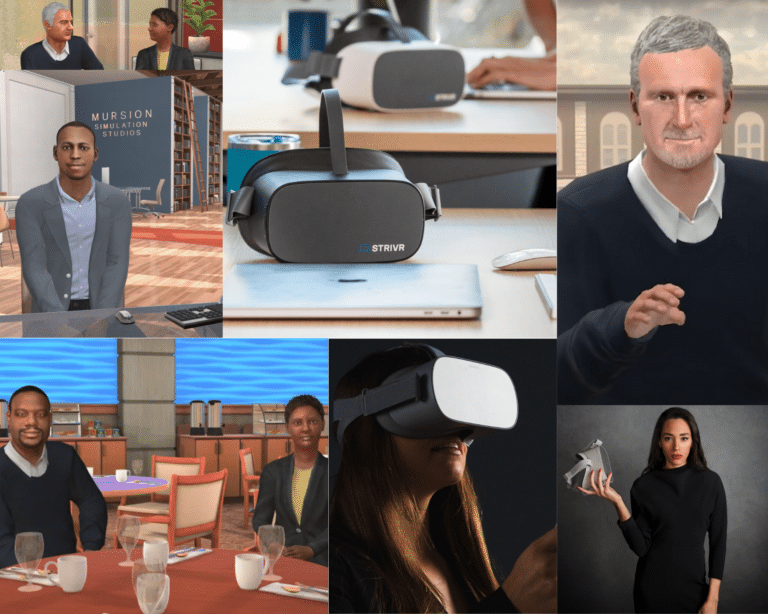
Soft Skills, D&I Training Go Virtual: The VR Companies Changing the HR Game
Enterprises struggling to deliver critical employee training across platforms and geographies have been turning to extended reality. PwC predicts that 23.5 million jobs could be using augmented and virtual reality by 2030 for training, work meetings, and customer service. This includes soft skills, empathy-based training, and compliance training—difficult to teach even without the hurdles of a global pandemic. Prior to March 2020, virtual reality was gaining in popularity for hard skills training. Not only is it safer to learn to drive a forklift or operate a machine in a virtual setting, but the technology replaces the need to requisition expensive assets for hands-on training. Soft skills, too, can be less risky and more comfortable to learn in VR. It’s the difference between learning from the real-life experience of a difficult customer and being able to practice all kinds of challenging customer service scenarios without angering a real person. When it comes to anti-harassment or diversity and inclusion (D&I) training, well, just imagine a male colleague virtually stepping into the shoes of a female colleague, or a white employee participating in a meeting as a person of color—powerful stuff. Here are some of the companies advancing the use […]
4 min read
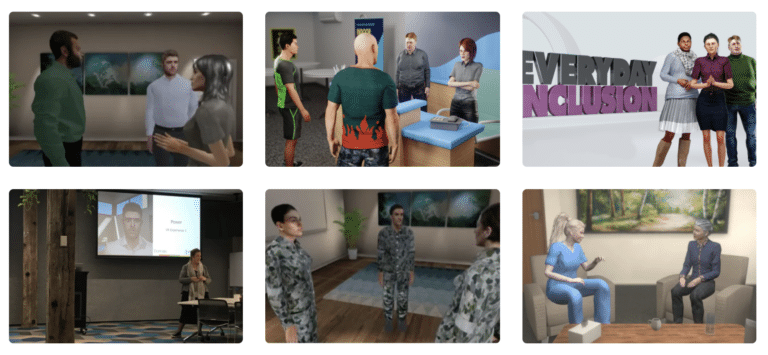
Soft Skills But They’re Not Easy: How Virtual Reality is Modernizing HR
We’ve previously written about the use of XR in HR for soft skills training, as well as anti-harassment and diversity and inclusion training. Since the pandemic began, AR/VR/MR (XR) has become the only way to deliver this training to employees in many cases. Moreover, COVID has created new sensitive situations in many industries such as customers refusing to wear masks in stores, restaurants, and the sky. DEMAND The skills gap isn’t limited to hard skills; there’s high demand for soft skills from both employers and their employees as more tasks are automated and new Covid strains continue to make remote work necessary. Even pre-pandemic, 92% of companies said that human capabilities are as or even more important than hard skills in business today. More recently, 59% of hiring managers and 89% of executives reported difficulty in recruiting employees with the desired soft skills. These include communication, teamwork, leadership, conflict resolution, customer service, creative thinking, good judgement, and more. CURRENT TRAINING Statistics show that traditional sexual harassment training was inadequate before the pandemic despite greater focus on creating safe and diverse workplaces. The move to remote work hasn’t changed matters much. In fact, according to Project Include, gender-, race- ethnicity-, and […]
3 min read
Augmented Enterprise Newsletter
Get bi-monthly insights on AI, XR, digital twins, and related emerging enterprise technology delivered to your inbox.