
By Application
Enterprise XR Use Cases: 2021 Year in Review
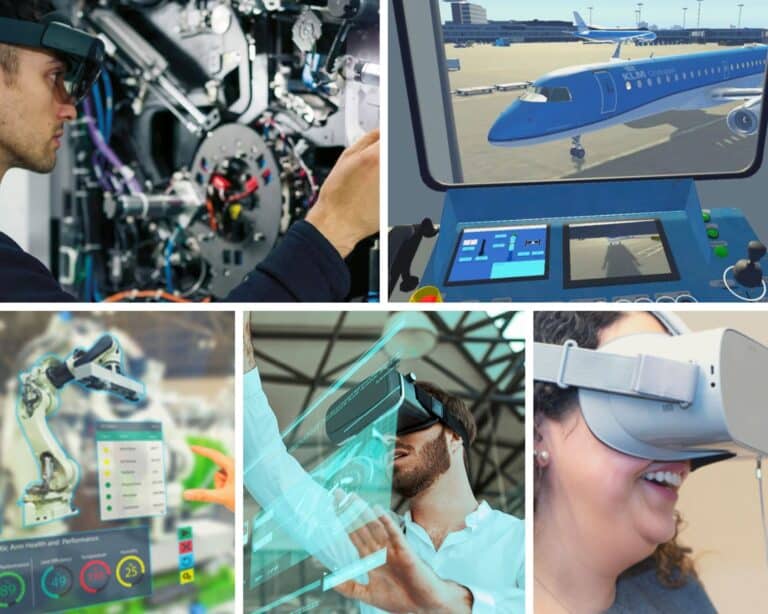
Tired of the word ‘metaverse’ yet? In 2020, augmented reality remote support went mainstream, and people began to seriously discuss the virtual workplace of the future. In 2021, remote support and virtual training use cases exploded and the virtual workplace (virtual enterprise) got a new name: The Metaverse. Applications like remote collaboration and immersive training became even more critical as companies dealt with the Great Resignation and global supply chain issues. And Apple and Facebook (sorry, Meta) dominated XR news with rumors of consumer AR glasses in development and Zuckerberg’s vision for the future of work. This year, AR/VR/MR (XR) stepped up to alleviate labor and supply chain shortages. Here are the use cases that stood out: Training Increasing use of XR for soft skills training In October, Accenture acquired 60,000 Oculus Quest 2 headsets for training new hires, perhaps the largest deployment of VR headsets to date. The news followed Bank of America’s rollout of VR for training approximately 50,000 employees across nearly 4,300 financial centers in North America. Users will practice tasks such as notary services, empathy, and typical client interactions. In November, wealth management group St. James Place rolled out 200 Oculus Quest headsets for roleplaying across […]
4 min read

Metaverse, Huh, What is it Good For? Top Enterprise Use Cases
Bloomberg predicts the metaverse will grow into an $800 billion market opportunity by 2024. 44% of respondents in a Lenovo survey say they are prepared to work in the metaverse. Companies like Mercedes, Nike, Coca-Cola, and Boeing are already experimenting in the metaverse. So, what is the metaverse? The metaverse, in short, is a vast, persistent, and interactive virtual world in which people will shop, socialize, get information, entertain themselves, and work in the future. It has been called both the next generation of the Internet and, as one article phrased it, “a souped-up version of virtual reality.” But the concept isn’t new, and the metaverse – in its most idealistic form – does not and may never exist. Today’s metaverse is a rebranding of existing VR technology. In truth, enterprises have been creating and experimenting with immersive experiences, or metaverses, and the devices used to enter the metaverse since 2015. Continued advancement of the underlying technologies along with changing social norms promise to take their use cases to the next level. Here are 3 use cases for the enterprise metaverse: REMOTE WORK/VIRTUAL OFFICE There are many upsides to virtual office space for employers and employees alike, and the […]
4 min read

Safety Wearables: Good for Business
COVID-19 has added a new dimension to worker safety, but wearables are poised to help. Wearable technology can augment a range of workplace safety efforts, from body-worn sensors capable of increasing workers’ situational awareness to exoskeletons capable of reducing the risk of musculoskeletal injuries and in turn lowering injury costs and absenteeism. Even smart glasses, just by keeping workers heads-up and hands-free, can have a huge impact on employee safety. Check out this video from EWTS 2020 to hear about wearable EHS applications at DOW, AES, Boeing, and more. EWTS 2021 will once again tackle this topic, with an emphasis on returning to work post-pandemic. Image source: Kenzen
1 min read
AR/VR in Design: Spatial & Emotional Visualization
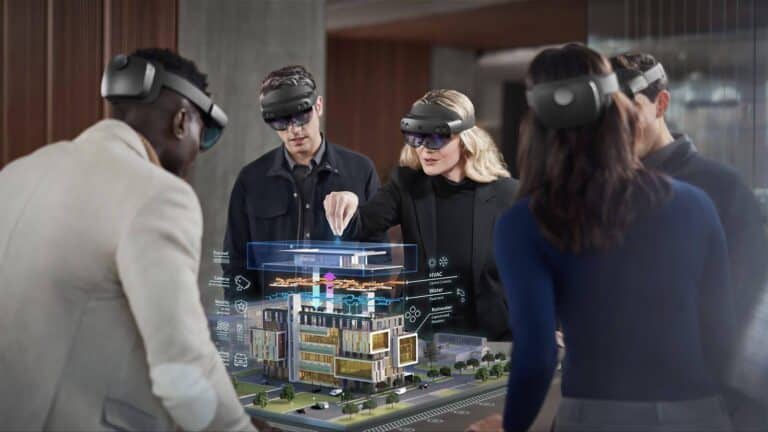
The benefits of immersive technologies for design and asset visualization are numerous, including reduced costs (no need to build expensive physical prototypes, less rework, etc.), improved sustainability, and faster (remote) design reviews. In this panel from EWTS 2020, end users from Gensler, AECOM, Toyota and BASF share how they’re using augmented and virtual reality to communicate ideas visually from the initial stages of design through to assembly, construction and more. One big takeaway: The spatial and emotional are linked when it comes to immersive experiences; understanding things on a spatial level allows for greater emotional understanding, too, to a degree not possible with traditional visualization solutions. Image source: ZDNet
1 min read
What it Actually Takes to Collaborate Remotely Through XR
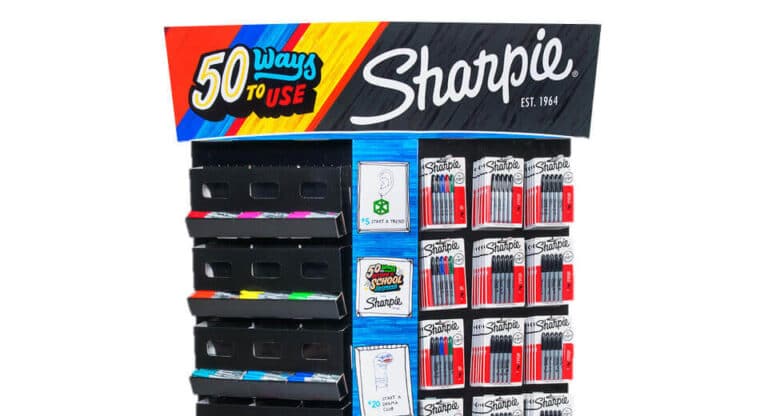
From building the right internal team to pulling the right files for conversion, what does it actually take to adopt XR remote collaboration in a business? In this case study, WestRock’s Scott Burkey describes the how: How WestRock is able to create AR/VR models of consumer packaging products and present these models to customers for review in lieu of shipping physical store display prototypes back and forth. Learn all about the Immersive Product Design (IPD) program within WestRock’s Center of Excellence. But that’s not all: WestRock is also using AR/VR for guided workflows in its factories and immersive training. Enjoy! Image source: WestRock
1 min read

Cheaper, Flexible, Safer: The Many Benefits of XR Training
Immersive training, including AR-enabled over-the-shoulder coaching and virtual simulations, was one of the top enterprise XR use cases before COVID. When the pandemic put a halt to travel and in-person classroom learning, the benefits of AR/VR for training only shone brighter. Going forward, these benefits – reduced travel (ability to deliver training directly to employees), greater flexibility (ability to simulate any scenario), etc. – guarantee XR will be an onboarding and upskilling standard across industry. Revisit this panel from EWTS 2020 featuring experts from Walmart, AtlasCopco, Bridgestone, Solvay, and Re’flekt to hear more. Image source: Auganix
1 min read
Digital Twins: Not Just for Industry – XR in Sales & Marketing
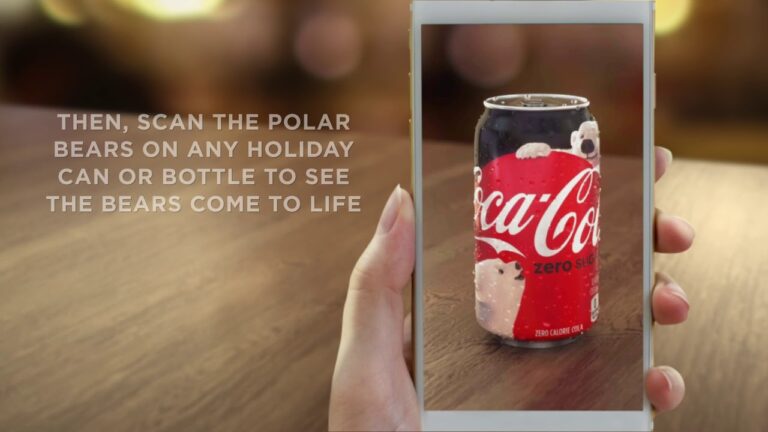
When you think of immersive technologies in Sales and Marketing, what do you picture? Using your smartphone camera to place pieces of virtual IKEA furniture in your home? When it comes to applications for XR in marketing, it’s not all mobile AR and virtual try-ons. Brands are definitely leveraging XR for storytelling and customer engagement, but there are also highly practical consumer-facing use cases for XR in sales. With nearly every big tech company working towards mainstream consumer AR glasses and the rise in sales of Oculus Quest 2 during the pandemic, now is a great time to revisit this panel led by SuperData‘s Stephanie Llamas from EWTS 2020. Discover how Adidas, Coca-Cola, REI and Thermo Fisher Scientific are creating both external (consumer experiences) and internal immersive apps to boost brand engagement, solve real customer problems, and become better retail operators. Think digital twins are just for industry? Think again: Learn how creating a pipeline of digital assets beginning at the source of creation can take you all the way through customer interaction. Image source: Coca-Cola
1 min read
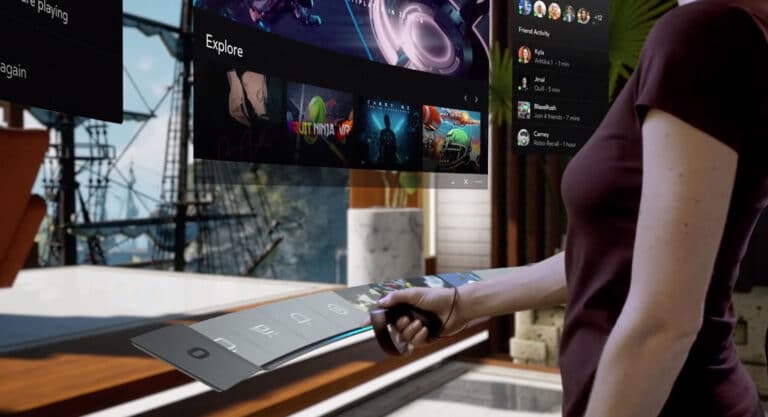
From Surviving to Thriving: XR Helps Enterprises Stay Cutting-edge, beyond COVID-19
Over the last several months the coronavirus pandemic has reshaped how companies in all industries think about remote work. For one, COVID-19 forced businesses everywhere to quickly improvise work-from-home arrangements in compliance with varying travel bans, social distancing and stay-at-home orders. In turn, the virus has (arguably) ‘made the case’ for the role of remote in the future of work, proving that work-from-home is possible on a greater scale and in a shorter timeframe than previously imagined. Why is this a good thing? Read The Case for AR/VR Remote Work from Home. To maintain operations and keep employees safe in the ongoing pandemic, more and more businesses are turning to augmented and virtual reality (AR/VR or XR), particularly XR remote support, training and collaboration solutions. A big step up from familiar video conferencing solutions like Zoom, AR/VR allows teams to effectively collaborate, train, and deliver services from a distance. (Basically, you don’t have to completely cease operations.) In a lot of cases (as you’ll read below), the pandemic ‘simply’ pressed fast forward on companies’ existing AR/VR plans. Though there were plenty of case studies demonstrating the benefits of immersive tech at work pre-pandemic (not to mention the first rollouts at […]
6 min read
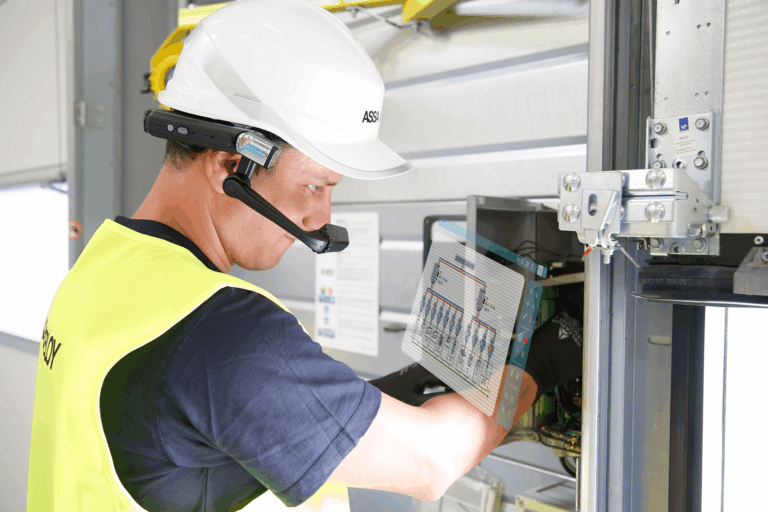
The Future of Work is Digital, Now and Remote: AR Remote Support for Accelerated Digital Transformation
Not all remote support solutions are created equal. This is becoming abundantly clear as organizations seek to improve upon their improvised remote work arrangements in the time of Covid-19. Since March and for the foreseeable future, companies in every industry have had to adopt remote working in order to comply with travel restrictions, quarantine and social distancing measures; and what they’re finding is that traditional video conferencing solutions aren’t effective or secure enough for modern industrial operations. Augmented or Assisted Reality-enabled remote support isn’t new. Pre-pandemic, companies were already adopting and testing smart glasses and other AR-capable devices along with remote assistance and collaboration software to cut down on travel and downtime, even for remote training. Coronavirus has accelerated these efforts and forced all businesses to rethink how they work. If anything, this global ‘experiment’ across the enterprise has revealed that it is possible to work from home, that a good remote support/communication solution is critical to do so efficiently, and that the future of work will never be the same. In a new complimentary white paper from AMA, learn about the trends and challenges making digital transformation essential across industries, from Coronavirus to the growing skills gap. Understand why […]
2 min read
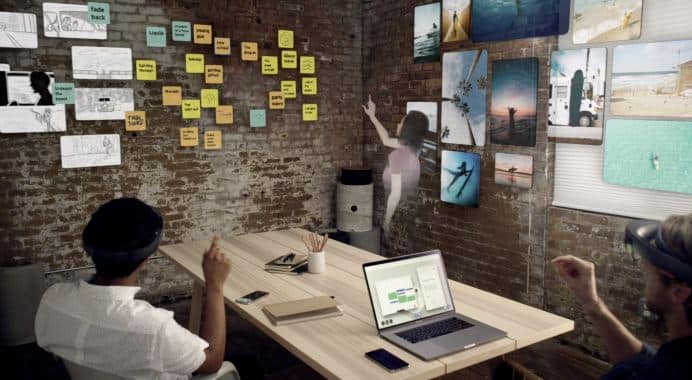
Is Remote AR/VR Collaboration Really Ready?
There are many challenges of quarantine but one that augmented and virtual reality might solve is the challenge of remaining productive while working from home in isolation from your teammates and clients. And, yet, augmented reality glasses aren’t yet an everyday consumer device or even an everyday tool in the workplace, save for certain tasks in a range of industries and for remote support in the field; and while Oculus Quest and Valve Index have sold out several times, not every home has a virtual reality headset. So, during this time and for the foreseeable future, we find ourselves leaning on solutions like Slack, Zoom, Google Docs, and the classic conference call. AR/VR is already a reality, however, for remote design collaboration. Perhaps it’s because existing visualization technologies translate easily into XR or because immersive tech really lends itself to that kind of work (design). In any case, the AEC industry can serve as inspiration for applying AR/VR to other collaborative tasks: Designing a building is an increasingly collaborative process. The core design team might consist of an architect, a few engineers (structural, mechanical, services, fire) and specialist designers (landscape, interior, acoustic); and they might be supported by various experts and […]
5 min read
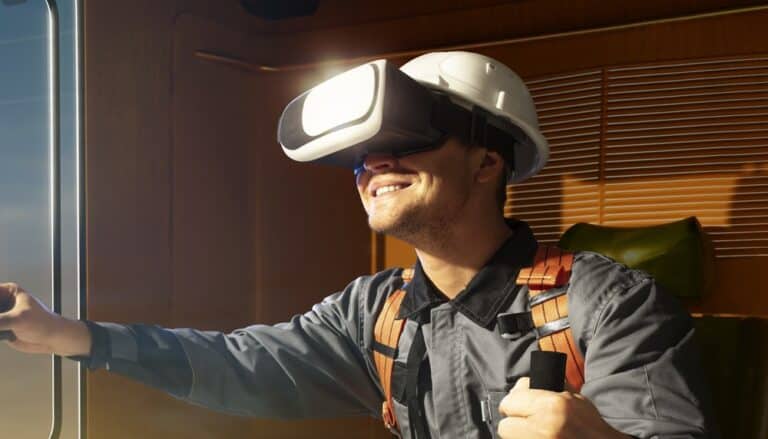
XR Training Gets Real at EWTS
Augmented Reality and Virtual Reality are disrupting the ways enterprises train employees. Each year, the Enterprise Wearable Technology Summit (EWTS) hosts the industry experts who are leading this application of immersive technologies. Training is an umbrella term. Breaking it down, AR/VR is being applied to: · Advance training for hazardous environments and operation of expensive equipment· Engage new workers and secure career knowledge of longtime employees· Onboard new staff and train employees remotely all over the world· Train for undesirable and emergency scenarios· Curtail time needed to train hands-on large and costly machinery· Reduce overall training time, increase retention, and cut training costs· Enable on-the-job learning, plus continuous and soft skills development While adoption takes time to fully integrate, the technology is here and ready to be implemented. AR/VR is currently saving time, money and even lives, improving the employee experience from the factory floor to the board room. Check out the training and learning experts signed on to present at EWTS 2020: Walter Davis,Head of Talent and Learning Technology Jennifer Rogers,Head of Learning Bode Oluwe,Technology Advisor Paul Daley, Learning Specialist John McGuire,Senior IT Architect – Cybersecurity Jefferson Welch,Managing Director, Fedex Ground University Marco Madrazo,Director, Learning Experience Design Brandt Wilson,Director […]
1 min read
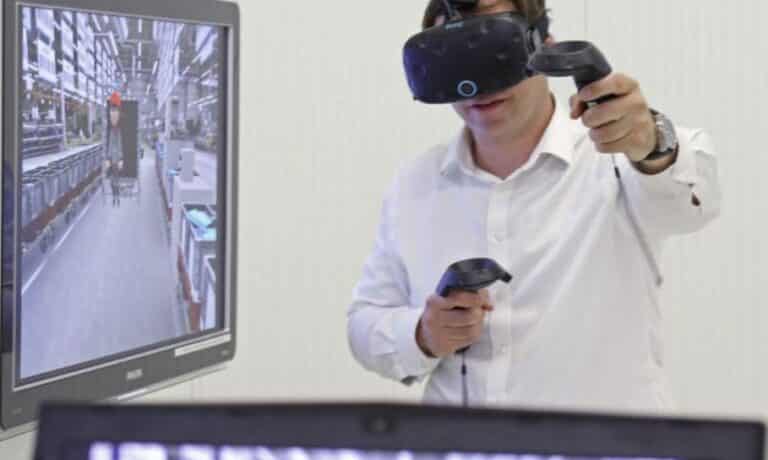
Education, not Automation, is the Problem: 21st-century Job Training with XR
Many people fear the day when drones, robots and self-driving cars will replace human workers. This is understandable and it’s not only delivery drivers who have reason to fear—computer algorithms (artificial intelligence) could potentially replace entire departments of human employees. Though many industries and job professions are experiencing existential crises, the future will not be jobless. It will, however, be quite different, with new jobs and more employee turnover (in pace with advancing technologies) requiring humans to be able to quickly and effectively train and retrain for new roles. Today’s workforce is aging. Simultaneously, current workers and new members of the workforce (millennials and soon Gen Z) are being forced to compete against cheaper labor around the world, against technology and automation, etc. in a rapidly changing global (and gig) economy. There isn’t a lack of jobs; in fact, as certain jobs are being automated, other positions requiring higher (and often more technological or advanced) skills are being created. Today, millions of jobs requiring a trained human touch are going unfilled because there aren’t enough workers equipped with the skills to fill them. The problem isn’t automation; it’s education. What we have is a training problem and the solution is […]
6 min read
Augmented Enterprise Newsletter
Get bi-monthly insights on AI, XR, digital twins, and related emerging enterprise technology delivered to your inbox.