
By Application
Wearables in Risk Management: Interview with AIG’s Ron Bellows
I got to sit down and talk with Ron Bellows, Risk Strategist at AIG. What resulted is a fascinating- but long (it’s worth it) – read and a wealth of information. Ron will be speaking at EWTS 2019. E: To begin, could you provide our readers with a little background on yourself and what you did at AIG? Also, when did you first encounter wearable technology? R: I’ve been a risk management consultant with multiple insurance companies since 1980. I started playing with wearables probably as early as 1985/86. You may remember Cybermatics: Surface EMG measuring technology was connected to cyber gym equipment for rehab and prevention, so that when someone was working out – in the sports or medical world – you could actually see what the muscles were doing with the surface electromyography. It’s kind of like an EKG. Your heart is a muscle; surface EMG looks at other muscles. Around ’86, I was working with a physical therapist doing studies on sports medicine and rehabilitation that might have application in the industrial environment. Many workers’ compensation injuries are expensive strain and sprain injuries impacting the musculoskeletal system. Biosensors, from a rehab standpoint, help us manage treatment for […]
14 min read
XR in HR: AR/VR for a Different Kind of Training in the Workplace
A report released last year by the Equal Employment Opportunity Commission (EEOC) contained some shocking findings: 45% of harassment claims made to the EEOC are sex-based. At least one in four women experience sexual harassment in the workplace. Around 90% of employees who experience harassment – whether sexual or on the basis of age, disability, nationality, race or religion – do not file a formal complaint. 75% of victims who do report harassment experience retaliation. The bottom line Every year, sexual and other types of harassment cost companies dearly in time and money. According to the Center for American Progress, workplace discrimination costs businesses approximately $64 billion annually. Hostile work environments also negatively impact productivity, contribute to high turnover, and harm a company’s reputation. And it’s not just harassment. According to McKinsey, unconscious bias is a 12 trillion-dollar issue, which means we could add $12 trillion to the global GDP by 2025 by ‘simply’ advancing gender parity and diversity in the workplace. Gartner finds that inclusivity is profitable, especially at the executive level—inclusive companies outperform industry standards by 35%, generate 2.3 times more cash flow per employee, and produce 1.4 times more revenue. Evidently, diversity pays in money, innovation, decision […]
6 min read

AR/VR Innovation at Nissan, Adidas, ADT and More
Emerging technologies are taking root across industries. Learn how a wide variety of enterprises are applying new technologies in this summary of the most recent use cases of AR/VR and wearables: Fast and Secure Customer Service via AR Customer support is a key consideration for companies purchasing expensive, mission-critical equipment. When an urgent repair is needed, inefficient customer support practices can unnecessarily prolong costly disruptions to operations. Swiss machinery manufacturer Bobst understands that continuous improvement of their customer service practices is important to guarantee the integrity of their products and earn customers’ loyalty; which is why the company recently deployed the Helpline Plus AR system. This was intended to boost Bobst’s capacity to respond to customer requests quickly and efficiently, and indeed the solution did improve the performance of Bobst’s help desk technicians. Augmented reality (AR) gives Bobst’s technical experts the ability to remotely diagnose and remedy a customer’s problem from anywhere in the world. Heads-up AR headsets deliver a two-way video and audio connection over a secure WiFi connection for real-time, visual remote guidance. With the customer wearing an AR headset, a support center-based technician can inspect the machine in question and give easy-to-follow troubleshooting and repair advice and […]
8 min read
Attracting Millennials with XR: The Future of On-Demand Training and Continuous Skill Development
JRCS, a Japanese supplier of maritime systems, is the latest company to partner with Microsoft to test the HoloLens Mixed Reality headset for training purposes. Volkswagen recently became the first car manufacturer to go “all in” on Virtual Reality training for its employees across the globe. UPS, Walmart, Linde North America, KLM Royal Dutch Airlines—all exploring XR as a tool for training employees in lieu of lectures and slideshows. And it’s not just training; as we’ve covered extensively on this blog, organizations in nearly every sector are equipping workers with XR devices to assemble aircraft, repair equipment in the field, inspect vehicles, and more. Why is this remarkable? Because workplaces are changing, and the workforce is getting younger. There is a reason some game developers are switching gears to enterprise content development—in just a few years, a generation raised on video games and technology in classrooms will make up 50% of the global workforce. There are 75 million millennials in the U.S. alone, all working age (roughly 18 to 35), and their outlook on life and work is very different from that of their middle-aged Gen X predecessors and the baby boomers reaching retirement. Millennials should matter to enterprises. They’re […]
7 min read
Ditching the robot, training manual, pills and stock room for XR and wearables
4 Recent Use Cases of Wearable Tech in Enterprise When a worker in a robotic suit is better than a robot – Boeing Industrial enterprises have been experimenting with robotics to replace humans in physically strenuous and repetitive tasks, but there are certain complex tasks that cannot be automated. One such job that only a skilled human can perform is wiring a Boeing 777. Boeing has received a lot of attention for using Augmented Reality in this area of assembly. In addition, the aerospace giant has been testing industrial exoskeletons for this process—work that is both too complex for a robot and poses a risk of injury. Boeing sees the sweet spot for exoskeletons in cases where the safety risk cannot be designed or automated out of the process. Installing overhead electrical wiring certainly qualifies, so Boeing technicians may ultimately use both smart glasses and robotic suits for heads-up instructions and fatigue prevention. Though the company has yet to deploy exoskeletons on the factory floor, pilot programs are helping Boeing determine which models are best for which jobs. Moreover, exoskeletons have become more realistic since 2012, when Boeing began evaluating the technology, with several startups now offering lightweight devices under […]
4 min read
Virtual Reality and Production Ergonomics
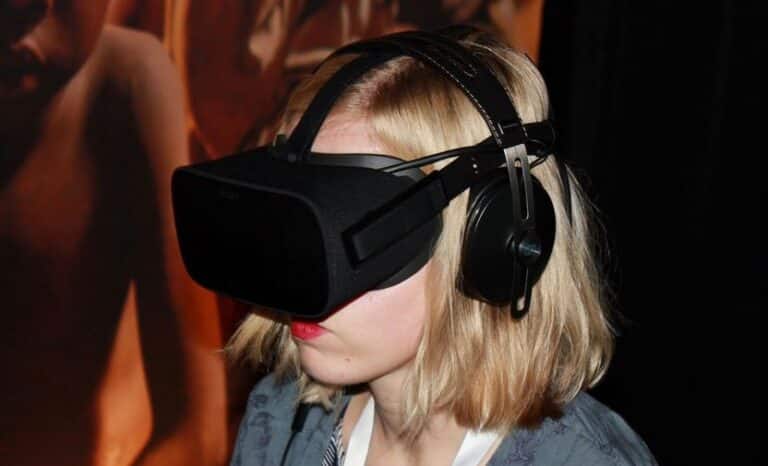
The big automobile manufacturers have been using Augmented and Virtual Reality to both design cars and sell them in dealerships; but there is a step in between design and sales where AR/VR can be employed and that is production. I’m not talking about auto workers wearing AR glasses to view assembly instructions on top of vehicles as they come down the line; but rather using VR to simulate the assembly process itself and ensure the safety and comfort of those who carry it out. The ergonomics of each step of putting a machine together – how a worker must move throughout the assembly process – is not something we often think about, yet poor production ergonomics are a source of inefficiency and can have a high physical cost for employees (+ associated financial costs for the company.) It is difficult to assess the ergonomics of a process like automobile assembly or the building of other large-scale manufacturing products by examining a schematic or onscreen model. And once the vehicle or machine hits production, it becomes too expensive to make major changes that don’t affect product performance or pose a serious threat to the end user. Virtual Reality can help optimize […]
4 min read
Using HoloLens for Design and Asset Visualization
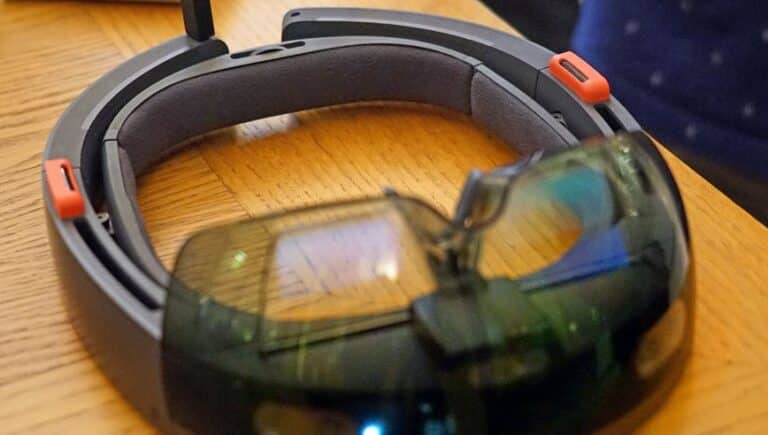
Just as there is a disconnect in designing three-dimensional structures and spaces on two-dimensional screens – and in executing and arranging 2D designs in real space – there is a disconnect in taking multiple data sets and real-time data streams in different formats and attempting to identify patterns and insights to apply in the real world. Architects and designers have been first-movers when it comes to using Augmented and Virtual Reality technologies in the design process; but there are other professions that call for digesting complex information, understanding complex situations and environments, and planning with moving parts. Below are three enterprise scenarios in which Microsoft’s HoloLens Mixed Reality headset is used as a design and asset/data visualization tool: Workspace layouts (office space, shop floor, job site, store…) Polamer Precision, an aerospace manufacturer, has been using Microsoft’s HoloLens Mixed Reality headset to map out its manufacturing “cell” layout. In Mixed Reality, users can test out positions for workstations and tooling and ensure that forklifts and other equipment will have room to operate. Imagine walking into a real-world environment like a job site – perhaps the site changes with every job – and having the ability to view holograms of the machines, […]
4 min read
Companies You Didn’t Know Were Exploring Wearable Tech
Ever heard of a little company named Coca-Cola or stayed in a Marriott hotel? Are you a Citibank or Wells Fargo customer? Read how some of the world’s largest and best-known companies – companies whose products and services you may see or use every day – are exploring wearable technologies: Coca-Cola Back in 2014, the beverage giant partnered with wearable fitness and sleep tracker maker Misfit, both as part of Coca-Cola’s employee wellness program and to offer exclusive red-colored Misfit devices to My Coke Rewards program members. Since then, Coca-Cola has delved further into the world of enterprise wearable tech. In 2017, it was revealed that the soft drink company partnered with Pristine to pilot Augmented Reality technology in its bottling facilities in hopes of increasing operational efficiency. Coke is testing AR glasses for machine inspections, service calls, routine audits, and more. One use case involves having technicians wear smart glasses in order to stream what they see in real time to remote subject matter experts. Since Coca-Cola’s main equipment suppliers are based in Germany, the use of AR for remote troubleshooting between plant workers and the supplier’s engineers greatly reduces the company’s travel costs. The glasses allow workers to […]
5 min read
Improving the Customer Experience with Wearable Technology
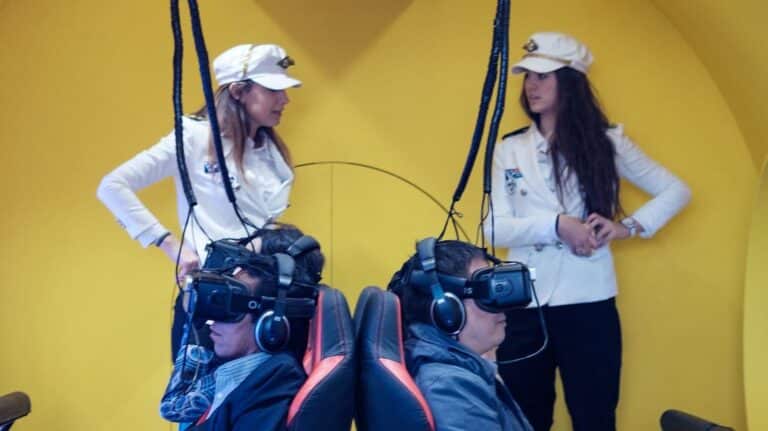
Read how enterprises are creating innovative customer service initiatives with wearable technologies: Audi Audi is keen on Virtual Reality to improve the car buying experience, making it more engaging and memorable. At several dealerships in Germany, Audi shoppers can strap on VR headsets to visualize the luxury automaker’s cars in a number of virtual landscapes of varying lighting conditions, from Paris to the surface of the moon. They can virtually experience the vehicle features and customization options for Audi’s entire car range and even peek under the hood of any vehicle. Car buyers today tend to come to the dealership only to discuss price, having already done their research online. Audi hopes to change this, making the in-person experience more informative and persuasive than a website; and it hopes that many of its customers will get to experience VR for the very first time in its showrooms. While the VR models are based on the actual vehicle designs, Audi partnered with Zerolight to develop virtual experiences not possible in the real world. So, shoppers can view their dream cars in a moon crater and look past the sheet metal to the underlying technical components thanks to an X-ray effect. While […]
6 min read

The 6 Most Popular Applications for Wearables in Enterprise
Heads-up, Hands-free Information Easy access to information from an ERP system (using touch, gesture or voice commands; a heads-up or glanceable display) Step-by step instructions for building, assembling, fixing and inspecting; plus safety procedures and other company protocols Hands-free documentation of information Paper manuals and lists, bulky tablets and PC stations are not ideal for workers who need their hands free and eyes on the job. Instructions for assembling the wing of an airplane, servicing an elevator, or inspecting a vehicle can be displayed via smart glasses, overlaid on top of the actual assembly or machine. For short checklist items, a smartwatch could be used; and employees can verify each step of their work. Remote Expert /SME/Support/Assistance/Guidance/Troubleshooting/Collaboration Many terms for this but essentially telepresence: Using the front-facing camera and microphone in a pair of smart glasses to share one’s view of a situation with a centrally- or remotely-located expert via live audio and (point-of-view) video Enhancing service efficiency in the field: Mainly applies to emergency situations, i.e. when a piece of equipment breaks down or a field worker encounters a problem he or she is unable to diagnose or resolve Saves time and money: Problem can be fixed in just […]
6 min read
Virtual Reality: Next-Level Job Training
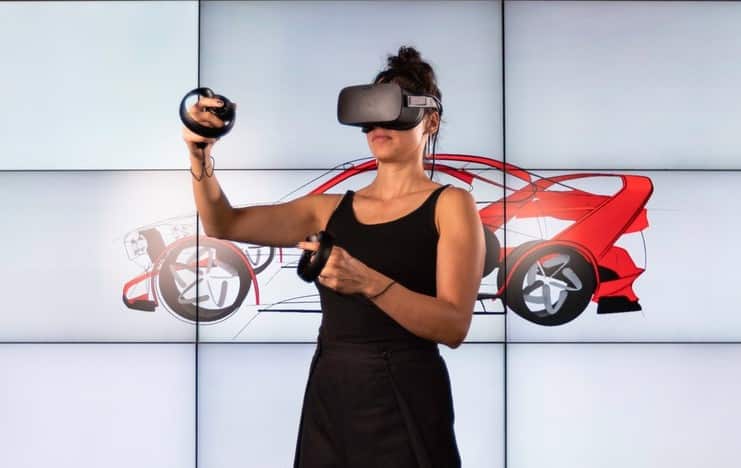
There’s no question “job creation” is a hot topic in America today. Certain industries have been slowing down (ex. manufacturing, oil) or even dying out (ex. coal,) while new ones like clean energy and energy storage are growing to meet new needs and demands. In fact, more U.S. workers today are installing solar panels on rooftops than mining coal or extracting oil and gas. Automation isn’t solely to blame for this, nor are jobs necessarily being eliminated or moving overseas: It is our resources and needs that are changing, forcing manufacturing and oil jobs to evolve with the times, and new jobs requiring new skills to be created. Nevertheless, companies are struggling to fill their ranks, especially as the baby boomer generation hits retirement age. There is a shortage of both skilled and unskilled labor today to which American industry needs a solution. To enterprises struggling to maintain or grow their workforces, Virtual Reality offers a powerful new paradigm for learning and capturing knowledge. Businesses are leveraging VR to train workers of all skill levels, ranks, backgrounds and work environments, from restaurant servers to astronauts, pilots and surgeons. With immersive VR headsets and customized software, job training can be more […]
5 min read
3 Great Use Cases of Wearable Tech for EHS
According to the most recent data from the International Labor Organization, every 15 seconds a worker dies from a work-related accident or disease. On top of 2.3 million deaths per year from occupational accidents, over 313 million workers suffer non-fatal work injuries. The great human cost also has an economic impact: For employers, on-the-job accidents cost billions of dollars annually due to production downtime and workers’ compensation fees. Can technology help prevent work-related accidents and diseases? The majority of workplace injuries are easily preventable through real-time monitoring of workers. After all, connected workers – aware of (and sensed by) their environment through IoT technologies – are inherently safer. Wearable technology can greatly improve workplace safety. For example, Smart bands and sensors embedded in clothing and gear can be used to monitor workers’ health and wellbeing by tracking such factors as heartrate, respiration, heat stress, fatigue and exposure. Notifications can be sent to workers’ wearable devices when critical levels are reached. Machine and environmental sensors can provide contextual information to field workers to help keep them informed and aware of their surroundings; and wearable GPS tracking can ensure they keep out of hazardous areas. Smart glasses and other HUDs allow employees […]
4 min read
Augmented Enterprise Newsletter
Get bi-monthly insights on AI, XR, digital twins, and related emerging enterprise technology delivered to your inbox.