
Editorial

New Realism in Enterprise Wearables
Recognizing what is cool versus what is possible today Should you wait on piloting or even adopting? No. Today’s hardware/solutions may not be perfect, but there are benefits to be had now Multiple speakers at EWTS 2016 asserted that there are effective enterprise wearable solutions available today. They talked about devices that are simple yet make a real difference – “a simple thing that does one thing really well” (Zac Penix, AES Corportation) – and strongly advised enterprises to do the “hard work of implementation” now as opposed to five years from now. Atheer’s Christian Prusia said let’s “focus on the now:” What are the enterprises of today leveraging? What use cases are they most focused on? What problems are they solving right now? So are there any “slam-dunk” wearables today? Yes, but they may not be the ones you imagine. In our last post, we also quoted Zac of AES for highlighting the basic company ID badge as a great wearable when made smart with sensors: “Old-school tech like RFID badges are great but upgraded a bit with wearable activity monitors, fall-detection sensors…It’s not glamorous but it’s effective.” Dawn Bridges of Jacobs Engineering claimed that “a wearable that recognizes […]
5 min read

Startups Monitor Emotions to Optimize Consumer Value, Vehicle Safety, and Employee Performance
Written by Special Guest Blogger Mark Bünger, VP of Research, Lux Research Many of the advances in Internet of Things (IoT)-based data gathering and analytics sound like Orwellian spying. And indeed, nearly every week brings new instances of devices streaming sensor measurements to a cloud-based server (Bluetooth-based smart locks, for example), where vulnerabilities compromise the endpoint, transit or storage; and intentional system features exploit users’ unintentional or even willful release of data for ethically-dubious ends. Now the addition of affective computing, a branch of artificial intelligence (AI) geared towards sensing and emulating human emotion, is adding a new layer of controversy in spaces like: Enjoying entertainment in smart homes. Affective computing startups are entering the home with social robots like Jibo, but also in ways that are less obvious (or voluntary) for consumers: Last year, Samsung had to walk back smart television “spying” features that sent not only voice commands but also incidental conversation back to its servers. Today, Affectiva is working with consumer goods and media companies like Disney, CBS, Coca-Cola and Unilever to measure the effectiveness of ads in sparking emotional responses. The company, which raised $14 million earlier this year, has now launched a mobile-device-based version of […]
4 min read
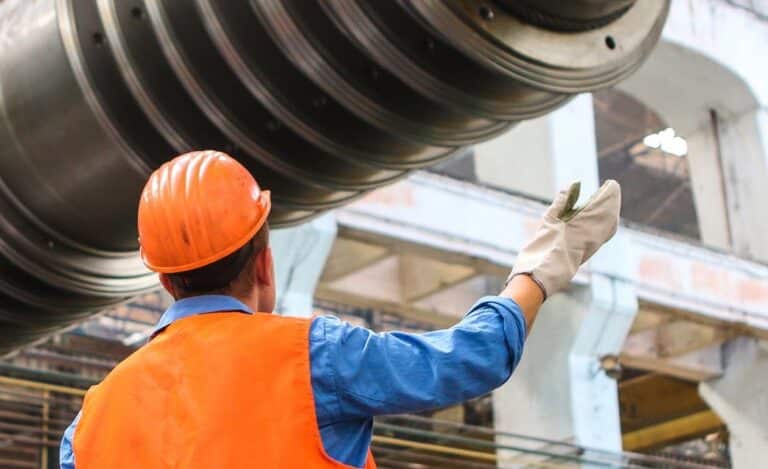
Enterprise Wearables: Same Applications, Different Environments
The applications (for wearables) are essentially the same across industries; it’s the environment that changes. I’ve said it before, and I’ll say it again: The value of wearable technology for enterprise lies in arming the right person with the right information at the right time in a hands-free manner. The person or employee, the type of information, the timing/location, the wearable itself will differ from business case to business case, but every single application of wearable tech in the workplace – no matter the industry – comes down to that right person/right info/right time/right device. And so it makes sense that we are seeing wearables being applied in similar ways and for similar purposes in different industries. Wearables are being used to achieve the same goals and to address pain points common to many businesses in diverse job settings; to the point where we can start identifying broad application areas (see our series classifying the applications for WT in enterprise) and group use cases from different sectors by more specific kinds of applications. The various testimonials given at EWTS 2016 confirm this big picture: After hearing all the presenters and panelists, it became clear that the applications for wearables are […]
9 min read

The User is King: Designing and Selecting Wearable Hardware
One theme that emerged over and over again, phrased in different ways, at the 2nd annual Enterprise Wearable Technology Summit this past June was the idea of the user as king: In determining a viable use case for your business, start with the user or worker by observing and talking with members of your workforce. Indeed, workers exert tremendous influence over how wearables will be used in the enterprise – in which applications – as well as over which devices are going to “make it” in the workplace. You could even go so far as to say that the success (or failure) of wearable technology in enterprise depends upon the user’s involvement and acceptance. Beyond ascertaining possible applications for wearables in the workplace directly from the workforce, the user is also critical in the design and selection process for enterprise wearables. Lance Anderson of Vuzix said, “If you’re doing your pilot in a conference room, you’re doing it wrong.” Likewise, if you’re manufacturing or developing a wearable solution or choosing a device to trial in your business without referring to the ultimate end user, i.e. the employee, then you’re doing it wrong. Lance also said that “wearability is absolutely everything.” […]
6 min read
The User is King: Choosing the Right Use Case
Insights on the Wearable User from EWTS 2016 J.P. Gownder speaks about enterprise wearables as a journey, and that is a great metaphor. I mean what was Peggy Gulick‘s case study if not one manufacturer’s (AGCO’s) journey with wearables? On the second morning of EWTS, Sharon Oleniczak of Newell-Rubbermaid led a closed-door workshop in which she shared a strategy for innovating with wearables that involved creating a story or narrative. The story was comprised of the underlying facts relating to one industry of type of work and an ideal vision for the future (presumably involving wearable tech), plus the emotions, cautions and opportunities involved; and you would tell this story in order to sell your idea to management. Michael Perman, formerly of Gap, also talked about innovating with wearables by understanding what people (workers or consumers) crave, what concerns them, and what gives them comfort. It may seem that technology and human psychology have little to do with one another, so why do wearables bring out this kind of terminology, words like journey, story, emotions, craving, and comfort? Perhaps it is because of what Tom Bianculli said in his opening keynote: “The human-machine interface is becoming more and more personal […]
10 min read

Why We Can’t Afford to Ignore Wearable Technology in Enterprise
Last month’s Enterprise Wearable Technology Summit was a truly special event, and I’m not just saying that because I helped organize it (wink). In less than a year – from the very first EWTS in October 2015 to June 2016 – the enterprise wearables space has progressed by leaps and bounds, in a direction that is both exciting and daunting. And yet, more than hard facts or a clear path forward, what emerged out of this year’s conference was a sense of community. So begins our latest blog series discussing the 10 major themes in enterprise wearables today, as supported by the insight shared in Atlanta. In this post, we share the first two big themes. Hands- free is what makes wearables so disruptive to business and why we cannot afford to ignore this new category of technology. I’m not saying anything new here but perhaps this view has become more widely appreciated over the past year. No longer merely a headline for an article, more and more people and organizations truly believe that wearables are the next big thing in enterprise. Gone are the days when his fellow analysts balked at J.P. Gownder‘s claim that wearables for enterprise would […]
8 min read
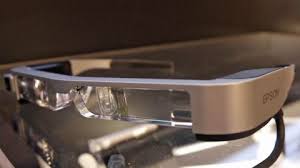
Q and A: Epson Partners with Atheer to Harness Power of Professionals
Atheer’s partnership with Epson was announced last week at EWTS 2016. Working with Epson brings a level of expertise in enterprise that is important to Atheer, as more and more interested enterprise companies are looking for flexible, collaborative tools for their workforce. We “sat down” with Atheer to learn more about the new partnership and what it means for the enterprise wearable tech space. One. What is the partnership that Epson is announcing with Atheer? Atheer has optimized its award-winning AiR Suite™ enterprise solution for Moverio smart eyewear. The Android-based software is designed for “deskless” professionals to communicate with remote experts to resolve problems quickly and efficiently, as well as managing task flow creation and deployment, and on-the-go task documentation in a variety of industrial settings. Atheer and Masimo for Medical Applications. Two. What will this mean for customers who already own Epson glasses? EPSON and Atheer are offering existing EPSON Moverio BT200 or BT2000 customers a 30-day free trial in order to try the AiR Suite enterprise software. Based on existing Atheer customer satisfaction with AiR Suite, both parties are anticipating high interest and trial activity. Three. What will this mean for future Epson customers? The AiR Suite for […]
3 min read
AWE 2016: Three Takeaways from the POV of an Enterprise End User
Last week, I attended the Augmented World Expo in Santa Clara, CA. I walked through the large exhibit space, trying new devices and technologies and catching up with many EWTS sponsors and partners; and also sat in on sessions, always asking myself “What could an enterprise learn from this experience?” Here are some thoughts and lessons I came away with: One. Something we already knew: The big opportunity for Augmented Reality today is in the enterprise As Christian Prusia and Ryan Fink of Atheer reasoned: Enterprise is a better starting or entry point for AR because the pain points are high, the dollars are there to make a strong ROI case for use, and the form factor is much less of an issue. In addition, we were already aware of the most promising use cases, including Step-by-step instructions (providing information on top of real-world objects) Remote assist, and Product visualization (for designing, building, and sales). We might also refer to Atheer’s umbrella acronym FAST (Fix, Assemble, Survey, and Treat); or to this list of the most common industrial use cases for Assisted Reality by Ubimax’s Hendrik Witt: Materials management and logistics Production and quality assurance Field service and maintenance Two. […]
9 min read

The Intention Economy: Wearables, AI, Robotics, and the Future
Written by Special Guest Blogger Aric Dromi, Futurologist, Digital Philosopher and Professional Troublemaker, TEMPUS.MOTU The current structure of most enterprises is based on 18th-19th century infrastructure, rules, and perceptions. The medium that channels the company’s ability to scale and expand its core business is outdated and anchored in a hierarchy made of paper. Most business models revolve around one central management entity. Much like the Swift in banking, you can create a psychological consensus for “single-point control” as long as you work in the comfort zone of one unique industry, country or even a local geographic location. Technology has always been the carrier of human social development. It was never one “thing” that made a difference, but the synergy between several disciplines coming together, defining the relationships that underlie the impact of society. The industrial revolution pushed the boundaries of humanity beyond anything we understood at that time–it transformed us. While the current generation of C-Suites (excluding few) and politicians are managing the world with a limited understanding and thereby under-utilising the potentials of digital technology in almost every area. Now, we are entering an era of digital augmentation and areas such as Artificial Intelligence, robotics, genomics, biotechnology, neurotechnology, adjustable […]
3 min read

Choose the Right Use Cases: How to Move Your Pilots from Inception to Deployment
Written by Special Guest Blogger Brian Ballard, CEO & Co-Founder, APX Labs Being an early technology adopter is no easy feat. Oftentimes, customers have incredible amounts of interest and enthusiasm for new products and projects, but are not always sure how to harness their momentum and apply it to moving a project forward to deployment. Wearable technology fuels a particularly high level of excitement and passion because it involves cool new hardware, has the ability to address long-standing but high-pain problems, and sparks the imagination of where big digital transformations can take us. However, despite the excitement that surrounds this type of project, rollouts require a managed, business-driven approach to see them through. Companies need to make sure all boosters are firing and in working order before they shoot for the moon. From our five years of experience in the market, we have found that these three key qualifications are vital to enterprise wearable deployments: Root the scenario in business reality When customers begin to consider how they can use wearables across their businesses, there is often an early research and evaluation phase: getting devices in-house and playing with them, building a rough demo, and just understanding how they work. […]
4 min read

Interview with an Innovator: Gap’s Michael Perman on Wearable Tech
From first-class physicians to innovation seekers in industry, we give you insight into the experiences of those pioneering the use of wearables in the workplace–in their own words. We recently sent over some questions to Michael Perman, Dean of Innovation at a little well-known retail brand called Gap. Read his answers below, and catch his presentation “C’est what? Leveraging Mindful Design for Innovation” at EWTS East in Atlanta this June. BrainXchange (Q): To begin, how about you provide us with a little background on yourself and your career. What exactly does the Dean of Innovation at Gap do, and how/when did you first learn about (or encounter) wearable technology? Michael Perman (A): As Dean of Innovation, my charter has been to build capacity and capability for innovation to happen. My goals have been to 1) establish a culture of creativity and invention, 2) embed systematic and repeatable methods for innovation to happen and 3) help teams define the problem they should be solving through insights about customers. So, my role has been as much a capability-builder as a catalyst for innovation to thrive. BrainXchange (Q): What is Gap’s Mindspark Innovation Program? Michael Perman (A): Mindspark has been our internal brand […]
4 min read

First Step’s First: How to Approach Wearables in Your Workplace
Written by Special Guest Blogger Sharon Oleniczak, Manager, Innovation Systems, Newell Rubbermaid Wearable Technology (WT) is growing rapidly and the possibilities in enterprise continue to expand. As businesses begin to consider utilizing WT they must identify where it will be most effective. Successful problem solving depends on knowing where to start. WT is no different. As an emerging field with the potential to help business on many fronts, how do we decide the best fit? If you step back and look, no matter what area of the organization you work in, there are probably a multitude of opportunities to use WT. By observing behavior and processes, patterns will begin to emerge to help you identify where it can bring change and improvement. To begin: Compare your current processes and experiences to the ideal you aspire to Look at how trends and influences impact the industry you are in Invite others to share alternate points of view and expertise Explore the technologies that are available today and what’s being worked on for tomorrow Use that collective knowledge to define the problem you will solve and potential solutions to consider As a global consumers goods company, Newell Rubbermaid is always exploring ways […]
3 min read
Augmented Enterprise Newsletter
Get bi-monthly insights on AI, XR, digital twins, and related emerging enterprise technology delivered to your inbox.