
Editorial
Introducing the Augmented Reality for Enterprise Alliance
Written by Special Guest Blogger Christine Perey, Executive Director, Augmented Reality for Enterprise Alliance (AREA) We live in an exciting era of mobile computing and enterprises are increasingly able to take advantage of new mobile technologies to improve their businesses. Many industries are wiring up factories and workplaces with the Industrial Internet of Things, and combined with ubiquitous network coverage, wearables are redefining the concept of the connected workplace. Among the many benefits of increased workplace communication is the prospect of guiding workers in their daily tasks with augmented reality. Robust, wireless networks, interconnected IT systems and AR-enabled mobile devices can provide the basis for displaying contextual information in the worker’s field of view. Implementing this capability in a production environment is still challenging, however, and overcoming those barriers is the primary goal of the Augmented Reality for Enterprise Alliance (AREA), the only global, member-driven industry organization focusing on accelerating AR adoption in enterprise. Members of the Alliance are part of a growing ecosystem of organizations ranging from providers of augmented reality-enabling technologies to customers in diverse industries. By joining the AREA, our members benefit from the network of providers and customers and support one another to grow the enterprise […]
3 min read
Picking the Right IoT Platform Partners
Written by Special Guest Blogger Isaac Brown, Lux Research Just when you thought there were not enough Internet of Things (IoT) platform providers, three major enterprise information technology (IT) vendors released their own solutions for connecting devices to the cloud. Enterprise wearables are the interfaces between workers and the IoT. As a result, picking the right wearable is only one link for a successful system, which makes picking the right IOT platform and understanding that space equally important. Microsoft released the Azure IoT Suite at the end of September, and Amazon followed with Amazon Web Services (AWS) IoT only a week later. Oracle completed the launch of its Internet of Things Cloud Service shortly after Microsoft and Amazon; meanwhile, the SAP HANA Cloud Platform for the Internet of Things has been around for the better portion of 2015. The space is also crowded with dozens of startups that offer similar capabilities for managing devices, controlling connectivity, building applications, and integrating into other systems. Many of the startups are doomed to fail, while a handful of the more capable companies will be acquired or succeed on their own. Over the past month, Lux has spoken with VPs and General Managers in […]
4 min read

Atheer: Vision at Work
1 min read
WEARABLE TECHNOLOGY FOR ENTERPRISE COMES TO ATLANTA
Duke Energy, DHL, GAP, Walmart, GE and Other Top-Name Enterprises Are Coming to Atlanta to Discuss Challenges & Opportunities of Using Wearable Technology in Business WESTCHESTER, N.Y.–BrainXchange – a leading boutique conference organizer – announced the early confirmed speaker lineup for the Enterprise Wearable Technology Summit East, which includes some of the biggest companies and foremost experts in the world. Wearable technology – one of the fastest growing and most exciting sectors in mobile technology – promises to be a game changer for the enterprise, where numerous job roles and tasks in all industries require employees to have access to real-time information in a hands-free, on-the-go fashion. “The enterprise adoption of wearable technology is really beginning to ramp-up. The market is moving from enterprises piloting 20-30 devices to commercially rolling out hundreds of devices.” – Andrew Ferguson, Innovation Director, BrainXchange. The Enterprise Wearable Technology Summit East – being held June 16-17, 2016 at W Downtown in Atlanta, Georgia – is the only event focused exclusively on the use of wearable technology in business and industry. Consisting of real-world case studies and best-practice user examples, the conference looks into how some of the most forward-thinking companies, from across the industry spectrum, […]
3 min read
Smart glasses hyped at the Enterprise Wearable Technology Summit, but other devices deserve more attention
Written by Special Guest Blogger Tony Sun, Analyst, Lux Research Lux Research analysts recently attended the Enterprise Wearable Technology Summit East in Atlanta, GA. The conference included about 250 attendees, with presenters and exhibitors focused on the opportunities and challenges of implementing wearable devices in the workplace. The buzz at the conference centered around smart glasses and three main issues facing smart glasses in the workplace today: Attendees’ top interest is how other companies are using smart glasses for augmented reality (AR). Among different form factors, head-worn devices, especially smart glasses, unsurprisingly attracted the most discussion, mentioned in almost every speech, group discussion, and case study. While most use cases mentioned in the conference – like warehousing, employee training, and assembly and installation – were discussed in our report “Better than Google Glass: Finding the Right Smart Glasses for Enterprise,” new use cases are also being developed. For example, Michael Leyva, Product Manager at Epson, said sharing the point of view from a drone for both enterprise and consumer applications has been a key application for the company’s Moverio smart glasses. The need for better ergonomics design is the major feedback from all wearable device adopters. In his keynote speech, […]
3 min read

Differentiating Consumer Smart Glass Hype From Enterprise Smart Glass Potential
Differentiating Consumer Smart Glass Hype From Enterprise Smart Glass Potential… Google Leads in One of These Categories Written by Special Guest Blogger Tony Sun, Lux Research Smart glasses launched to much fanfare but commensurate disappointment with Google’s initial consumer-focused product line, but, like many such initial products with glitches, the seeds were sown for other developers and end-users to connect and innovate. Enter the enterprises looking for new tools that can improve productivity, a domain in which smart glasses have received significant buzz recently. The devices’ unique form factors and hands-free controls attracted interest from many different industries, ranging from automotive and construction to medical and retail. This end-user interest together with the entrance of a plethora of device developers has created a major battlefield for smart glasses with numerous pilot projects being pursued. The question is, what glasses are the best fit for what enterprise use cases? By analyzing more than 70 enterprise use cases, we found that these pilot programs can all be boiled down to three core functions. Those for accessing information enable users to pull information like checklists, product info, and notifications from various sources and view it in the head-mounted display (HMD). Sometimes, the visualized […]
4 min read

Wearables in Healthcare: Activity Trackers May Be Useful After All
Written by Special Guest Blogger Milos Todorovic, Analyst, Lux Research One of the pervasive topics at the inaugural Enterprise Wearable Technology Summit held in Houston, TX was the medical professionals’ increasing embrace of Google Glass and similar products as tools to optimize their own workflows. One of the topics that did not receive as much attention was the use of wearables by patients and the willingness of doctors to incorporate data from such devices into their decision making processes. General sentiment is that the future uses of wearables will span a spectrum of applications from longer-term, continuous monitoring of vitals, both in clinical settings and at home – enabled by devices like Vital Connect’s patch – to performing IVD tests on bodily fluids with future devices like Electrozyme’s printed biosensor strips. All of these applications have been discussed in the industry circles for years, yet the use of wearables for patient monitoring and diagnostics has caught very little traction. However, what caught our attention was the mention of standard activity trackers as tools doctors might use to monitor patients’ activity levels pre- and post-surgery. Patients are often instructed to follow specific exercise regimes to lose weight before surgeries and to […]
3 min read
Are you a #Mawearick? EWTS 2015
Andrew Ferguson, Dr. Rafael Grossman, Dr. Homero Rivas and Melissa Saelzer has a discuss about wearables, their first experience using these devices and their application in the industry.
1 min read

AREA Webinar: Meet the AREA, its Committees, Programs and Members
The AR for Enterprise Alliance is the only global non-profit, member-driven organization dedicated to widespread adoption of interoperable AR-enabled enterprise systems. Whether you are getting started with enterprise Augmented Reality or a widely recognized expert in the field, you can benefit from and contribute to the AR for Enterprise Alliance.
1 min read

Major Players in Enterprise Wearables: Ubimax
Today, we will hear from Ubimax. We sent over some questions to Ubimax. Check out their answers below! BrainXchange (Q): Can you provide us with some background on Ubimax? What kind of company is Ubimax and what products, services, or expertise does Ubimax offer? Ubimax (A): Ubimax is a leading Wearable Computing and Augmented Reality solution provider. We supply enterprises with fully integrated solutions along the industrial value chain, ranging from logistics and productions to maintenance and field service. Currently we offer a suite of four ready-to-deploy products: xPick, xMake, xInspect, and xAssist. Our team has more than 10 years of experience in the fields of Wearable Computing and Augmented Reality technology. Our CEO and co-founder, Dr. Hendrik Witt, who spoke at last week’s EWTS ’15, is really a Wearable Computing pioneer with more than 15 years of experiences with smart glasses, sensors and other wearable tech. He is a former PhD. student of Prof. Thad E. Starner, one of the leading experts in the world and founders of the wearable computing paradigm back at his time at MIT. BrainXchange: What is Ubimax doing with wearable technology? How is Ubimax contributing to bringing wearables into the enterprise? Ubimax: Ubimax is […]
3 min read

Major Players in Enterprise Wearables: AMA
Today, we will hear from Advanced Medical Applications or AMA. We sent over some questions to AMA. Check out their answers below! BrainXchange (Q): Can you provide us with some background on AMA? What kind of company is AMA and what products, services, or expertise does AMA offer? AMA (A): AMA has been working in the mobile applications business for the last 11 years. We have always been up on the latest technologies thanks to our great partnerships with handset and chipsets manufacturers. When entering the Google Glass program, we became thrilled with the business potential of Glass and thus created a new division of the company to fully focus on it, but of course maintaining the core elements of our company DNA: user experience, high quality, and portability. BrainXchange: What is AMA doing with wearable technology? How is AMA contributing to the wearable revolution in the enterprise? AMA: AMA entered the wearable revolution first with smart watches (we published a couple of apps on Tizen and Android Wear), but we really made a big shift with Google Glass. It was great, as many industrial professionals and doctors came to us with different problem areas to address or solve using […]
3 min read
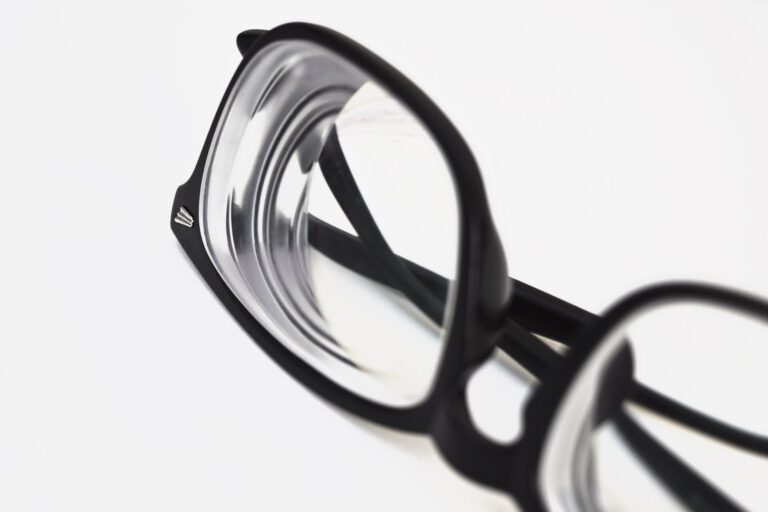
Major Players in Enterprise Wearables: Interview with Rochester Optical
Today, we will hear from Rochester Optical, a company whose Smart Solutions initiatives have taken the wearable world by storm and enabled smart glasses to infiltrate a wide range of industries. We sent over some questions to Rochester. Check out their answers below! BrainXchange (Q): Can you provide us with some background on Rochester Optical? What kind of company is Rochester and what products, services, or expertise does Rochester offer? Rochester (A): Rochester Optical is not your standard optical company. We have a long history of traditional frame and lens manufacturing for the military, wholesale and retail markets; but we are also forging a new frontier by engineering optical products designed specifically for smart glasses. We’re applying our optical expertise to the user-experience problems smart glasses pose, and we’re coming up with innovative products and solutions. BrainXchange: What is Rochester doing with wearable technology? How is Rochester contributing to bringing wearables into the enterprise? Rochester: We entered the wearable space when Google Glass launched their Explorer program. By looking at the device from an optical standpoint, we identified design deficiencies in terms of style, comfort, and visual acuity. Almost instantly, our smart product strategy was born; and we started rapid […]
5 min read
Augmented Enterprise Newsletter
Get bi-monthly insights on AI, XR, digital twins, and related emerging enterprise technology delivered to your inbox.