
Editorial

Adopting the Wearables Design Mindset
Written by Special Guest Blogger Scott McCormick, Director of Client Relations, Float Mobile Learning It can be difficult to pinpoint the department in charge of delivering performance support solutions in Big Enterprise these days. Is it HR or IT? Does it fall on the shoulders of L&D or does Marketing drive the effort? Is it a combination of these different departments or (shudder) all of the above? Management and Legal will be sniffing around, too, once it is learned what type of information is being distributed and how. The point is, there is someone, or better yet, a group of people who are trying to determine the best way to deliver vital on-demand information to a target audience within the company. And that’s a crucial role as business processes get leaner and faster and involve fewer people to get the same amount of work done. To add to those pressures, new technologies are appearing in the marketplace seemingly on a daily basis. Enterprises who may just be getting the hang of mobile deliverables on smartphones and tablets are now seeing a growing variety of wearables solutions that could eclipse the mobile devices and provide a more effective user experience. Some […]
5 min read

The Coming Crack-Up in the Wearable Electronics Market
Written by Special Guest Blogger Jon Melnick, Senior Analyst, Lux Research When we look back eight years to the introduction of the iPhone, it is easy to see the disruption smartphones caused; from transportation to on-demand services to social media. The big question today is what (if any) disruption will wearables cause? Improved healthcare? Quantified self? Connecting with customers? Gathering consumer data? Making safer and more efficient employees? Wearable electronics have come a long way since their less-than-noble origins as a way to beat the house at roulette. However, today’s wearable electronics landscape consists of a huge amount of disjointed activity as literally hundreds of devices litter the market. Wearable developers are placing their bets in specific areas, and our survey of over 450 wearable devices showed that consumer communication and consumer health garner the most development attention. While these larger market trends emerge with promise and a robust field of competitors, companies seek differentiated niches. Take, for example, HP’s wearables play. Initially designed to provide remote technical support to industrial printer customers, HP had added smart glasses to its MyRoom platform to enable remote employees to quickly engage with subject matter experts (see Figure 1). For example, EMTs can […]
2 min read

Top Challenges of Enterprise Wearables: Regulatory Compliance
Compliance When it comes to the issue of compliance, perhaps the most obvious circumstance is that of HIPAA compliance of wearable devices in the Medical Sector. In other industries, however – especially in the more hazardous industries such as Oil & Gas, Manufacturing, and Construction – there are standards that have to be met, certain requirements and expectations for products and equipment utilized at the shipyard, job site, or oilrig. In this article, however, we will focus on the challenge of compliance as it pertains to healthcare. HIPAA While doctors have been some of the most enthusiastic proponents of wearable technology; medical institutions – perhaps more so than any other enterprise organization – face significant privacy obstacles when it comes to implementing wearables, most obviously the Health Insurance Portability and Accountability Act or HIPAA. In theory, in order to utilize a wearable device with live-streaming capabilities such as Google Glass in a medical setting in compliance with this act, the device would have to be run over a healthcare-specific, password-protected, encrypted network. This is no easy feat, the alternatives being to strip the technology of certain features such as Internet connectivity (which might defeat the purpose of adopting the tech […]
4 min read

Proving ROI of Wearables in Enterprise
Today, we will discuss yet another cultural and organizational challenge of wearables at work: Proving ROI. Proving ROI How does one measure the ROI of wearable technology in enterprise settings? How does one show statistical results of wearables in the workplace? We have been told of the potential benefits of wearable tech in business and industry, told that wearables could improve communication, provide greater access to information, increase efficiency, enhance productivity, augment safety, build better customer relations, etc. etc. But where’s the proof? Where are the numbers? The Human Cloud at Work research project conducted by Dr. Chris Brauer of Goldsmiths, London may be the closest any organization has come to providing robust stats for wearables in enterprise. At the very least, it is the most referenced study. It may be that it is difficult to prove the ROI of wearables simply because we are at the early stages of this new wave of mobile technology–perhaps that is why there aren’t very many statistical results or figures being pronounced. A statement such as “The use of smart glasses in this manufacturing industry application increased productivity by X% and saved the adopting company Y amount of dollars over the course of […]
2 min read

Cost and Implementation of Wearables in the Workplace
Today, we will discuss cost and implementation as a major barrier to wearables proving their worth in the workplace. Cost & Implementation Let’s face it, wearable technology is expensive: Many of the devices currently on the market are pretty pricey, even by enterprise standards. Let’s take a look at some numbers… The first edition of Google Glass came at the hefty price of $1,500 a pair, while the Vuzix M100 Smart Glasses cost about $1,000; but that’s “nothing” compared to ODG’s R-7 Glasses, which you can pre-order for a whopping $2,750. A decent smart watch runs anywhere from around $200 to $400 for the top-model Apple Watch Sport; and even your basic Fitbit costs upwards of $100. Now perhaps purchasing a personal Apple Watch won’t cause a major dent in your wallet; but just put yourself in the place of a warehouse manager, having to outfit your entire workforce with wearable gadgets costing hundreds of dollars “a pop.” It’s just not feasible from a cost perspective unless you have thoroughly tested the use case and can guarantee ROI. For some companies, cost may be a non-issue. Most retailers, however, no matter their size and industry position, are very capital-constrained and […]
4 min read

Stories from the Wearable Tech Pilot Front Line in Business
Written by Special Guest Blogger Kelly Baig, HP Education Services HP has been running active pilot testing of its MyRoom/VRG solution. VRG stands for “Visual Remote Guidance,” which is a fancy name for the integration HP offers with wearable tech devices, including Google Glass, Vuzix M100, and ChipSip to name a few. The MyRoom/VRG solution was the result of active collaboration and development by the HP MyRoom software team and the HP Graphics printer division. What does the solution provide? Hands-free, remote support assistance – backed by secure, real-time communication through the HP Helion Cloud. In summary, rather than sending a printer expert to the customer on-site, the customer can use smart glasses to show the expert the problem and receive immediate help and assistance. The solution is depicted here, in this illustration: Since the introduction of this technology, the HP MyRoom team has received countless inquiries and questions from all types of organizations. These organizations include teams at manufacturing and utilities companies, telcos and government agencies, and automotive, technology, and healthcare companies – and this market is just getting started. In this blog article, I wanted to share some of the highlights along with the lessons that are being […]
3 min read

A Killer App You Can Wear?: Wearable Tech May Transform Operations in Data Centers and Other Mission Critical Environments
Written by Special Guest Blogger Chris Crosby, CEO, Compass Datacenters When we were kids our visions of the future included an array of technological wonders like flying cars, people living on the moon and my personal favorite, being able to use my watch as a communications device ala Dick Tracey. Naturally, some of the things we imagined are still imaginary—the world still awaits its first flying car dealership—but some of our more esoteric visions of the future have become reality, wearable technology being a prime example. Today it is possible to make a call from your wristwatch, but I think one of the lessons that we’ve learned over the years is that the real benefits of new technologies sometimes take a while to come to fruition. This is certainly the case with wearable technology. Let me begin by saying that I don’t think being able to count your daily steps or monitor some of your body’s vital functions are trivial applications, but in terms of business applications we are only beginning to scratch the surface of the uses of wearable technology. As the repositories and processing centers for the vast amount of data that is generated on a daily basis […]
3 min read
Google Glass v2 Wish List by Dr. Rafael Grossmann
Written By Special Guest Blogger Dr. Rafael Grossmann As the first surgeon who ever used Glass in the Operating Theater, I had the distinct honor and pleasure to witness the next version of Glass and chat with Google about it, as well as to provide some of my thoughts and insights about the future edition of the smart glasses. Although I am limited by a non-disclosure agreement, I wanted to offer my view of what the future of the device should be like, and especially propose what I believe would be absolute “winner” features. Google Glass v2 needs to be: Easy to connect to WiFi networks, even unsecured ones. Cellular connectivity, even with a weak signal, should be a must as well. Imagine that we need to do a remote teleconsultation or check online information “in the middle of nowhere”… It must be a rugged piece of hardware, water-proof or very water-resistant, and able to tolerate field conditions no matter the type of field. Think of doctors from Medecins Sans Frontieres using smart glasses at their remote sites. The “glass” cube screen needs to be scratch resistant, as well. It must be portable and easy to carry and store. Yes, […]
4 min read

Separating Wearable Start-up Contenders from Pretenders
Written by Special Guest Blogger Jon Melnick, Senior Analyst, Lux Research Picking start-up winners is no easy task as only 7% to 10% of all start-up companies succeed. However, the Lux Research methodology of assessing start-ups though combining primary research, analysts with domain expertise, and a consistent process of quantitative and qualitative factors has been shown to increase the rate of picking successful start-ups to 50% (see Figure 1). As wearable devices are a hyped technology segment, full of start-ups hocking the next revolutionary device, it is a ripe field to apply the Lux methodology to identify which new companies will be tomorrow’s giants – and which should just be ignored. Wearables have the potential to provide fresh new solutions in uses ranging from clinical vital signs monitoring to industrial worker assistance to personal virtual and augmented reality. However, across the breadth of wearable developers, technologies, and applications, there are no obvious winning developers, applications, and business models. To further understand success in wearables, we evaluated 62 wearable developers profiled using the Lux Research methodology and plotted them in a framework called the Lux Innovation Grid (see Figure 2). The Lux Innovation Grid rates each company’s Technical Value, Business Execution, […]
4 min read
Wearable Technologies in Agriculture – From Ideas in Labs to Start-Ups
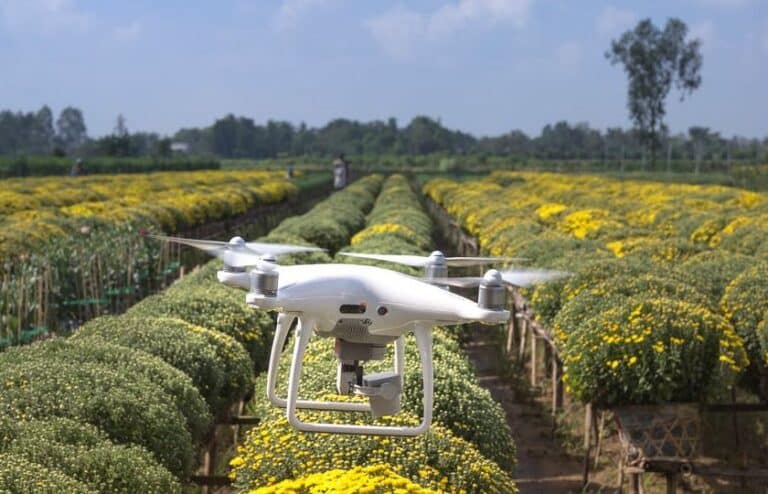
Written by Special Guest Blogger Saverio Romeo, Beecham Research The association agriculture-technology is not always immediate for many people. Agriculture is often seen as a sector incapable of introducing new technologies in its practices. But, that is a strong misunderstanding of the innovative capabilities of the agricultural sector. From the point of M2M and the Internet of Things, the sector has embraced several cutting-edge applications such as autonomous vehicles, mesh networks, sensing networks and farm management information systems supported by sophisticated data and visual data analytics tools. And the attention on wearable technologies has been equally strong. Excluding the use of technologies for livestock in precision livestock farming – which is very strong -, research pioneers in Japan such as Tokihiro Fukatsu, from the Japanese National Agricultural Research Centre, have been experimented the use of wearable technologies for farmers since 2007. Fukatsu’s overall idea was to exploit the hands-free feature of smart glasses in order to connect the farmers with the farm management information system. The objective was to enable access to knowledge for farmers, but also enabling interactions between the farm management information system and the farmer via voice recognition software. Many other agricultural academic and research centre have […]
2 min read
The Gap Between Flexible and Wearable Electronics
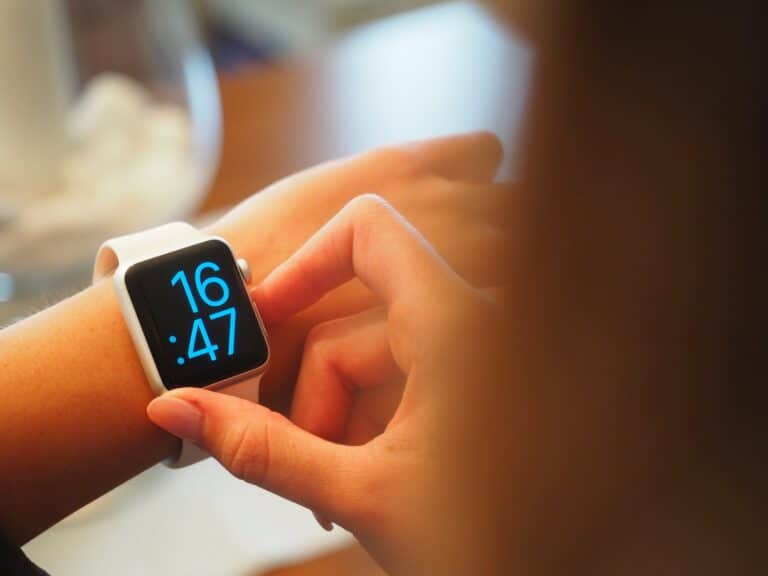
Written by Special Guest Blogger Tony Sun, Lux Research, with brief introduction by Emily Friedman, BrainXchange Why isn’t more being done to incorporate flexible electronic components into wearable technology? The opportunity exists, the potential outcome being cheaper and lighter wearables; and yet there is a gap between the two categories. Lux’s Tony Sun explains why: Printed, flexible, and organic electronic (PFOE) technologies, such as e-paper displays, organic light emitting diodes (OLED), and printed sensors, promise conformable form factors, light weight, as well as potentially low cost, creating a lot of interest in using them for wearable electronics. However, despite many people thinking wearables may be the killer application for PFOE, little PFOE innovation actually focuses on wearable applications. Lux Research examined the 180,000 patents in PFOE and wearables, of which 40,000 and 140,000 target wearables and PFOE, respectively. However, of the 180,000 patents, only about 650 patents address PFOE in wearable devices. The challenge comes down to both which developers are working on these technologies and which PFOE technologies they choose to develop. While Samsung is the leading patent holder in both PFOE and wearables, the list of leading filers quickly diverges. As Qualcomm, Apple, Sony, and Microsoft round out […]
2 min read

The Future of Wearables: Consumer vs. Enterprise
How are wearable devices going to evolve? (And evolve they must.) Already we’re seeing a sort of split, with consumers gravitating towards the wrist – i.e. smart watches and smart bands – and enterprises making use of those smart glasses that haven’t caught on much in the consumer space. And then there’s this imagined showdown between Apple and Fitbit, in which Apple (with the Apple Watch) is threatening to dethrone Fitbit as the king of consumer wearable tech. Some say the Apple Watch will “kill” Fitbit; others say it won’t—I don’t think they’re even playing in the same ring, since Apple is attempting fitness tracking and much more with the iWatch while Fitbit has always focused on fitness/health. Now bear with me, I believe consumer and enterprise wearables are going to evolve into radically different devices with differing functions as well as appearances. Consumer smart watches are going to be quite different from enterprise-grade smart watches; and the same goes for smart glasses, including virtual reality & augmented reality headsets. VR may be too immersive for enterprise, suitable for training purposes and little more; whereas augmenting reality to assist workers in completing tasks – say, on the factory floor – […]
2 min read
Augmented Enterprise Newsletter
Get bi-monthly insights on AI, XR, digital twins, and related emerging enterprise technology delivered to your inbox.