
By Technology
Top Enterprise XR News Out of AWE 2022
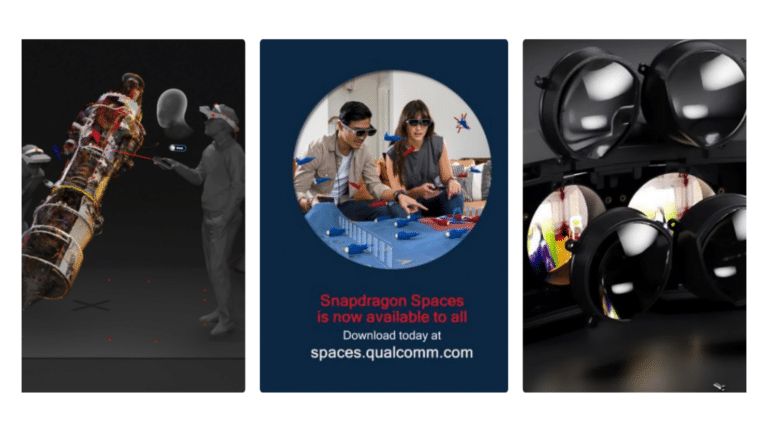
The Augmented World Expo (AWE) 2022 took place last week. As always, we’re recapping all the major enterprise-related news to come out of the event: Campfire The holographic collaboration company announced the Campfire Studio Console, “a device that delivers large-scale shared holograms in design studios and open workspaces.” Campfire’s holographic tech (unveiled last year) is designed to accelerate the virtual collaborative development of physical products and infrastructure. The Studio Console will allow globally distributed teams to “interact naturally and safely” around and within holograms of vehicles, structures, and environments. Qualcomm The top enabler of the metaverse announced the global availability of its Snapdragon Spaces XR Developer Platform, which “offers proven technology and an open, cross-device horizontal platform and ecosystem” for developers to create new head-worn AR experiences from the ground-up and add head-worn AR features to existing 2D Android mobile apps and more. Magic Leap AWE attendees got to try the upcoming Magic Leap 2. In addition, the company’s Head of Product Management James Meskill gave an overview of the enterprise-focused device and showed off the “WildFire Demo.” “We’re focused on businesses who need to solve real problems and who have essential work to get done…We’re in the early access […]
3 min read

Solving the Skills Crisis with Augmented Reality
The skills gap has become a skills crisis. Augmented Reality is helping industrial organizations enable on-the-job training, capture and scale expertise, recruit younger workers, and close the skills gap.
5 min read
Beyond the Tape: How One Manufacturer is Creating a Skilled Workforce with Augmented Reality
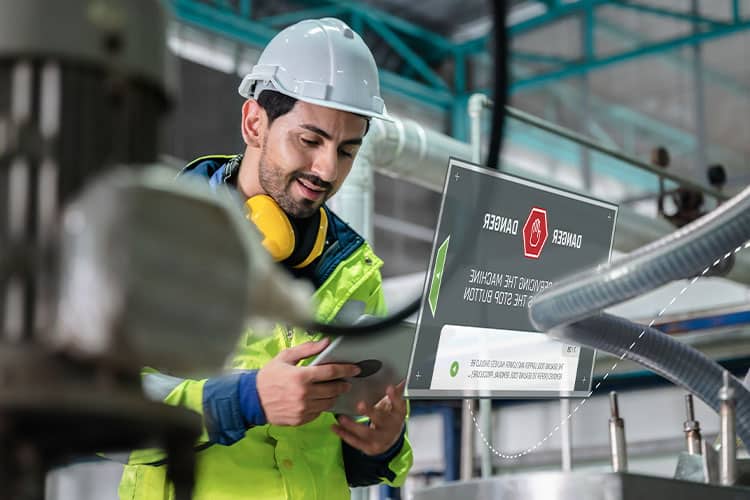
You’ve probably never heard of Intertape Polymer Group (IPG) and yet – if you’re a frequent online shopper – you most likely interact with their products regularly whenever you receive a package from Amazon or Walmart. IPG is a leading, global packaging and protective solutions company that manufactures and supplies everything from industrial tapes to bubble wrap. Recognizing that many of the company’s pain points like safety, the exit of its senior workforce, and a shortage of skilled labor were related to training and recruitment, IPG’s Ronn Englehart turned to Augmented Reality (AR). As Ronn explains in a recent webinar, AR is doing a lot for IPG’s workforce challenges, including: Helping to standardize, document, and validate work procedures Capturing and scaling expert knowledge for work instructions and training material Upskilling internal resources (operators on the plant floor) to join the skilled workforce Attracting and onboarding new talent, and Closing the skills gap Watch the webinar now to hear about IPG’s AR implementation plan, from aligning stakeholders and securing devices to measuring both quantitative and qualitative ROI; and the impact of augmented reality on safety, compliance, maintenance, recruitment, and more.
1 min read

10 More Enterprise Metaverse Statistics
When it comes to the enterprise AR/VR/MR (XR) space, the immersive devices used to enter digital worlds are nothing new. What is new is rising consumer awareness of and interest in XR. Along with the metaverse hype comes new opportunities to actually launch consumer-facing XR applications in business and industry beyond flashy experiments and mobile AR. In addition, XR’s role in enterprise is expanding beyond the factory or the field, into remote and hybrid offices. Here are 10 statistics impacting the enterprise metaverse: 1. 52% of internet users say they would join the metaverse for work reasons such as virtual workspaces and networking. (Statista) 2. 33% of developers believe that data privacy and security are the biggest hurdles that the metaverse has to overcome. ( Agora ) 3. According to a recent Microsoft report, 57% of people prefer telecommuting and 51% said they would consider switching to mixed or hybrid offices next year ( Great Expectations: Making Hybrid Work Work released by Microsoft ) 4. 2019 was the first year that enterprise spending on XR eclipsed consumer spending. ( Harbor Research ) 5. 40% of consumers said they would pay more for a product they could customize in Augmented Reality. ( […]
2 min read

12 Intriguing Metaverse-related Statistics
The future of the Internet? Just a fancier name for XR? All hype? Whatever the metaverse turns out to be, there’s been a ton of activity in the space in just the first three months of 2022 alone. Here are some interesting (occasionally contradictory) Metaverse-related statistics with undeniable implications for the future of work: According to PwC, 23 million jobs will be impacted by augmented and virtual reality by 2030, boosting the global economy by a potential $1.92 trillion. Gartner believes that 25% of individuals will spend at least one hour per day in the Metaverse by 2026. 52% of employees are open to meetings in the metaverse, while 47% are “okay” with representing themselves as avatars in these virtual meetings. (Microsoft Work Trend Index) (Lenovo found that 44% of employees are prepared to work in the metaverse, compared to 20% unwilling to work with the technology.) 51% of Gen Z and 48% of Millennial workers are interested in using the metaverse for work, compared to 37% of Gen Xers and just 27% of Boomers. (Microsoft Work Trend Index) A Lenovo survey found that 44% of employees think the metaverse will improve their work productivity. Accenture found that 71% of […]
2 min read
Immersion Beyond Sight: The XR Accessories of Today and Tomorrow
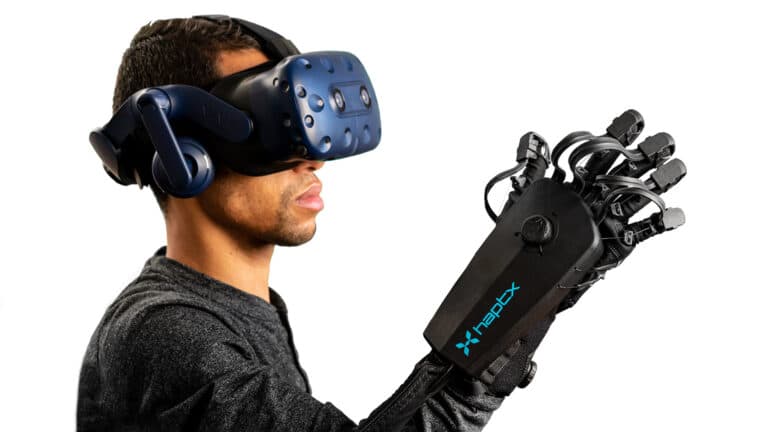
Is complete immersion possible? In theory, yes, if scientists and technologists figure out how to accurately simulate all the human senses in virtual reality. This would undoubtedly increase the realism of virtual experiences and while I’m sure multisensory VR games would be AWESOME, I’m more interested in job training, professional design, marketing (brand experiences), and other enterprise applications. Ericsson believes there will be widespread use of virtual environments engaging all five senses by 2030. Others are less optimistic: The problem, as Louis Rosenberg writes for Business Today, is your body. Rosenberg explains that without elaborate hardware like external cameras, your brain maintains two versions of reality, one of you in virtual reality and one of you sitting or standing where you are (in physical space). This creates the “feeling of being cut off from the world.” It’s not that today’s VR games and apps aren’t fun or useful, or capable of changing behavior. Virtual reality doesn’t need to stimulate all the senses to be effective, but the technology to do so would make it possible to spend longer stretches of time in the virtual world. Why so difficult? Rosenberg remarks that high-fidelity visuals are much easier to create than a […]
6 min read
Year in Review: Enterprise XR Solutions
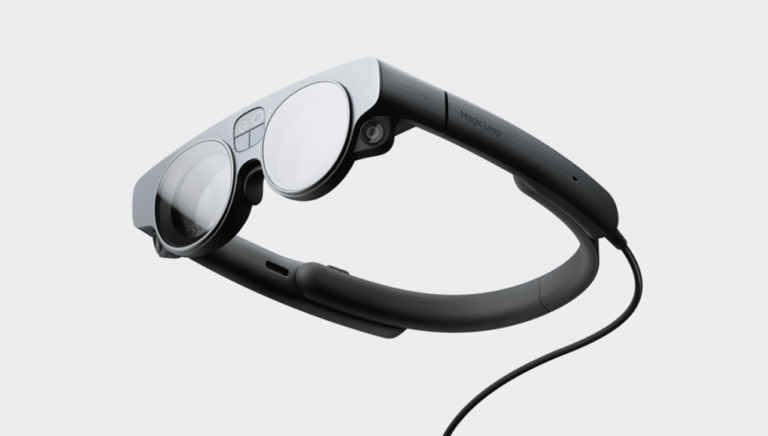
Over the course of 2021, Big Tech went all in on immersive collaboration and anticipation certainly grew for a game changing XR device (or two) from Apple. 2021 was also the year of the word ‘Metaverse,’ which we see as any immersive world where you might have your next team meeting or interact with brands. Let’s see what the major players in enterprise XR unveiled and acquired this year: AUGMENTED/MIXED REALITY MICROSOFT Microsoft’s activities this year made it clear the company is focusing on collaborative XR and, more generally, the future of work. In March, Microsoft announced Mesh, a new platform for building multi-user XR apps or shared virtual experiences connecting people in different locations. Mesh will be brought into Microsoft Teams in 2022, allowing colleagues to meet as avatars in mixed reality. META (FORMERLY FACEBOOK) Facebook rebranded as Meta in 2021 in a PR move to distance the company from controversy, or as leadership claims, to convey the company’s new aim of building the metaverse. Meta also made its AR entrance with a pair of glasses developed in collaboration with Ray-Ban. The company’s 10-year plan for AR, however, is much more ambitious, as revealed in a blog post from […]
5 min read

Beyond AR/VR: A Fully Connected Workforce and Workplace
Discussing the impact or potential of immersive technologies in the workplace is all well and fine, but it’s impossible to talk about the future of augmented and virtual reality in business without considering complimentary emerging technologies such as artificial intelligence (AI), wearables and advanced sensors, and even Blockchain. In this panel from EWTS 2020, innovators from PwC, BP, Holiday Inn, Lenovo and Boeing share how they are strategically combining emerging technologies to unlock even more value for their people, customers and partners. Even more valuable, they discuss how they’re able to cut through red tape in the name of innovation by creating incubation bubbles and experimental groups within the business to push through brand new tech.
1 min read

Heads-up and Hands-free: Why Enterprise Augmented Reality Doesn’t Have to be Complicated
Augmented Reality doesn’t have to be complicated. There’s a ‘subset’ of AR called Assisted Reality and ways to augment workers’ capabilities in a heads-up, hands-free form factor without overlays requiring specialized development skills. AR can be as simple as a scanner built into a pair of glasses and voice commands and still be utterly transformational, improving the employee experience and increasing organizational efficiency. Case in point: This unique case study presented by Bayer’s Carrie Roy and Michael Calvillo at EWTS 2020. Watch the video to hear how Carrie and Michael internally pitched, conducted a zero-budget POC, and found a vendor for their speech-to-text (STT) smart glasses data collection use case. For more, read our interview with Carrie and Michael here.
1 min read
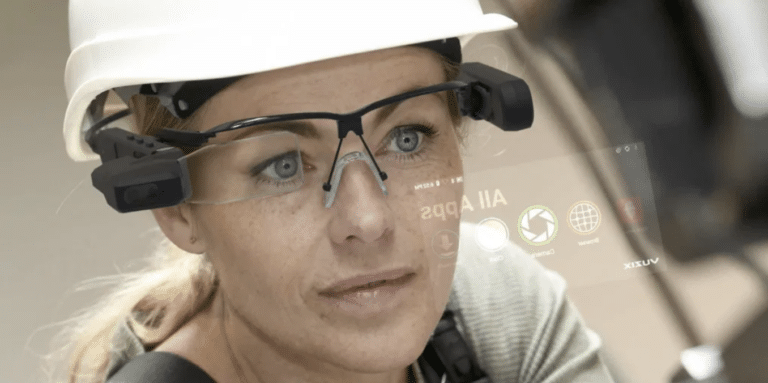
What makes an AR/VR device or app enterprise-grade?
We’ve said it before, but the question is no longer ‘Should you invest in XR and/or wearables for your business?’ Even before the pandemic, the answer to that was ‘yes,’ though the need may not have been as immediate as post-Covid-19. So, what is the question? It’s ‘Which solution?,’ and a good place to start is by listening to the experts. In this panel discussion from EWTS 2020, innovators from GE, CBRE, Abbvie, Qualcomm and Immy share key considerations for choosing the right hardware and software for your use case, workforce and infrastructure. What is required of enterprise- / industrial-grade devices and platforms, especially from an ergonomic and UX point-of-view? Play the video to find out. Image source: VentureBeat / Vuzix
1 min read
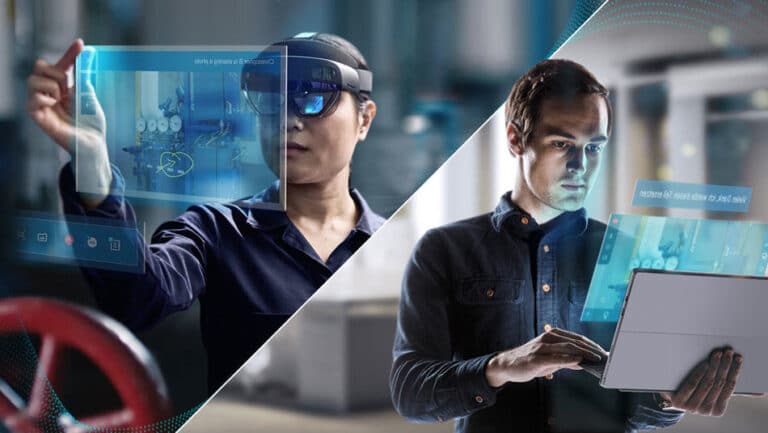
Augmented Reality & Artificial Intelligence: Next-gen Workforce’s Best Friends
On June 23, industry experts Anand Rao, Global Artificial Intelligence Lead at PwC, and Jereme Pitts, COO of Librestream, were joined by end users Erik Schmidtberg and John Cogliandro from Raytheon in a webinar about the powerful combination of Augmented Reality (AR) and Artificial Intelligence (AI) in enterprise. Jereme set the scene by describing the modern workforce, which is overwhelmingly deskless, and issues like the skills gap driving adoption of emerging technologies like AR in industry. He was followed by Anand, who managed to explain AI in layman’s terms, its relationship to AR, and impact on the human worker now and in the future. In the second half of the webinar, Jereme and Anand moderated a panel with real enterprise end users – Raytheon’s Erik and John – to ground everything discussed up to that point in reality. Here are my 3 takeaways from the session: 1. AR+AI: Why now? A number of live polls throughout the webinar drove home the relevance of the day’s topic, including “Are you satisfied with the method you’re using to capture knowledge.” Just 15% of respondents said they were satisfied with how they currently capture knowledge. Another poll revealed that 61% of attendees still […]
4 min read
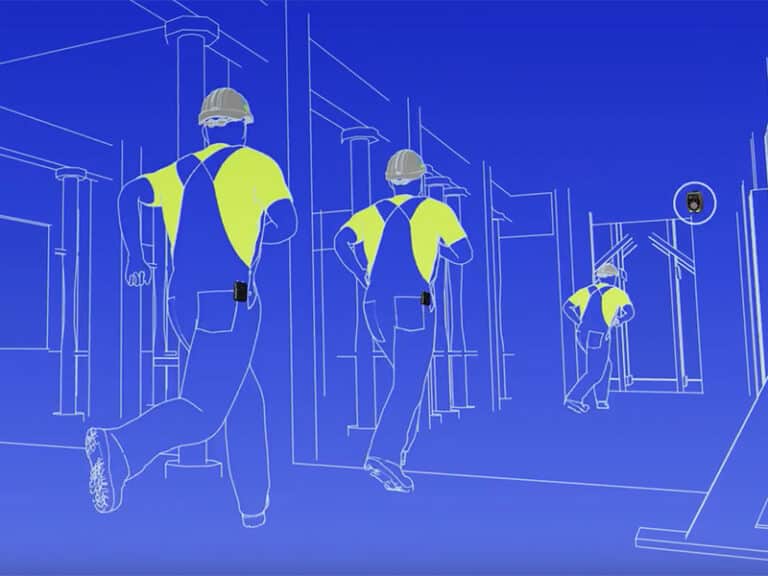
The Underdog of Wearables: Below the Neck Devices
Augmented and virtual reality get a lot of headlines. This is understandable: After all, where would many companies be if not for AR-enabled remote support and VR training to ‘carry’ them through the pandemic? But not every use case in which an employee would benefit from receiving/accessing task-based information hands-free calls for a pair of expensive smart glasses and AR/VR devices can only do so much to protect workers from physical harm. That’s where body- and wrist-worn wearables come in and, while not as glamorous as a mixed reality headset, discreet body-worn sensors have a big role to play in reducing the 340 million work-related accidents that occur annually around the globe. From tracking workers’ movements around hazardous job sites to secure authentication via biometric wearables, what are the most valuable opportunities for wearables worn below the neck? Watch this video from EWTS 2020 featuring innovators from Con Edison, Spirit AeroSystems, CVG Airport and Triax Technologies to find out:
1 min read
Augmented Enterprise Newsletter
Get bi-monthly insights on AI, XR, digital twins, and related emerging enterprise technology delivered to your inbox.