
By Technology
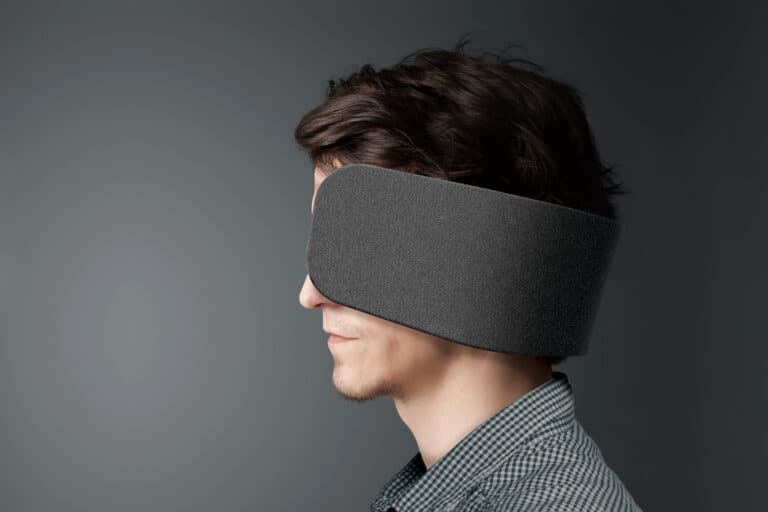
Alternative Enterprise Wearables: Vests, Visors and Hearables
What is the most successful piece of wearable technology in human history? Arguably, it’s the hearing aid. In fact, hearing aids might be considered the original hearables. Yes, I said hearables. Wearables are a broad category of devices – broader than you might think – encompassing not only smartwatches and smart eyewear but also embeddables, hearables and ingestables—any connected device that can be worn somewhere on or inside the body. We can extrapolate this to define an enterprise wearable as any electronic device that a worker wears (or ingests) to improve his or her performance and safety in some way. Then, there are items of clothing and gear equipped with today’s advanced sensors. In many industries, these wearables are a worker’s last line of defense against injury in the workplace. Read on for some alternative enterprise wearables – non-watch and non-eyeglass form factors – under development or currently available for enterprise: Smart Suspenders and Other Accessories Amazon has over 100,000 robots in its warehouses. Funnily enough, as efficient as these robots are at moving containers of items to help human pickers fulfill millions of online orders, they (or rather their on-board sensors) aren’t all that great at recognizing their human […]
7 min read

VR: Getting People to Take Safety Training Seriously, Retail Merchandising, and More
Virtual reality is making inroads in the retail industry, at the same time as more and more companies are realizing the powerful potential of VR for training. Here are some of the most recent use cases of VR in enterprise, all of which, when it comes down to it, are customer-facing applications of the technology. The following is evidence of digital disruption ramping up beyond work instructions and collaborative design, to directly impact the products and services that consumers experience everyday: ADT In a recent mailer campaign to convey the importance of professional alarm monitoring services, ADT sent out Google Cardboard-like VR headsets that put recipients into a simulated life-threatening situation. Noting a lack of awareness among homeowners around what actually happens during a fire, ADT worked with Harte Hanks to create a VR experience accessible on YouTube that would drive home the potential side effects of carbon monoxide, the physical obstacles that can prevent you from escaping, and other elements of a house fire. Placing a phone in the viewer sent by ADT, you find yourself in a bedroom filled with smoke. You’re immersed in a mother’s fear and disorientation as she’s awoken by a call from ADT and […]
4 min read
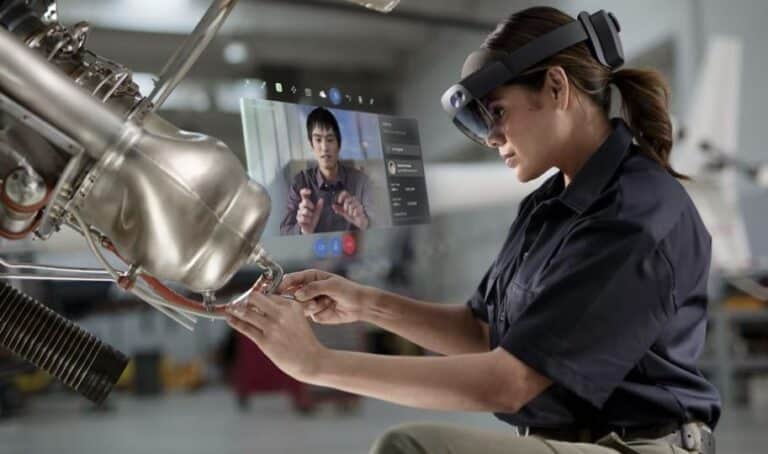
Excited about HoloLens 2? Looking back at groundbreaking use cases of HoloLens
The big news this week has been the unveiling of the much-anticipated, $3,500 HoloLens 2. The new HoloLens boasts a larger field of view (twice that of the original), higher resolution, faster and more natural interaction, and is reportedly more comfortable to wear than its predecessor. HoloLens 2 has eye-tracking and retina-scanning features, doesn’t require any fitting (making for a more streamlined experience) and even takes hygiene into account in its design. Thus far, reviewers have largely praised the device, with most writers deeming it a great leap forward for Mixed Reality. Behind the scenes at Microsoft is a team of designers and engineers who clearly listened to feedback from early enterprise users, including major companies like Boeing and Ford that have been using HoloLens for a few years now. Other big names like Chevron, Kiewit, Bridgestone, ExxonMobil, Pfizer, Merck, and BT have likewise been testing and using HoloLens. Besides the use of HoloLens, what do all of these companies have in common? They speak at EWTS every year. Indeed, over the last five Enterprise Wearable Technology Summits, we’ve followed Boeing’s and the rest’s stories from proof of concept through rollout. Read on for three use cases of HoloLens that […]
5 min read
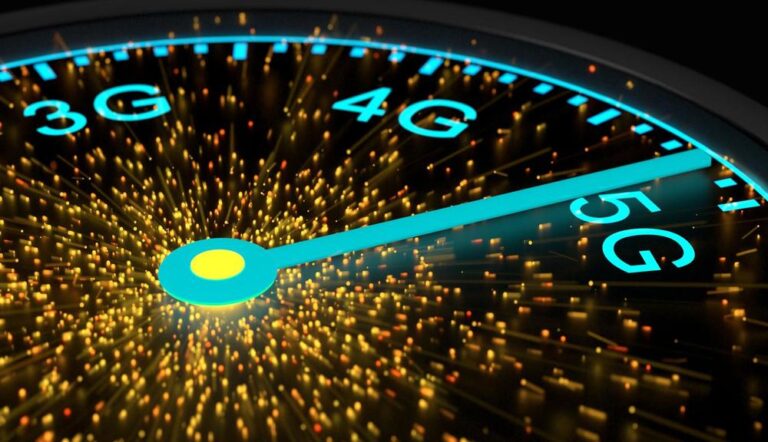
9 to 5G: Prime Time for Next Gen Connectivity in Enterprise
Enterprises are looking to 5G in order to adopt more sophisticated AR/VR and wearable technology solutions for a greater variety of use cases. What is 5G? A network revolution that’s currently in its early stages, 5G (the new mobile standard that will succeed 4G) is an evolving constellation of technologies expected to unlock the ability to use wearable technologies (and other emerging tech) for a much wider range of applications in the workplace. Providers are beginning to deploy 5G around the world to support the expanded mobile connectivity and capacity requirements of the Internet of Things, including immersive experiences, machine learning, Big Data, etc. Enterprise decision makers tasked with identifying, testing and implementing wearable solutions can now begin to consider the capabilities that will be at their disposal once the speed, flexibility, and reliability of 5G becomes available. The speed of deployment of 5G-based mobile networks depends on the timing of the massive investments needed to build out the infrastructure. Nevertheless, now is the time to consider the future applications of immersive and wearable technologies and how 5G will enable the transformation of your enterprise. 5G promises a solution to the many network and performance challenges holding back Industry […]
6 min read

Practical Fantasy: Real Companies Exploring Exoskeletons
One cannot begin a blog post talking about workplace safety without sharing some statistics: According to OSHA, there are more than 4,700 worker fatalities in the U.S. each year, and nearly three million work-related injuries and illnesses. U.S. employers spend $95 billion annually on workers’ compensation insurance, and shell out over $20 billion in workers’ comp fees. It’s not just about the money—injuries and illnesses hurt productivity, with employees having to miss work, restrict their activities, or even transfer jobs. Those three million workers aren’t necessarily doing anything wrong. The work performed on construction sites and in factories is physically demanding. Over time, manual labor takes a toll on the human body, no matter one’s form while doing a task. So, it’s understandable that enterprises would be willing to spend a lot of money to augment human abilities with wearable robotics. Exoskeletons are mechanical frames worn on the body to alleviate individuals’ physical burdens and enhance their abilities. There are full-body suits as well as partial exoskeletons like bionic arms and motor-assisted gloves. Exoskeletons can be powered (motorized) or not, but the idea is to make it physically easier for workers to do their jobs. (Exoskeleton technology originated in the […]
6 min read

How Wearables are Contributing to the IoT
The Internet of Things is a network of (Internet-) connected objects that have been made “smart” with embedded sensors. These devices collect data about the physical world around us, about processes and the health of both people and machinery—data which is then interpreted and shared with other machines and people via cloud-based software platforms. Accenture calls it “a universe of linked devices, services and people.” Cloud computing, edge processing, big data analytics, artificial intelligence—these are the technologies that meaningfully connect all our billions of things, forming a complete IoT solution. An IoT solution is a system of connected devices and technologies used to do something like predictive maintenance, where the failure of a piece of equipment can be predicted and the right person automatically sent to repair it before a break down occurs. In enterprise, IoT solutions can boost productivity, streamline business operations, cut operating costs, generate new revenue streams, and deliver better customer experiences. How? Here is Microsoft’s action plan for transforming an organization with IoT: Build things: IoT begins with your things, with strategically adding sensors to devices Control things: Deploy IoT solutions that automatically control, monitor and manage your things (your assets,) allowing you to capture real-time […]
6 min read
Smart Glasses, AR, VR and MR: Head-Worn Devices in the Enterprise
Picavi’s Johanna Bellenberg talks about head-worn devices with the very people implementing the technology at Walmart, GE Transportation, Gensler, USPS, and FM Global.
3 min read
Below the Neck: Body- and Wrist-Worn Wearables in the Workplace
Watch this panel of thought leaders and practitioners from different enterprises share use cases of body- and wrist-worn wearables they’ve deployed in their organizations. You’ll see that below-the-neck wearable devices are being applied to both collect data from and push immediate feedback to workers: Applications and Lessons: In healthcare, wearable data is used to learn more about patients and improve care. With new possibilities of collecting data on human behavior, chronic conditions, etc. come new, never-before-seen challenges for those in medicine. How can wearable data be used – and more significantly, how should it be used – to change patient care, make better care decisions, coordinate care more effectively, and empower patients to care for themselves? In other workplaces, wearable data helps identify hazards and keep employees safe. A small wearable radiation detector can ensure that astronauts stay below established exposure safety levels on space missions. Leidos is developing such a device for NASA, taking a commercial, off-the-shelf device and extending its capabilities to fit the user’s needs and limitations in space. The EHS team at General Electric is focusing on highly hazardous processes across the company’s portfolio, exploring wearables from two angles: Body-worn wearables that can make hidden hazards […]
2 min read
Finding Wearables in Every Corner of the Enterprise
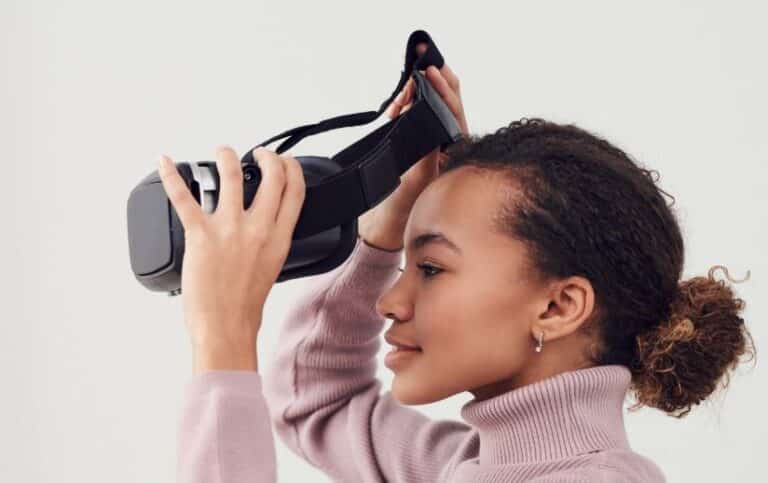
You wouldn’t think that a financial services corporation, a children’s toy retailer, a railway company, and the U.S. Navy could relate to one another but in this new age of mobility – really a new age of mobile computing – companies and individuals are finding the same emerging technologies can meet their differing needs. As it has become more and more possible (and desirable) to live our lives on the go, our jobs are following suit. Whether you sit at a desk, stand on an assembly line, spend your days walking around a warehouse, or travel from job to job; wearable technology has something to offer to make your work easier, more productive, and safer. See how wearables are seeping into every corner of the industry landscape: Fidelity Investments Fidelity Labs recently partnered with Strivr to develop immersive Virtual Reality “empathy training” simulations for its customer service representatives. Wearing the Google DayDream headset, employees go through a simulated call; they’re able to see the distressed customer on the other end of the line both during and after the call, and witness the impact of their responses on the customer in his/her home. Trainees can observe the virtual client’s facial expressions […]
4 min read
Consumer Wearables That Could Work For Your Business
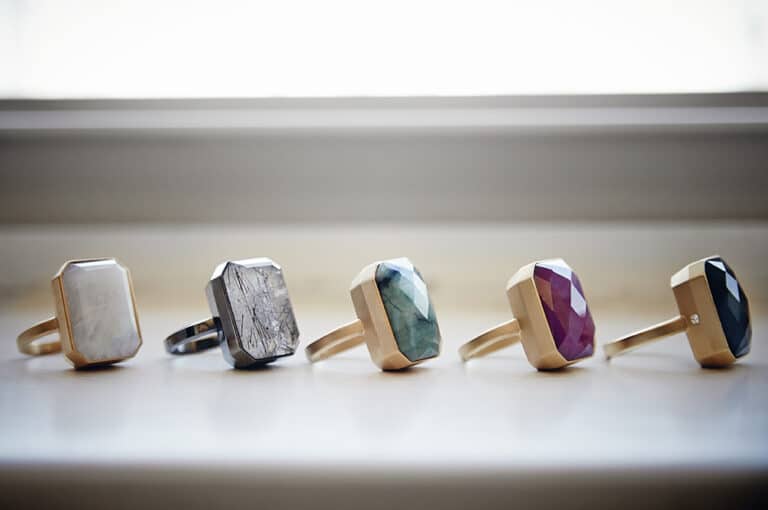
I recently did some field research. Actually, I went online shopping but I promise it was work-related! As an enterprise wearables expert, I don’t usually follow the consumer wearables market. I don’t have a fitness tracker or an Apple Watch, but I suspect many of the wearable devices available to consumers today have enterprise potential. I did some browsing, and found that consumer wearables fall into several categories. I searched for devices in each category that might be useful in an enterprise setting. I didn’t buy any of these wearables (no budget for a whim), so I’m writing with the assumption that the devices do what they’re advertised to do. Armbands and Wristbands Myo The Myo armband by Thalmic Labs is like a touch-free mouse for your tech, allowing you to control connected devices such as a smartphone or presentation clicker using gesture and motion. With SDKs for Windows, Mac, iOS, and Android, developers have a lot of freedom to build applications for the Myo, and some professionals have already adapted the device to their needs. Surgeons in Spain, for instance, are using the Myo to navigate medical records in the OR. RE-vibe RE-vibe by FokusLabs claims to “encourage mindfulness while studying or at […]
8 min read
The Wearable Road Less Traveled: Not Your Average Enterprise Wearables
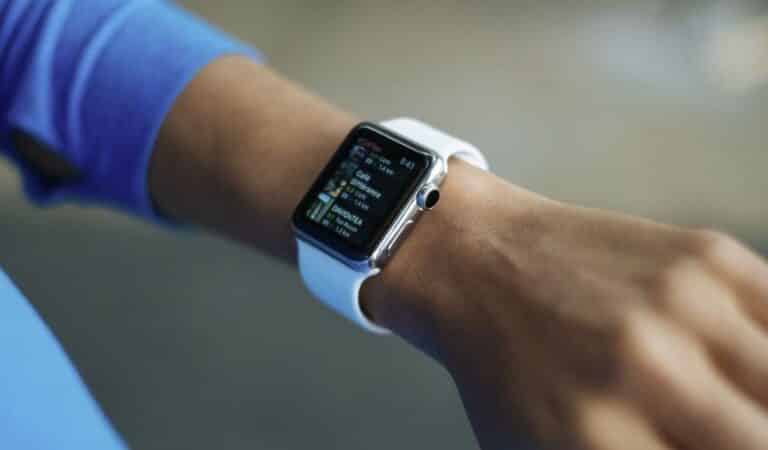
Smart glasses like the Vuzix M300 and the long-awaited Google Glass Enterprise Edition; AR/VR headsets like the HoloLens and Oculus Rift; smartwatches like the Samsung Gear S3—these wearables get a lot of coverage; but how many cases of enterprises using temperature-regulating wearables or custom smart bands do you know of? Read about companies exploring the wearable road less traveled: Caterpillar In Spring 2015 it was reported that Caterpillar planned to use dorsaVi’s medical-grade wearable sensor technology to monitor and evaluate the movement of its workers using heavy material handling equipment, with the goal of discovering best practices and improving safety. The ViSafe solution features multiple (wearable) movement and muscle activity sensors that track how users move in their daily work lives—how their lower backs, shoulders, etc. move while performing tasks. The sensor data synced with video footage can be analyzed to pinpoint unsafe work practices like challenging postures and repetitive motions that would cause injury, and to reveal where modifications should be made in the workplace. For Caterpillar, ViSafe analysts would help come up with a plan to optimize both the workplace and workforce to prevent injury, including training workers in safe manual handling and implementing potential interventions at work […]
6 min read
Below the Neck: Examples of Body-Worn Wearables in Enterprise
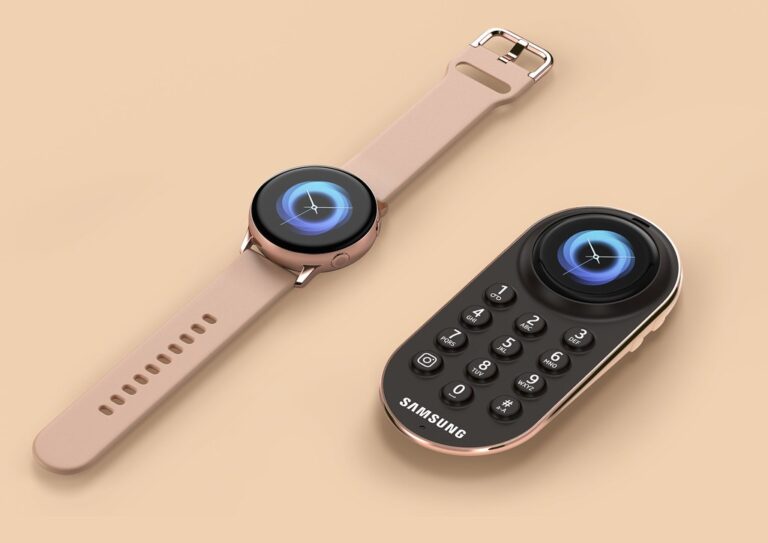
It seems that recently a group of major enterprises, specifically Boeing, UPS, General Electric, ThyssenKrupp Elevator and Lockheed Martin, have been receiving a surge of coverage in articles on the topic of wearables in enterprise. The innovators behind the use of wearables at each of these companies will, of course, be speaking at EWTS 2017, sharing their experiences and best-practice user advice. But those companies are garnering attention primarily for their use of Augmented Reality smart glasses and other heads-up displays. The following are four examples of workers wearing technology below the neck, on the job: San Diego International Airport The San Diego International Airport (SAN) partnered with Samsung SDS America and Total Communicator Solutions to make its airport IT operations more responsive. SAN is the first international airport to use Samsung smartwatches, specifically the Samsung Gear S3 and S2 watches. TCS provided the software part of the solution—its Spark Compass intelligent communications platform – integrated with SAN’s “existing operational infrastructure and data solutions” – uses beacon technology to provide location tracking and facilitate communication between smartwatch-wearing airport staff members. So, when an IT issue is reported, the solution alerts the nearest IT staff person via his or her smartwatch. […]
5 min read
Augmented Enterprise Newsletter
Get bi-monthly insights on AI, XR, digital twins, and related emerging enterprise technology delivered to your inbox.