
By Technology

Wearables in Enterprise: 10 New Stats, Findings, and Predictions
A few months back, we pulled together a number of interesting facts and predictions from studies and reports related to the use of wearable technology in the enterprise. Since then, there have been more reports (of course), and the landscape has changed—there is more activity in the enterprise wearables space, with a bunch of new and next-generation devices either recently launched or on the horizon, and more openness on the part of enterprise organizations to experiment and share use cases. It’s time, therefore, for another list of the 10 most interesting facts, findings, and predictions as reported by the experts in 2015: 90% of 603 professionals surveyed by Modis at the start of 2015 said they were interested in using a wearable device to complete work tasks if provided by an employer. An April 2015 report by Robert Half Technology found that 81% of 2,400 U.S.-based CIOs expected wearable devices like smartwatches and smart glasses to become common tools in the workplace. According to 451 Research’s June 2015 survey of IT decision makers in the U.S. who either currently use or plan to use wearable technology, 39% said they would be deploying solutions in the next 6 months (following the […]
3 min read

Virtual Reality in Enterprise? Big Brands Say Yes
Sources say Augmented Reality will be big for enterprise; Virtual Reality, on the other hand, is expected to have mainly entertainment/gaming applications. The following use cases of wearable technology may seem like consumer use cases, but they’re not. They’re instances of major enterprise organizations evaluating new technologies and finding ways to incorporate wearable tech – not AR glasses but this time VR headsets – to propel their businesses forward. The following companies are not putting wearable devices into the hands of employees who then interact with customers; they’re putting devices – however atypical and modest – into consumers’ hands to build their brand and generate revenue. Indeed, an emerging application area for wearable tech seems to involve major name brands using AR and VR technologies to engage with consumers. Marriott, Coca-Cola, and McDonald’s are among the latest brands to turn to AR/VR in their marketing strategies—to excite and entertain customers, appeal to new and younger audiences, and generate business. Marriott Hotels Marriott has been testing out VRoom Service – a first-of-its-kind, in-room Virtual Reality travel experience – for guests staying at specific locations. The cutting-edge guest service was created in collaboration with Samsung, and is one of the first business […]
4 min read

Wearable Tech and Smart Gesture Recognition in the Enterprise, Part I
It seems as though new reports come out every week related to the growth of wearable technology. According to a report published in November 2015, the market for wearable sensors is expected to reach $5.5 billion by 2025. I mention this forecast, since in this article we will be moving away from a device-oriented discussion of the potential for wearables in business in order to consider the sensor technology within our favorite wearable devices–specifically, motion sensor technology. How might enterprises capitalize on motion sensors–cheap, ubiquitous, powerful, and coming soon to a wearable device in your workplace? At the recent EWTS event in Houston, TX, Toronto-based tech company Kiwi utilized the sensors already present in attendees’ smartphones to track their movements–specifically, their activity levels during networking breaks. From this data, the Kiwi team was able to determine the most active networker throughout the conference, and reward that individual with a prize. Now imagine the sensors built into your wearable devices. These are closer to your body than your smartphone, and potentially more accurate. Kiwi’s smart gesture recognition platform has the potential to measure some very significant or key motion and activity metrics in a variety of workplaces and enterprise environments based […]
3 min read

Wearable Tech and Smart Gesture Recognition in the Enterprise, Part II
Now, how might smart gesture recognition be applied in the enterprise? An obvious place to start would be in considering how a platform like Kiwi‘s could be employed to diminish repetitive motion and manual handling injuries on the job. Many workers in a variety of industries are at risk for these kinds of injuries; but smart gesture recognition technology on wearable devices could be employed to capture, visualize, assess, and correct workers’ motions to create a safer working environment. And since lifting-related injuries are the leading cause of workers’ compensation costs in the U.S., implementing motion recognition software on workplace wearables could save companies millions of dollars to boot. Most of the injuries which lead to back pain – the leading cause of worker absenteeism – are preventable. As of now, there are a few wearable devices on the market designed with deskless workers’ physical comfort and safety in mind; but a smart gesture recognition platform could be a less broad, more tailored and even cost-effective means of achieving the same or similar results. With smart gesture, there is the opportunity to customize solutions for specific use cases and businesses; and there is also potential to equip the tools workers […]
3 min read
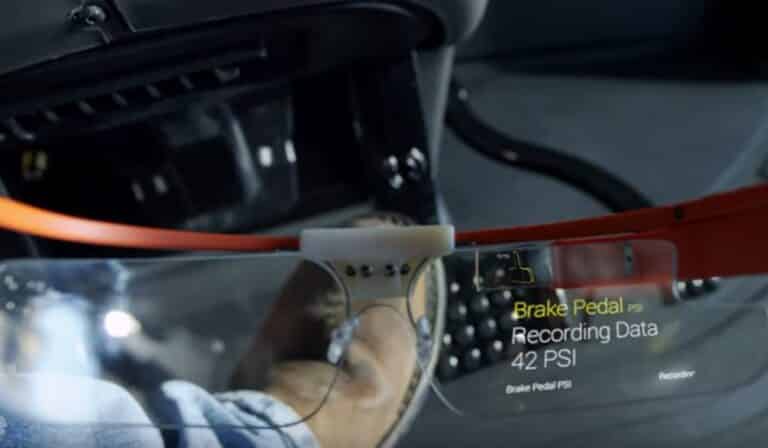
AGCO: Google Glass on the Manufacturing Floor
AGCO’s Jackson, Minnesota manufacturing team has incorporated Google Glass to audit finished product before it is shipped to dealers for consumer purchase.
1 min read

Top 5 HoloLens “Share Your Idea” Submissions
We’re pretty stoked on the Microsoft HoloLens “Share Your Idea” campaign. Holographic computing and augmented / mixed reality stand to utterly transform the way we perform our jobs (and live our lives). Already we’ve read about some great proposed enterprise applications for the HoloLens technology by Volvo, the first car brand to collaborate with Microsoft, and by Autodesk. So we are now able to picture car shoppers in the auto showroom of the near future using HoloLens to explore individual vehicle features. Industrial designers, mechanical engineers, and others in product development will also make use of the mixed reality technology to experiment and collaborate on product designs. What else can HoloLens achieve in the workplace? We combed through the most popular of the nearly 4,000 already submitted concepts to find some intriguing enterprise-related submissions. Of course we couldn’t read through all the proposed applications, so we limited ourselves to just those that had 20 or more “likes.” I’m sure there are lots of great business and industry ideas for HoloLens in the mix; and if you have the time, please share any submissions that we may have overlooked as well as your own ideas at the bottom of this post. […]
4 min read

Smart Glasses in Museums
Industry: Education / Museums / Leisure; Company: de Young Museum, San Francisco, CA, and other cultural institutions; Device: Google Glass (AR & VR headsets) What do you get when you pair smart glass technology with the world’s greatest art and cultural artifacts? A revolutionary redesign of the museum-going experience. While multimedia exhibits have long been mainstays of science, history and children’s museums, fine art museums have traditionally avoided digital tools in an effort to preserve the art viewing experience. For a while now, however, one has been able to rent designated devices (and more recently smartphones and tablets) as audio guides in museums; iPads and other touch screens have been employed to supplement exhibitions; most major museums boast a proprietary app for visitors to download to their smart devices; and QR codes beneath artwork labels have been featured to provide information on key works. Now, art museums are looking to interactive Augmented and Virtual Reality exhibits to enhance the visitor experience, hopefully without degrading the artworks/artifacts themselves in the move towards embracing new forms of technology. Indeed, both major museums and smaller cultural institutions are experimenting with smart glasses and other augmented reality devices to serve as virtual tour guides, […]
5 min read
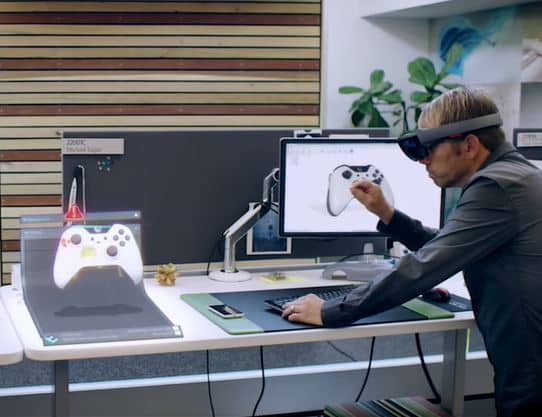
Microsoft HoloLens: Partner Spotlight with Autodesk Fusion 360
Microsoft HoloLens and Autodesk Fusion 360 are helping improve collaboration across the product development process, enabling engineers and designers to iterate together in real-time.
1 min read

Microsoft HoloLens: Partner Spotlight with Volvo Cars
From giving customers a sensor’s vantage point to configuring cars in entirely new ways, Microsoft HoloLens is working to bring Volvo’s cutting edge car features to life in ways never before possible.
1 min read
From the Back Room to the HPE MyRoom VIP: Interview with HPE’s Garry Orsolini
We recently interviewed Garry Orsolini, Technology Director at Hewlett Packard Enterprise (HPE) and leader of the team responsible for creating the HPE MyRoom /VRG application platform for wearable technology. Garry and his team are pioneers in the enterprise wearables space. When Google Glass came out with its Explorer Edition, Garry was one of the first to tinker with the novel technology, seizing upon its capabilities to better serve HP’s enterprise customers. In fact, Garry’s interest in connecting people with technology goes back to the early days of his career at HP, as you’ll read below. At the present time, HPE has a very early-to-market, complete and secure enterprise wearable tech solution, which supports a wide range of wearable and mobility devices, and which also serves as a true inspiration and benchmark in this nascent space in which we are all invested. Please enjoy reading the interview. BrainXchange (Q): To begin, how about you provide us with a little background on yourself and your career? Garry Orsolini (A): Well, I graduated with a B.A. in Philosophy but could not find anyone who wanted to hire a resident philosopher so I became a VISTA (Volunteers In Service To America) volunteer and worked […]
8 min read

AREA Webinar: Plan for Enterprise AR Success | Meet and Manage the Risk Factors
Similarly to mobile technology introductions, implementing enterprise Augmented Reality technologies must be planned. Sound Augmented Reality project planning takes into account potential benefits and risks to existing IT, human and business systems. Potential benefits of Augmented Reality are addressed in many places, including previous AREA webinars. This unique webinar will examine risk factors frequently encountered with enterprise AR deployments.
1 min read

AREA Webinar: Selecting Use Cases for Enterprise Augmented Reality
Selecting the best use cases for enterprise Augmented Reality introduction is arguably one of the most important steps that project managers will perform when exploring the technology’s potential to impact workplace performance. Finding a use case that is sufficiently narrow to be well defined while also broad enough to be applicable to multiple important business processes across an organization requires careful analysis. Use case selection should also take into account the stakeholders, their budgets, their power to influence corporate decision makers and their experience with emerging technology introduction.
1 min read
Augmented Enterprise Newsletter
Get bi-monthly insights on AI, XR, digital twins, and related emerging enterprise technology delivered to your inbox.